
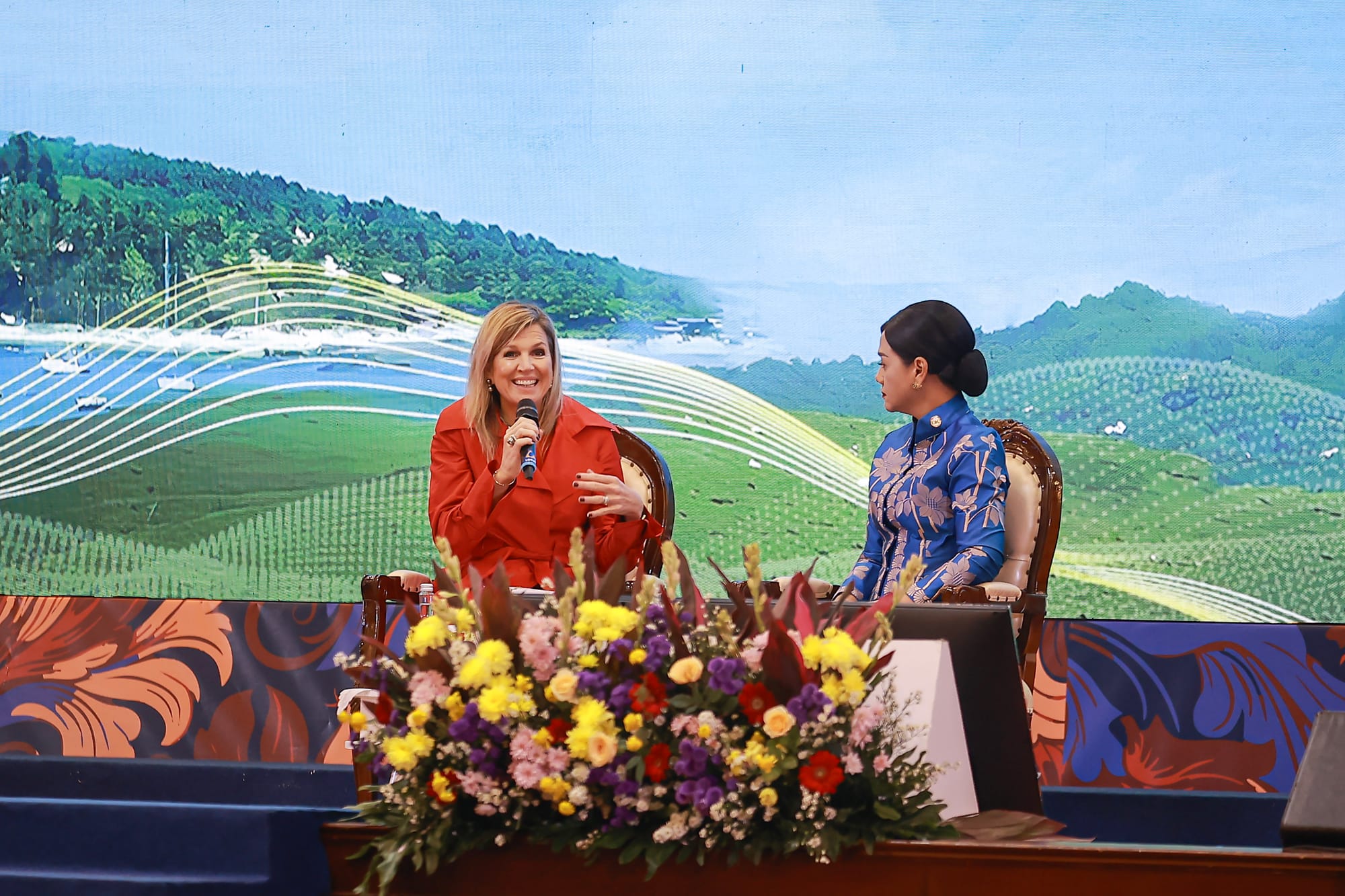
For the sake of the future, maintaining financial health is no longer just a recommendation, but a necessity that cannot be compromised. Based on four pillars, financial health is more than just the ability to access financial products, but the formation of habits that start early with a pattern of setting aside income carefully, not just waiting for the remaining expenses.
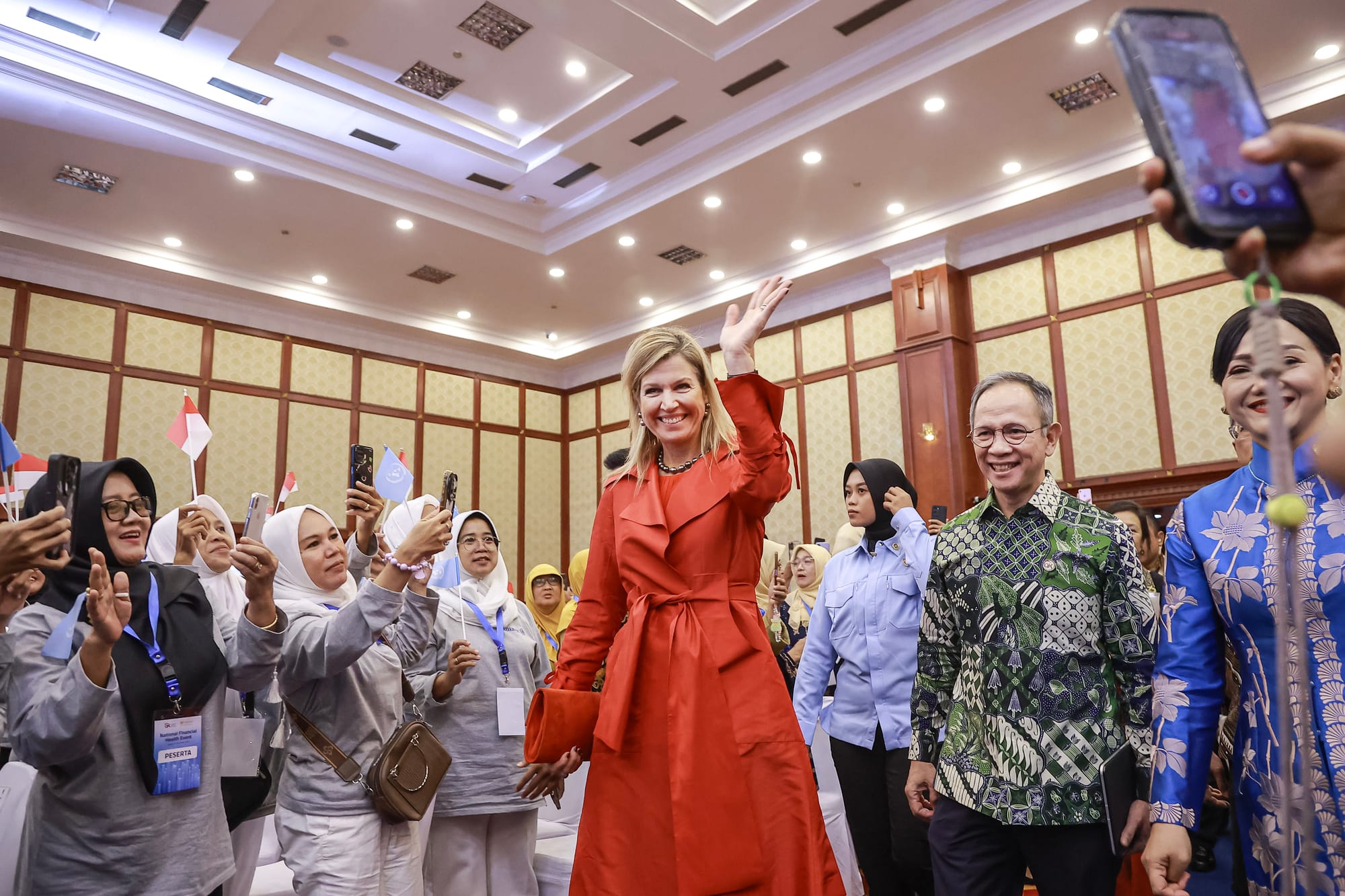
The invitation was conveyed directly by the Special Advisor to the United Nations Secretary-General for Financial Health (UNSGSA) Queen Maxima of the Kingdom of the Netherlands in front of hundreds of students, college students, and housewives in the discussion "National Financial Health for All" organized by the Financial Services Authority (OJK), Bank Indonesia, Ministry of Finance, and Ministry of Foreign Affairs in Jakarta, Thursday (27/11/2025).
The Empress of the windmill country explained that financial health is a measure of a person's or a family's ability to manage their financial obligations, while still having confidence in the future with the right financial products. Financial health is a form of deepening financial inclusion and literacy, two issues that Indonesia has previously known through OJK's regular socialization.
"Indonesia should be proud that while less than 50% of the world's population is unbanked, 80% of Indonesia's population already has one. Since access to financial services already exists, the challenge is now to help people who have access to improve their lives, prioritize, make wise financial decisions, and save for the long term," said Queen Maxima.
Based on the UN agreement, there are four pillars of financial health that are important to look at.
- First, access to savings products and services, financing, and payment mechanisms to manage daily finances.
- Second, resilience in the face offinancial shocks, characterized by the availability of emergency funds.
- Third, future financial planning with pension ownership.
- Fourth, financial security must be realized by the government, including the eradication of scams and fraud.
In the context of Indonesian society, Ratu Maxima stated that building awareness to maintain financial health is not easy, especially when 58% of the population has no savings after expenses.
Notably, 6 out of 10 people live on minimal income to cover living expenses. Here, banks and financial service providers are at the forefront to not only collect public funds, but also become financial health counselors for customers.
"I emphasize to banks that this is not a CSR call, but a necessity. If financial health is the focus, people will be better informed about suitable financial products to help them save longer, have better financial health, and help people protect themselves," said Ratu Maxima.
During her visit to a garment factory in Central Java a few days ago, Queen Maxima told the story of a worker she met there. The worker previously did not have a habit of saving, but by setting aside Rp10,000 a day, he can now do better planning for children's college needs and home renovations. This means that people's inability to save is a misconception, because what must be changed is the pattern.
"By setting aside your income, rather than waiting for the rest of your expenses, you can start building up an emergency fund, and then prepare for other needs in the long run. This is very difficult for some people, but without an emergency fund to start with, future financial plans will be very difficult to achieve," he says.
National priorities
Responding to Ratu Maxima's invitation, OJK Board of Commissioners Chairman Mahendra Siregar stated that financial health is an agenda that OJK will make a national priority, no longer just an aspiration.
Mahendra spontaneously admitted that he only understood the concept of financial health when talking with Ratu Maxima. The pillars of financial health have actually been contained in Law Number 4 of 2023 on Financial Sector Development and Strengthening (UU P2SK), but outside of financial inclusion and literacy, the pillars of emergency funds, pension funds, and financial security regulations have not been well integrated.
"We see that this is really appropriate to the needs of Indonesia. We are ready to collaborate with UNSGSA and will invite all those who work together in financial inclusion and literacy programs. Indonesia always learns from the best, and Queen Maxima as a special advisor to the UN Secretary General, we openly accept your ideas and we will build cooperation in the future," said Mahendra.
Sharing the same view as Mahendra, Director General of Financial Sector Stability and Development of the Ministry of Finance Masyita Crystallin revealed that the challenge of building financial health awareness in Indonesia is inseparable from the lingering gap between financial literacy and financial inclusion. Some assumptions assume that high financial literacy will encourage high inclusion.
In fact, with the financial inclusion rate reaching 80.51%, Indonesia's financial literacy is stuck at 66.46%. From this data, there is a serious indication that people who have access to financial services potentially lack or do not have sufficient ability to understand the services and products they access, both banking and non-banking.
"On the other hand, starting in 2025, the Ministry of Finance is tasked with deepening the financial sector. This task is given to us to encourage a healthy ecosystem that can guarantee our future. Understanding financial health is a provision to ensure that we become prudent service customers, not easily exposed to scams, and encourage our economy to grow according to the target," said Masyita.
The former World Bank economist suspects that a basic understanding of financial literacy cannot be separated from the habit from an early age to be trained to manage income, regardless of its source, ranging from pocket money, side jobs, to regular salaries. A sign of careful income management is spending that is measured and recorded in the appropriate expenditure items.
"In the OJK, BI and LPS financial literacy event, there is a good tagline: 'Set aside, Don't Save'. Because if we are used to setting aside a certain amount for needs, a certain amount for investment, then all expenses will be maintained in their posts. Don't wait for the remaining expenses because the lifestyle is different. As Queen Maxima said, financial health needs to be maintained for our future," he said.
From the smallest fraction
The difficulty of setting aside income for savings needs to be recognized as a structural problem in Indonesia. However, Financial Planner and Founder of Mitra Rencana Edukasi Mike Rini Sutikno believes that saving and having an emergency fund is still possible for vulnerable groups. Financial health, according to Mike, should be inclusive and affordable, so it should be made available to those on limited incomes, with reasonable adjustments.
"If a traditional savings percentage such as 20% for emergency fund is not possible, we can start from a smaller amount. If I have only Rp10,000 or Rp5,000 in change, I immediately put it in my piggy bank. That's already a good start, especially if the change is higher. So it's not the percentage, but from the smallest denomination of money you receive," said Mike when contacted. SUAR, Thursday (11/27/2025).
With the changes in digital lifestyles, Mike thinks that saving behavior can actually be easier with the presence of digital banks and digital gold savings, because the nature of digital financial services allows the amount of savings to be more flexible than paper money.
"Make the digital bank account and gold savings as a 'digital envelope' to manage finances and support saving habits. Saving with the smallest amount is possible with digital bank accounts and gold savings, and the flexibility of savings should be made the most of," concluded Mike.
Previously, Gadjah Mada University Management and Public Policy Department lecturer Media Wahyudi Askar noted that account ownership as a benchmark for BI and OJK to measure the level of financial inclusion could trigger problems.
"It is very possible that Indonesia has a high level of account ownership, but the owners do not use these accounts to access financial services. We know that almost all social assistance uses bank accounts, and these accounts are only used to receive money from the government, not for active transactions," he said when contacted by SUAR, Thursday (30/10/2025).
Media emphasized that although the number of bank account ownership is high, it does not reflect good financial inclusion. The measure of the usefulness of financial products and services should be the benchmark for inclusion, along with the level of public welfare.
"Inclusion is more than just opening an account. Most importantly, people actually use the products as needed. Account ownership data is high, but if measured by indicators of product use, significance, and the impact of product use on welfare, we can find inclusion is still far from ideal and must be accelerated," Media concluded.