
Car exports from Indonesia showed a positive trend in September 2025, as well as a breath of fresh air for the automotive industry amid the slowing domestic market.
This is evidenced by national automotive exports still showing a solid performance throughout 2025, with Completely Built-Up (CBU) car exports remaining the biggest support for exports.
Based on data from the Indonesian Automotive Industry Association (Gaikindo) received by SUAR on (13/10), total CBU car exports in the January-September 2025 period reached 382,374 units, up 10.9% compared to the same period last year of 344,899 units.
Meanwhile, specifically for September 2025, CBU car exports reached 47,321 units, which was down 6.8% when compared to August 2025 which reached 50,778 units.
Gaikindo Secretary General Kukuh Kumara said car exports in the form of Completely Knocked Down (CKD) in the January-September 2025 period reached 45,673 sets, an increase of 29.8% compared to the same period last year which reached 35,179 sets.
CKD exports in September 2025 reached 4,386 sets, down from August's 6,163 sets.
"The performance of national automotive exports is quite good, which comes from CBU and CKD, plus market demand is also increasing," he said.
On the other hand, exports of vehicle components again registered growth. In September 2025, total shipments of auto components reached 16,100,113 pis, up 11.9 percent from August 2025's 14,394,277 pis. Cumulatively, component shipments during the first nine months of this year totaled 108,152,701 pis, growing about 12 percent from the January-September 2024 period.
Toyota is still in control
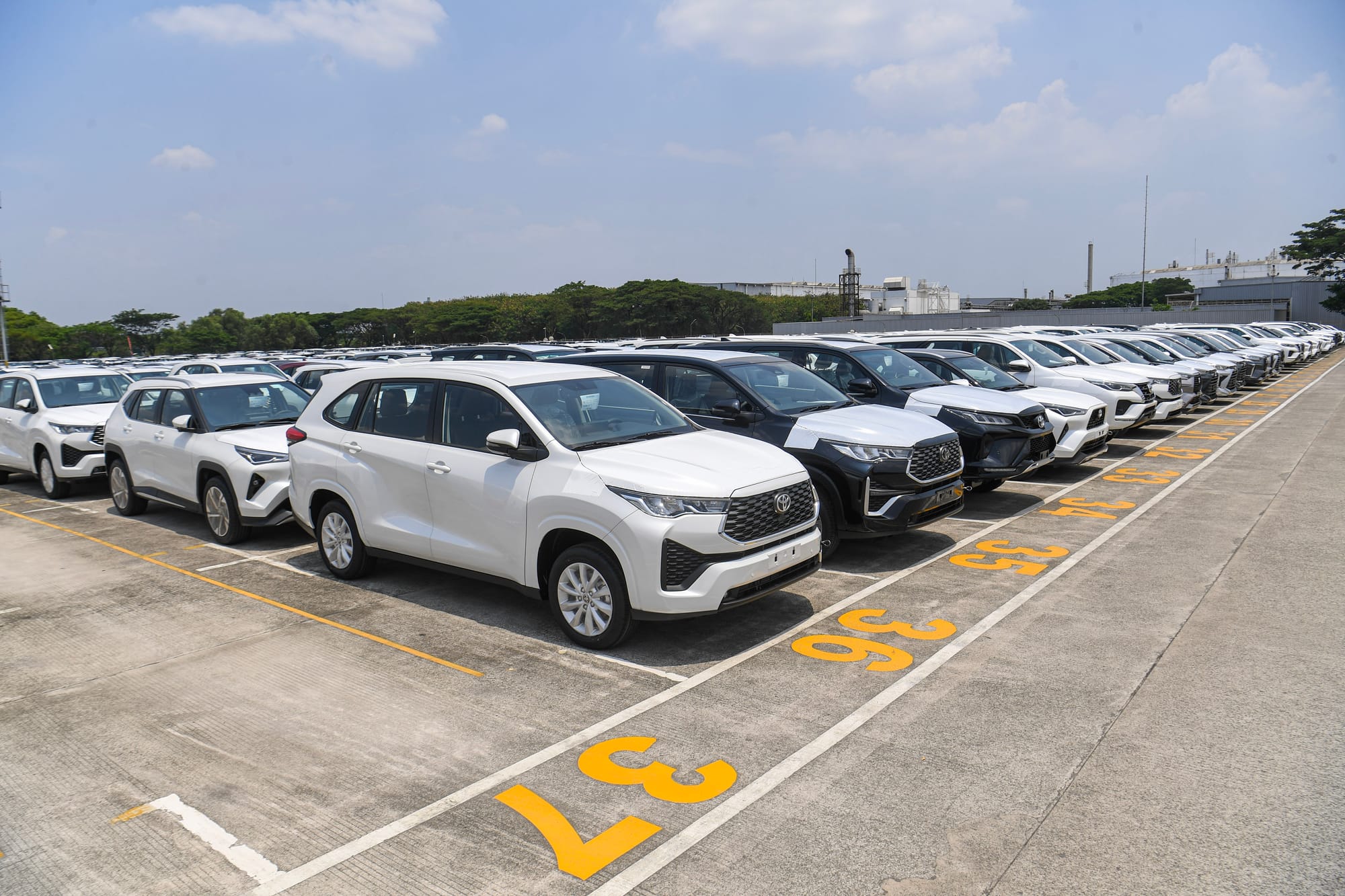
Toyota is still the largest contributor to Indonesia's CBU car exports in September 2025, with shipments of 15,765 units. Second place went to Daihatsu with 12,680 units, followed by Mitsubishi Motors with 7,962 units. Hyundai was fourth with 6,073 units, followed by Suzuki with 3,261 units.Meanwhile, Honda exported 1,290 units, Isuzu 114 units, and Wuling 161 units.
CKD exports in September 2025 were dominated by Mitsubishi Motors with a shipment of 3,280 sets followed by Suzuki with 564 sets, and Hyundai with 540 sets.
Component exports in September 2025 were still dominated by Toyota with shipments of 14,672,330 pis, followed by Honda with 1,343,866 pis, Hino with 74,797 pis, Hyundai with 7,344 pis and Suzuki with 1,776 pis.
Domestic Sales Sluggish
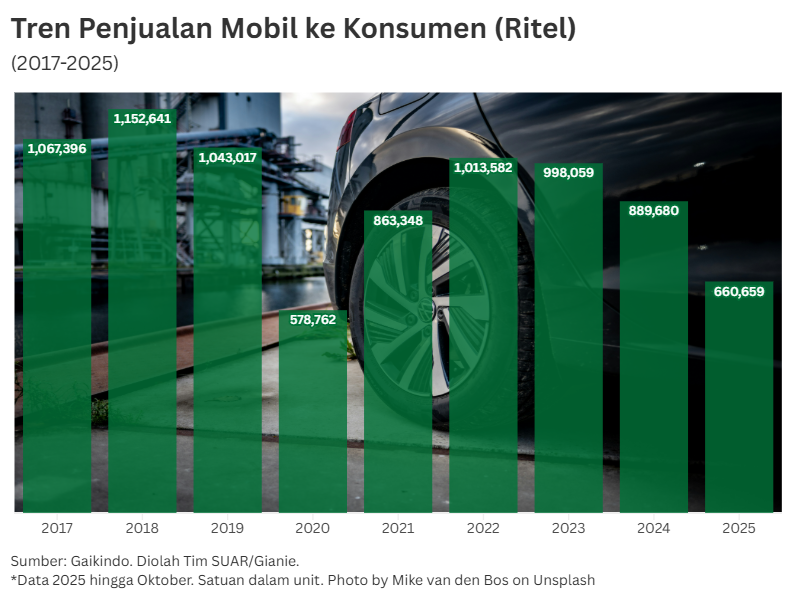
Cumulatively, national car sales from January to September 2025 were 561,820 units, down 11% from 630,754 units in the same period in 2024.
Meanwhile, national car sales in September 2025 were recorded at 62,071 units, a slight increase of 0.5% compared to August 2025 which amounted to 61,777 units.
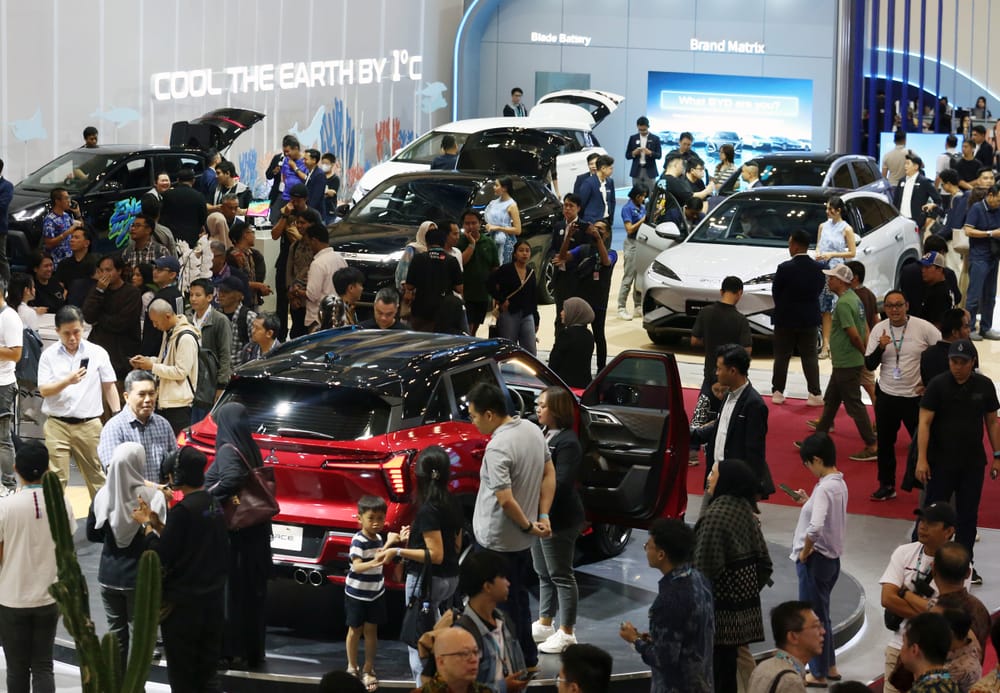
Kukuh said car sales have declined due to weak consumer purchasing power and a shift in consumer interest to new technology/electric cars.
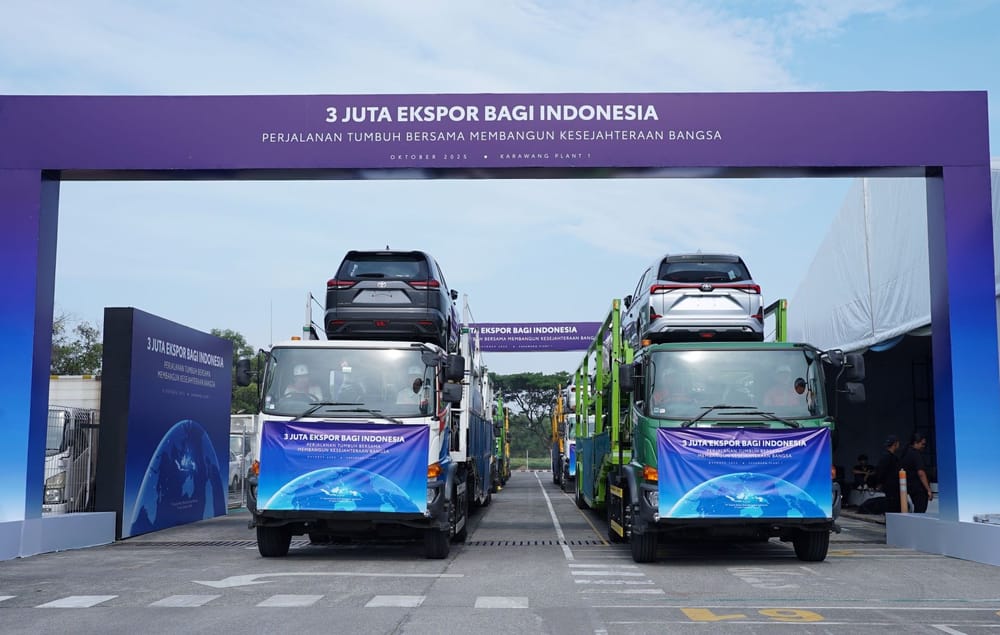
PT Toyota Motor Manufacturing Indonesia (TMMIN) noted that it has exported 3 million units of vehicles, which have been produced domestically since 1987.
Toyota Motor Corporation (TMC) President Koji Sato in his remarks at PT Toyota Motor Manufacturing Indonesia (TMMIN) Karawang Plant 1, Karawang, West Java, said this was proof of the nation's ability to penetrate and compete in the global market. "The achievement of three million units of vehicles is a reminder of Indonesia's capabilities, showing the quality of what we have produced here," he said as quoted from Antara, (13/10).
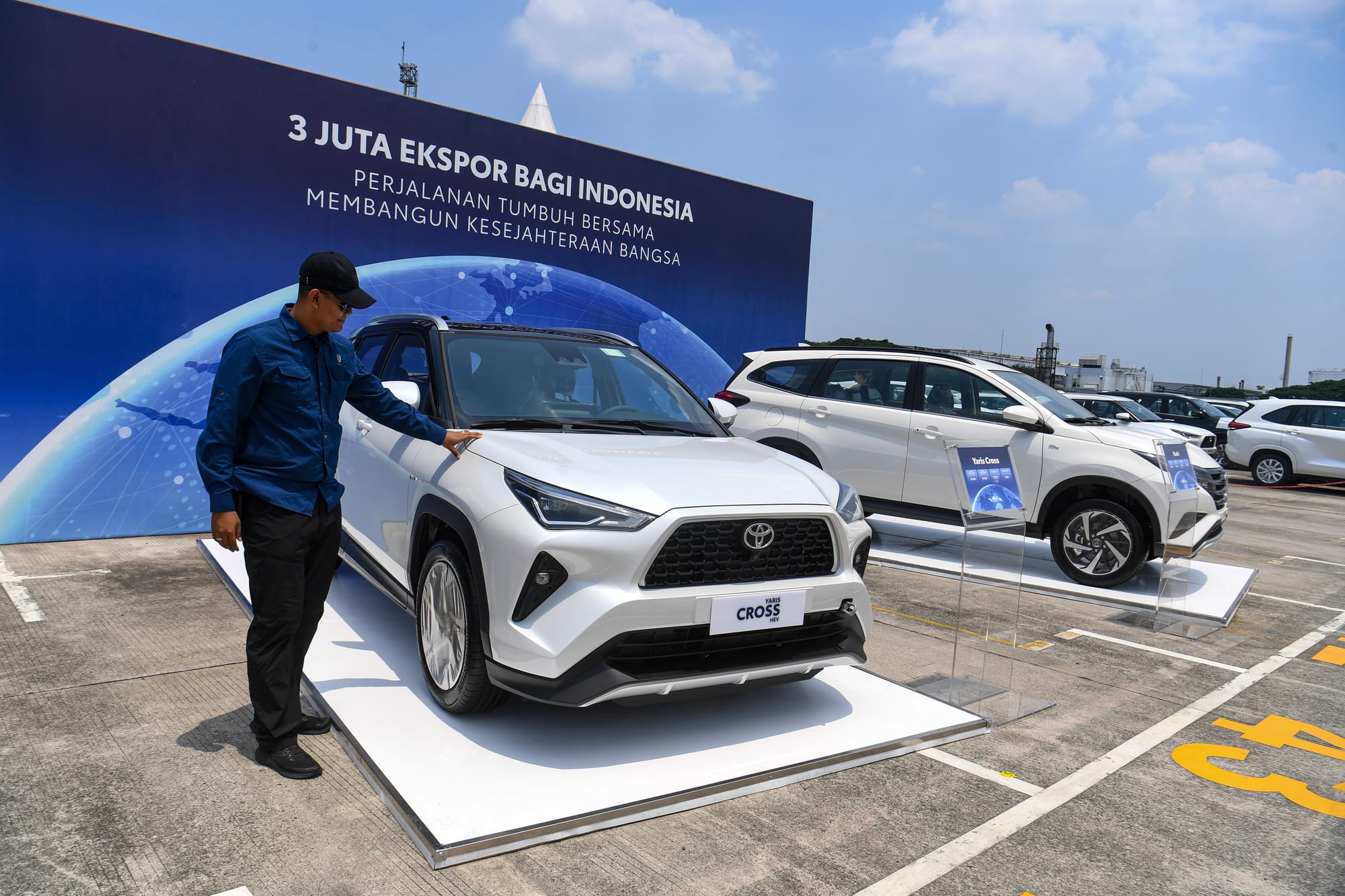
Sato also emphasized that this achievement was realized thanks to synergy with the government, industry partners, including a strong supply chain, and the support of the Indonesian people who consistently encourage the progress of the national automotive industry.
He hopes that the support of the government, partners and all stakeholders for their efforts and dedication for more than five decades will continue to go hand in hand with strengthening Indonesia's role in corporate research and development (R&D) and increasing exports even more. "Going forward, we will strengthen Indonesia's role as a research and development (R&D) and export center for the Global South," Sato said.
The export of Toyota Indonesia products began with the first shipment of the third generation Kijang to Brunei Darussalam in 1987. In 2004, Indonesia was trusted to be the production and export base for the Kijang Innova as part of the global model series, the Innovative International Multi-purpose Vehicle (IMV).
The number of destination countries and export volume is growing significantly, until in 2018 it reached an accumulation of 1 million units and in 2022 it reached an accumulation of 2 million units of whole vehicle exports.
Products that are popular among Indonesians also showed strong export performance. For example, the Avanza successfully penetrated the global market with a volume of more than 40,000 units per year, while affordable green vehicles (LCGC) such as the Agya recorded exports of more than 30,000 units per year.
Appreciated
The Ministry of Industry (Kemenperin) appreciates the achievement of the 3 millionth export of vehicles carried out by the Toyota Group in Indonesia.
These achievements are clear evidence of the resilience of Indonesia's manufacturing sector which continues to grow and be competitive in the global arena.
"Toyota Indonesia has become one of the driving forces of the national automotive industry with a major contribution to exports and employment. The success of breaking through exports of three million units is an important milestone that shows that our industrial structure is getting stronger and adaptive to the dynamics of the global economy," said Industry Minister Agus Gumiwang Kartasasmita in a statement received by SUAR in Jakarta (13/10).
Agus explained that the automotive sector has a large multiplier effect on the national economy. In 2024, the gross added value of the motor vehicle industry reached Rp180 trillion.
With a backward linkage of 2.07 and a forward linkage of 2.4, the industry is estimated to have an additional impact of IDR 804 trillion on the upstream and downstream sectors.
Toyota Indonesia has also fostered more than 700 supplier companies and absorbed more than 360 thousand workers. This is a tremendous contribution to the national economy.
The Minister of Industry hopes that Toyota Indonesia will continue to support the government's commitment to developing environmentally friendly vehicles and reducing carbon emissions. According to him, the initiative is part of the big agenda of industrial transformation towards sustainability.