
Investment in the creative economy sector (ekraf) recorded a big jump in the first semester of this year. The Ministry of Ecraf reported that investment realization from January to June 2025 reached Rp 90.12 trillion, up from Rp 64 trillion in the same period last year.
"This increase in investment reflects investor confidence in Indonesia's increasingly competitive ecraf ecosystem," said Minister of Ecraf Teuku Riefky in a working meeting with Commission VII of the House of Representatives, Thursday, (4/9/2025).
Singapore is the largest contributor to foreign investment with a value of nearly Rp 19 trillion. On the domestic side, Jakarta Province recorded a realization of around Rp 26 trillion, up from Rp 18 trillion in 2024. Referring to this trend, the Ministry of Ecraf is optimistic that the medium-term target of Rp 152 trillion-Rp 183 trillion by 2029 can be achieved.
In addition to investment, the government is also preparing other growth targets for the next five years. Ecraf's GDP contribution is targeted to increase from 5.69% in 2024 to 6.12% in 2029. Employment is also projected to increase from 26.5 million workers in 2024 to 27.7 million workers in 2029.
Creative industry exports
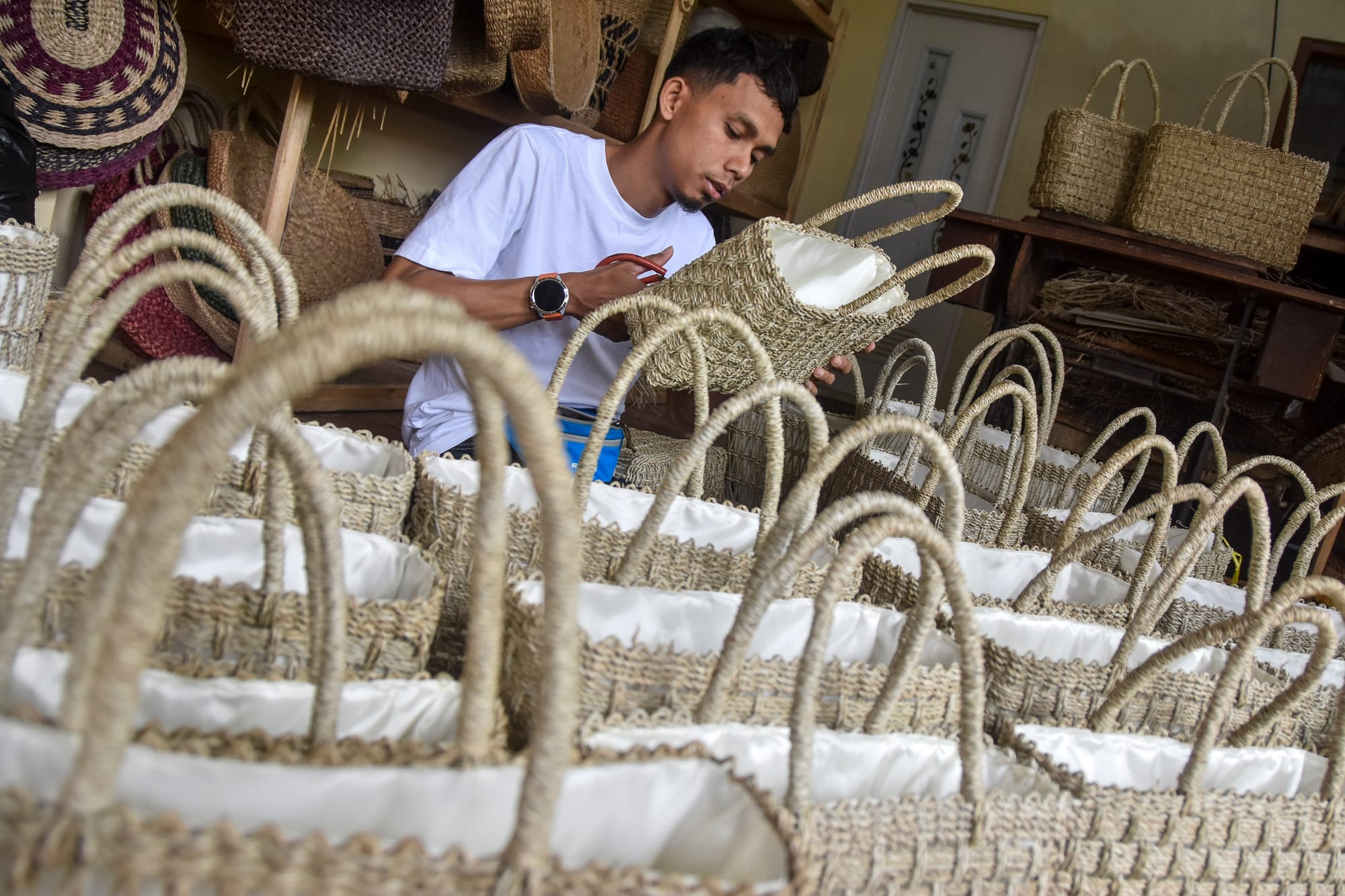
The export performance of the subsectors also showed positive results. Fashion was the main contributor with a value of more than US$7 billion. Then, it was followed by crafts that include furniture and handicrafts amounting to US$ 5.01 billion, and culinary with almost US$ 800 million.
Destination markets were more diverse, with shipments to Switzerland, Japan and the United Arab Emirates rising between 5% and 19%.
To maintain momentum, the Ministry of Ecraf proposed an additional budget of IDR 2.24 trillion to fund new programs. These initiatives include empowering creative villages, strengthening the craft and culinary industries for UMKM, and supporting local festivals. The House of Representatives has given in-principle approval with a note that the allocation of funds must really touch the creative industry players.
Similar optimism is also seen in export performance. Based on Customs data reprocessed by the Ministry of Ecraf, ecraf exports were recorded at US$ 25.1 billion in 2024, while in the first semester of 2025 it has reached US$ 13 billion and is projected to consistently increase to reach US$ 33 billion in 2029.
In terms of labor, the ecraf sector has absorbed 26.5 million workers in 2024. This figure is projected to increase steadily to 27.7 million workers by 2029.
Exports of the ecraf subsector in the first semester of 2025 were dominated by fashion worth US4 7.09 billion, crafts US$ 5.01 billion, and culinary reached US$ 767 million. Market diversification also began to strengthen. Shipments to Switzerland, Japan, and the United Arab Emirates increased from 5.7% to 19.14%.
Chairman of the Indonesian Furniture and Handicraft Industry Association (HIMKI), Abdul Sobur, said the data on craft exports is in line with field conditions. He noted that furniture and handicraft export growth in the first semester of 2025 was in the range of 7%-8%. "Although there is growth, pressure is still felt, especially from the US market, which absorbs more than half of our exports," he said.
Sobur explained that exports to Europe are still weak due to conflict and the post-pandemic slowdown. But new opportunities are seen in the Middle East, India and East Asia - where demand is growing.
According to him, the government needs to actively encourage producers to participate in international exhibitions so that market diversification does not stop on paper.
"The government needs to actively encourage producers to participate in international exhibitions so that market diversification does not stop on paper," said Sobur.
HIMKI is targeting furniture and handicraft exports to reach US$6 billion by 2030. The target is considered realistic, as global furniture consumption continues to grow along with the rising middle class in many countries. However, competition with large producers such as China and Vietnam remains a serious obstacle.
Sobur emphasized the importance of policies that better support industrial competitiveness. He highlighted the complicated export regulations and higher loan interest rates compared to competing countries. According to him, ease of procedures and access to low-cost financing will determine the ability of furniture and handicraft players to seize opportunities from the swift flow of ecraf investment.
The portion of low-cost financing available at present is considered limited and is mostly enjoyed by large companies. UMKM, which form the backbone of the craft subsector, often struggle to obtain credit at reasonable interest rates. Without such facilities, it is difficult for small and medium-sized players to increase production capacity and penetrate new export markets.
Market diversification is seen by HIMKI as an important step forward. Although the United States remains the main market, the association encourages its members to expand penetration into the Middle East, Japan, and India. This potential is increasingly open after Indonesia joined BRICS which can expand trade access.
Sobur also sees investment opportunities potentially shifting from Vietnam to Indonesia. Vietnam's capacity saturation has prompted investors to look for alternatives in the region. However, he cautions that this shift will not be quick, as it requires the construction of new production facilities as well as a ready-made workforce.
With these conditions, HIMKI hopes that the additional budget of Rp 2.24 trillion at the Ministry of Ecraf is really prioritized for programs that touch the needs of the industry. Support such as exhibition facilitation, certification incentives, and low-interest loans are considered to be more impactful than programs that are only for ceremonial purposes.
Yusuf Rendy Manilet, an economic researcher from the Center of Reform on Economics (CORE) Indonesia, believes that the realization of Rp 90.12 trillion in investment in the first semester of 2025 is a positive signal for the development of ekraf. According to him, the decision of investors to invest funds in challenging economic conditions shows that there is confidence in long-term returns.
Investors' decision to invest in a challenging economy shows their confidence in long-term returns.
"This is a good signal, we just have to see which subsectors the funds will go to," he said.
He highlighted three subsectors that are currently prominent. Namely, fashion, crafts including furniture, and culinary.
These products are considered unique and have a strong industrial base, making them more easily accepted by the global market. However, he cautioned that other subsectors also have the potential to provide large added value, although they are currently not as optimal as the three main subsectors.
Regarding equitable distribution of investment benefits, Yusuf reminded the need for cross-ministerial coordination. "The ecraf policy cannot stand alone, it must be linked to the policies of the ministries of UMKM, trade, and industry so that small actors can enter the export chain," he said.
Without such orchestration, he said, UMKM will continue to struggle to meet standards and obtain global certification.
According to Yusuf, the sustainability of investment flows will depend on the government's consistency in evaluating policies. Targets that have been achieved need to be improved, for example by expanding global market access. On the other hand, communication with businesses is key so that their needs are truly accommodated.
He added that the long-term prospects for ecraf are also supported by Indonesia's demographic capital. "With a large young population and massive internet usage, Indonesia has important capital to keep this positive trend going," he said.