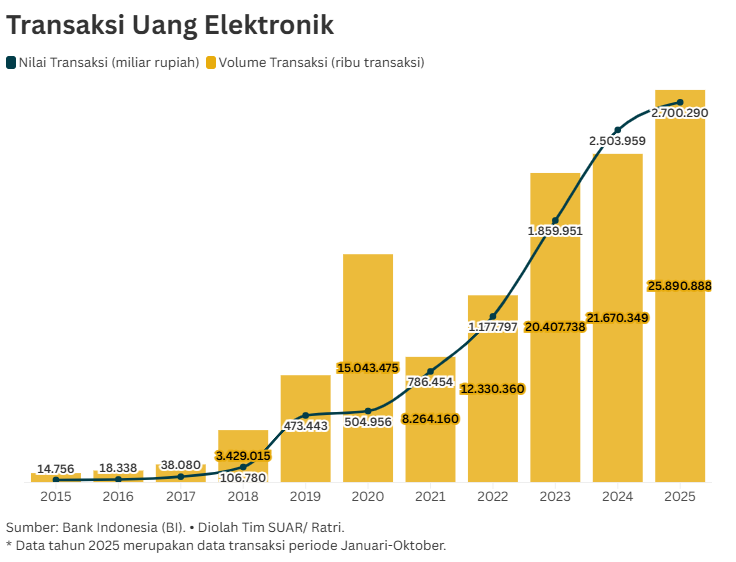
In the midst of a downward trend in people's purchasing power, electronic commerce or e-commerce is growing. In fact, the backbone of the digital economy is predicted to continue growing until 2030.
Digital transformation has indeed changed the way people consume goods through various digital technology device services. Thanks to the easy access to digital shopping, the level of public consumption is maintained amid the economic downturn.
Interestingly, this increase in e-commerce spending is driven by generation Z and millennials as the largest internet users (around 60%) in Indonesia (APJII, 2024).
Going forward, a strong digital ecosystem is key to increasing public consumption. To encourage millennials and gen Z to be more active in online shopping, the government and businesses need to collaborate to create a safe, convenient, and innovative market environment.
The Statista Market Insight report shows that revenue in Indonesia's e-commerce market is projected to reach USD $41.97 billion by 2025. The value is expected to continue to grow, with an annual growth rate (CAGR 2025-2030) of 7.75%, reaching USD $60.95 billion by 2030.
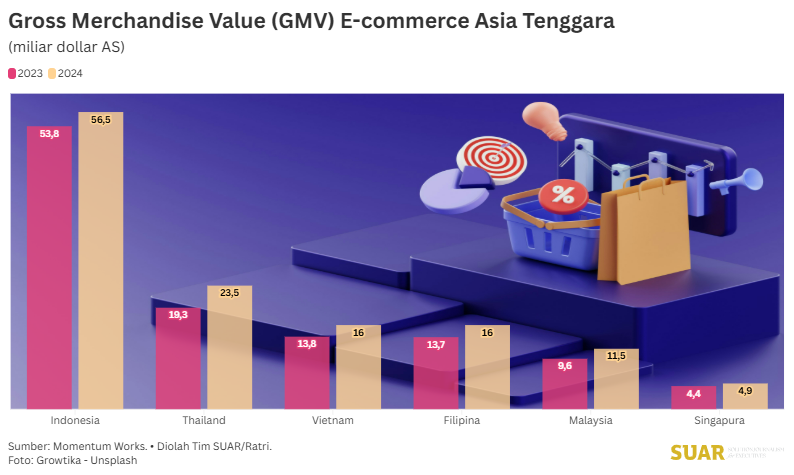
Momentum Works also reported Indonesia as the largest contributor to digital trade in Southeast Asia, reaching USD 56.5 billion or IDR 926 trillion at an exchange rate of IDR 16,400 per US dollar. This value increased compared to the previous year which amounted to 53.8 billion US dollars.
The large volume of this market shows the large potential that can be worked on. The UMN consulting and Kompas.com survey results reported by BPS also confirmed that e-commerce is the main channel for 66.09% of gen Z and millennials to shop. This proves the dominance of digital platforms in their consumption patterns. To maintain and increase these fantastic numbers, a strategy to attract consumers is essential.
Based on the GWI survey (Q2-2024), the biggest factor driving Indonesian consumers to complete online purchases is free shipping (52.9%), followed by customer reviews (51.0%), and coupons and discounts (50.0%). This shows that policies such as postage subsidies and discount programs are highly effective instruments.
Indonesia's economic stability depends, in part, on how the country manages the sources of economic drivers. For that, the government needs to build a conducive e-commerce ecosystem, supported by pro-consumer policies and digital literacy programs.
Of course, the government needs to collaborate with the private sector and the community. E-commerce is not just a trend, but a strategic solution to ensure the wheels of the economy continue to turn, driven by the dynamic purchasing power of millennials and gen Z.