

Towards the effective implementation of the Indonesia-European Union Comprehensive Economic Partnership Agreement (I-EU CEPA) on 1 January 2027, Indonesia still has two homework assignments to ensure maximum benefits from the economic agreement, namely improving regulations and optimizing infrastructure readiness. By utilizing the remaining time to the maximum, strategic steps are needed to ensure that both go in line with the original objectives.
Deputy Minister of Trade Dyah Roro Esti Widya Putri stated that the conclusion and signing of the I-EU CEPA after 9 years of negotiations took place at the right momentum amid an uncertain geopolitical situation. With trade volume reaching EUR 27.3 billion, increasing by 4.5% on average every year, Indonesia is targeting potential points for broader economic cooperation.
"I-EU CEPA is a toolbox for the European Union and Indonesia to overcome protectionism. This agreement will realize its full potential, especially renewable energy, sustainable agriculture and manufacturing, common standards, and harmonization of regulations that attract investment," said Dyah in a discussion in Jakarta, Tuesday (4/11/2025).
Regulatory harmonization, according to Dyah, is not only about technical issues such as licensing and dispute resolution, but also forming corridors that allow UMKM to have market access to Europe, as well as increasingpublic-private partnerships by ensuring that the private sector receives maximum benefits from cooperation.
"Such harmonized regulations will help Indonesia ensure economic and trade growth, while at the same time, ensuring that climate change mitigation and sustainability efforts do not become obstacles to the economic progress of both countries," Dyah concluded.
Milestones, not targets
Harmonization of regulations in accordance with the provisions of I-EU CEPA are steps that must be taken by the government in the remaining time, so that the effective implementation target can be achieved and the policy impact can be immediately felt by the business world.
However, Deputy Chairman for International Relations of the Indonesian Employers Association (Apindo) Didit Ratam noted that as good as I-EU CEPA is, it is not a panacea that can solve all problems completely. I-EU CEPA, according to him, is amilestone, but not the main goal.
"I-EU CEPA is an instrument to achieve the main target, which is to break the stagnation trend of Indonesia's exports to Europe, which for the last 5 years has only grown less than 10% per year. This reflects the experience of other ASEAN countries, FTAs can immediately boost exports and FDI performance significantly," Didit said.
For the EU, Indonesia has a very promising strategic base for investment: geographical centrality, regional trade access, a very large market, and a young productive workforce. However, to attract investment within the framework of CEPA, Didit emphasized three classic unsolved problems: infrastructure gap, high cost of economy, and policy predictability.
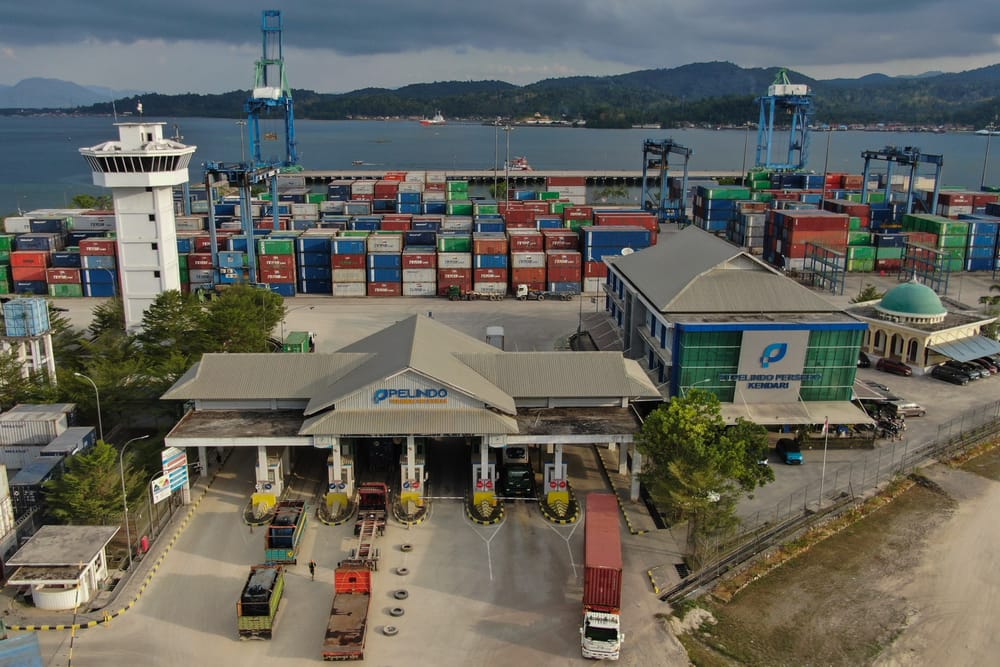
"Investment in infrastructure requires at least Rp10,300 trillion, while the state budget allocation is only Rp402 trillion per year. Logistics costs for doing business in Indonesia still reach 23% of GDP, ranging from facilities, excise, to fuel. Deregulation and import relaxation have not been structured as promised," he complained.
Discipline and standards
The need to harmonize regulations in line with the provisions of I-EU CEPA is the price that Indonesia must pay to obtain maximum benefits from the agreement. CSIS Indonesia Economics Department Researcher Dandy Rafitrandi detailed that the harmonization of rules in accordance with the provisions of I-EU CEPA pivots on two sides, namely the standard side and the discipline side.
On the standards side, Indonesia's responsibility is to ensure that there is a legal platform that regulates sustainability and product competitiveness simultaneously, and does not sacrifice one for the other. The standard also stipulates the need for transparency, non-discriminatory enforcement, and prevents protectionist attitudes.
Meanwhile, in terms of discipline, the availability of legal platforms needs to be accompanied by national product standards and certification schemes, as well as improvingtraceability of Indonesia's leading commodity products in accordance with the European Union Deforestation Regulation (EUDR).
Read also:
 Tria Dianti
"Both sides need to be implemented because Indonesia has strategic resources, but does not have enough technology to manage them. Therefore, the provision of zero tariffs for 'green products'(green goods), even though it has not yet received details, is Indonesia's handle to foster awareness of entrepreneurs, including UMKM," said Dandy.
If the regulatory climate is certain, according to Dandy, business awareness determines the success of I-EU CEPA follow-up. In this case, Indonesia can learn from the success of the EU-Vietnam Free Trade Agreement , which managed to increase export performance by 52% in the first year since the implementation of the rules.
"This cooperation is fundamentally strategic and promises benefits for both parties. The challenge lies in overcoming the nontariff barriers on both sides, while ensuring the awareness of the entrepreneurs to fulfill the stipulated provisions," he concluded.
Complementing Dandy's explanation, Pelita Harapan University Center for International Trade and Investment Director Michelle Limenta asserted that the objectives and arguments contained in the I-EU CEPA are very clear, namely promoting commodity processing and increasing added value in the country, while encouraging technology transfer and standards alignment.
"Our challenge is how to pursue development and pursue sustainability in harmony. If we commit to domestic value addition through responsible industrialization, the future of resilient supply chains, with added value and mutual benefits for both parties is not impossible," Michelle said.
The usefulness of I-EU CEPA is not only determined by the completeness of the contents of the agreement, but also Indonesia's ability to solve its own problems, including by streamlining domestic industrial infrastructure. Siemens Indonesia's Head of Digital Industries Mugi Harfianza explained that to address the infrastructure gap quickly, industrial digitalization and automation are no longer an option.
"Reflecting on our 170 years of experience, Siemens helps industries in Indonesia by reducing energy usage, improving product quality, and lowering production costs with innovations that ensure accurate and consistent asset data, as well as real-time collaboration between engineers and operators," said Mugi.
However, Mugi admits that there are various responses when discussing automation and digitalization, which depends on the extent to which businesses can identify pain points in their business, so as to know exactly what the obstacles are.
"When you can properly address these pain points, you can evaluate technology as more than just an expensive adoption. It is important to understand that this is not an instant one-day or two-day endeavor, but rather realizing a digital infrastructure ecosystem that is capable of sustaining sustainable goals," he stressed.