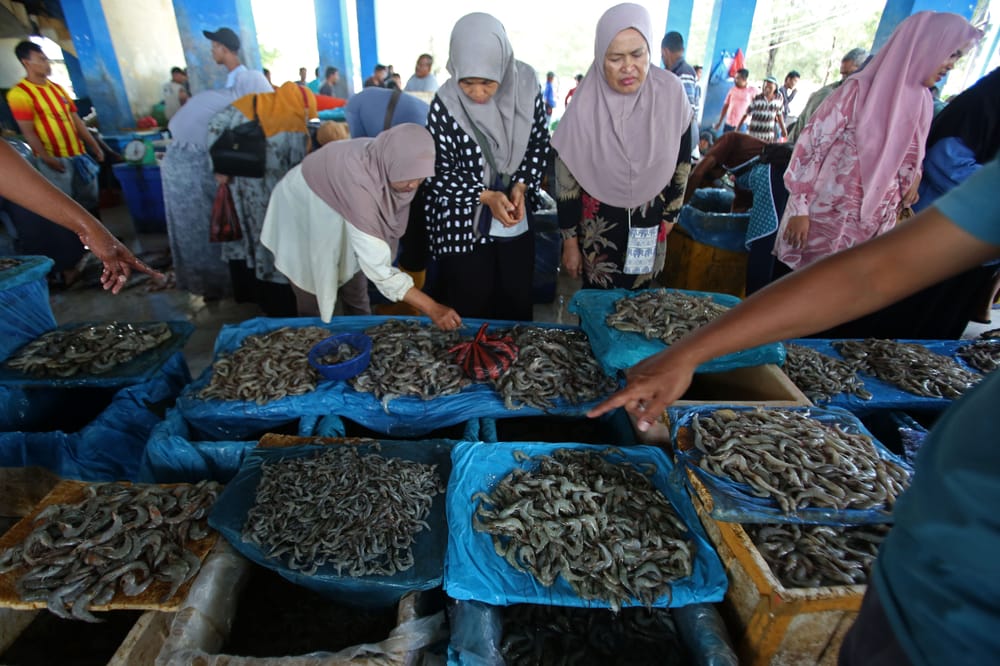

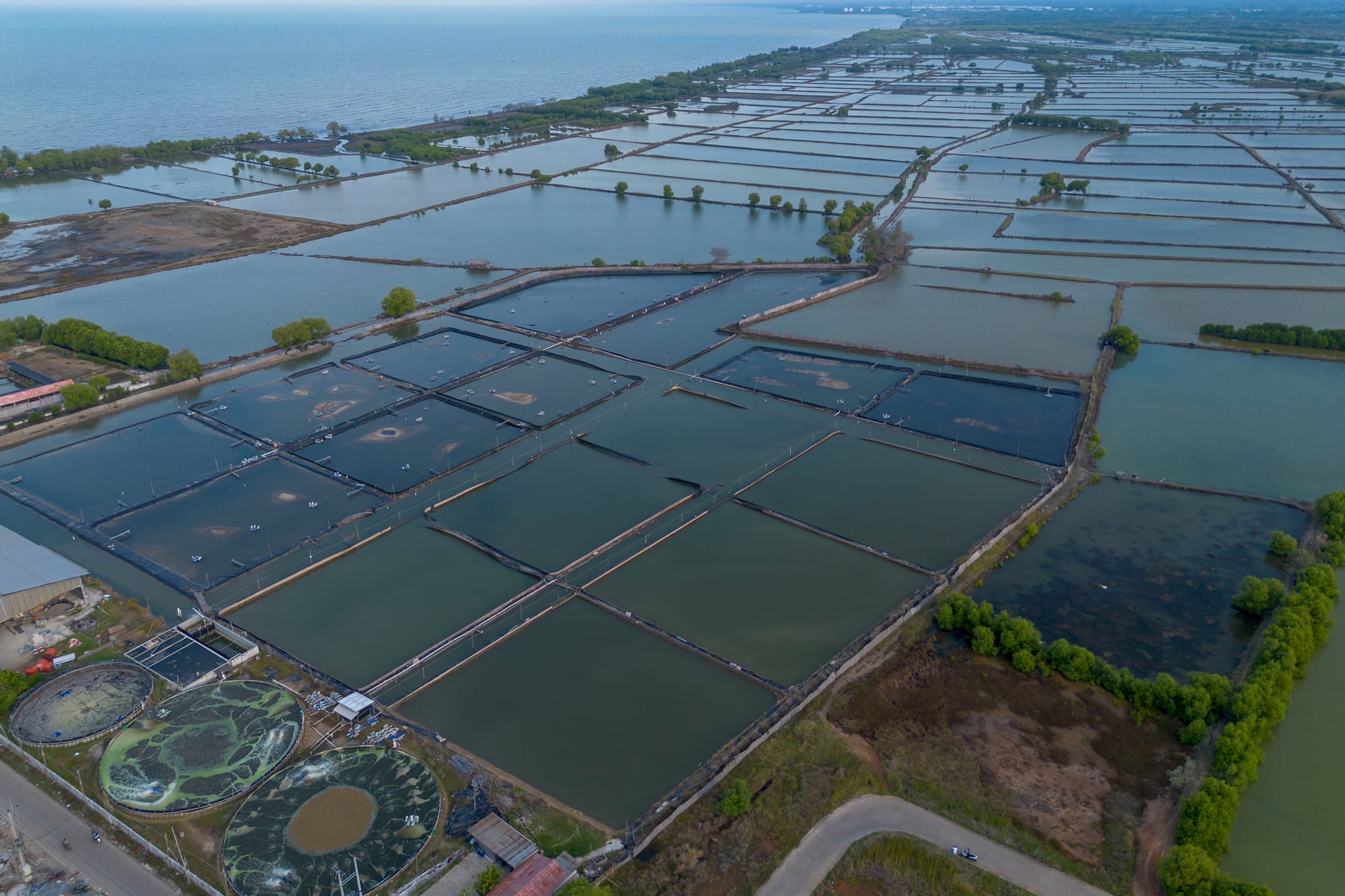
The North Coast (Pantura) area of Java will be vibrant again with productive fish ponds. People's ponds that have been neglected will be revitalized to boost the economy of people in coastal areas.
Interestingly, if the ponds were previously filled with shrimp and milkfish seedlings, now the farmers have a new superior product: tilapia fish.
The Ministry of Maritime Affairs and Fisheries (KKP) emphasized that this revitalization program reaches 78,550 hectares of ponds on the North Coast of Java. The goal is to increase the productivity of national aquaculture.
Director General of Aquaculture of KKP Tb Haeru Rahayu stated that the first phase will begin with the revitalization of 20,413.25 hectares of ponds in four regencies in West Java. They are Bekasi, Karawang, Indramayu, and Subang regencies.
The first phase of pond revitalization is a follow-up to the signing of a memorandum of agreement on the Synergy of Marine and Fisheries Management Based on Blue Economy in West Java Provincebetween the Minister of Maritime Affairs and Fisheries Sakti Trenggono and West Java Governor Dedi Mulyadi in Jakarta, August 25, 2025.
In detail, of the 20,413.25 hectares of the first phase revitalization area, 8,188.49 hectares of ponds are located in four districts in Bekasi; 6,979.51 hectares of ponds are located in five districts in Karawang; 2,369.76 hectares of ponds are located in four districts in Subang; and 2,875.48 hectares of ponds are located in five districts in Indramayu.
According to Haeru, with modern management, industry-based, and sustainable cultivation, the productivity of the ponds, which is currently only 1 ton-2 tons per year, can increase. "The commodity chosen is tilapia or saline tilapia," Haeru said in a written statement on the KKP website.
According to Haeru, tilapia was chosen as a massive aquaculture commodity because it has a high tolerance for brackish water, grows quickly, and cultivation techniques are relatively easy to master. In addition, the domestic and export markets for tilapia are also very open - although potential destination countries still need to be reviewed due to changing market trends.
Tilapia was chosen as a massive aquaculture commodity because it has a high tolerance to brackish water, grows quickly, and cultivation techniques are relatively easy to master.
Through this revitalization program, KKP targets to increase the productivity of aquaculture ponds to 144 tons per hectare per year. Currently, it is only 0.6 tons per hectare per year.
"We estimate that the production volume will reach 1.18 million tons with a production value of Rp 30.65 trillion, and create jobs for 119,100 people in the upstream and downstream sectors," he said.
The production volume is targeted to be achieved by relying on export-standard premium tilapia fish, with a harvest size of 1 kg per head.
In the future, with this increase in productivity, Indonesia is expected to be able to meet the demand of the blue food market which has increased significantly from US$ 270 billion in 2020 to US$ 420 billion dollars in 2030.
Learn the conditions
According to Sunaji, Head of Ambulu Village in Losari Subdistrict, Cirebon, in addition to increasing productivity levels, the government needs to pay attention to aspirations, community readiness, and other factors before cultivation begins.
This is because not all ponds on the Pantura coast have a suitable landscape for tilapia cultivation on a massive scale as planned by the government.
After all, Sunaji said, although Cirebon was not included in the first phase of the program, the advanced stage of revitalization is highly anticipated because it has great potential.
Ambulu village has long been known as a leading producer of milkfish and shrimp, with the "Bandeng Losari" brand being well known in the aquaculture market. However, the productivity of Ambulu's small ponds has declined due to tidal flooding.
"We used a very limited Village Fund to build a 1.2 kilometer long embankment because there was no certainty from the Ministry of Public Works. After the embankment was built, the water quality that dropped due to tidal flooding made us remodel milkfish and shrimp ponds into more profitable salt ponds," Sunaji said when contacted by SUAR, Tuesday (23/9/2025).
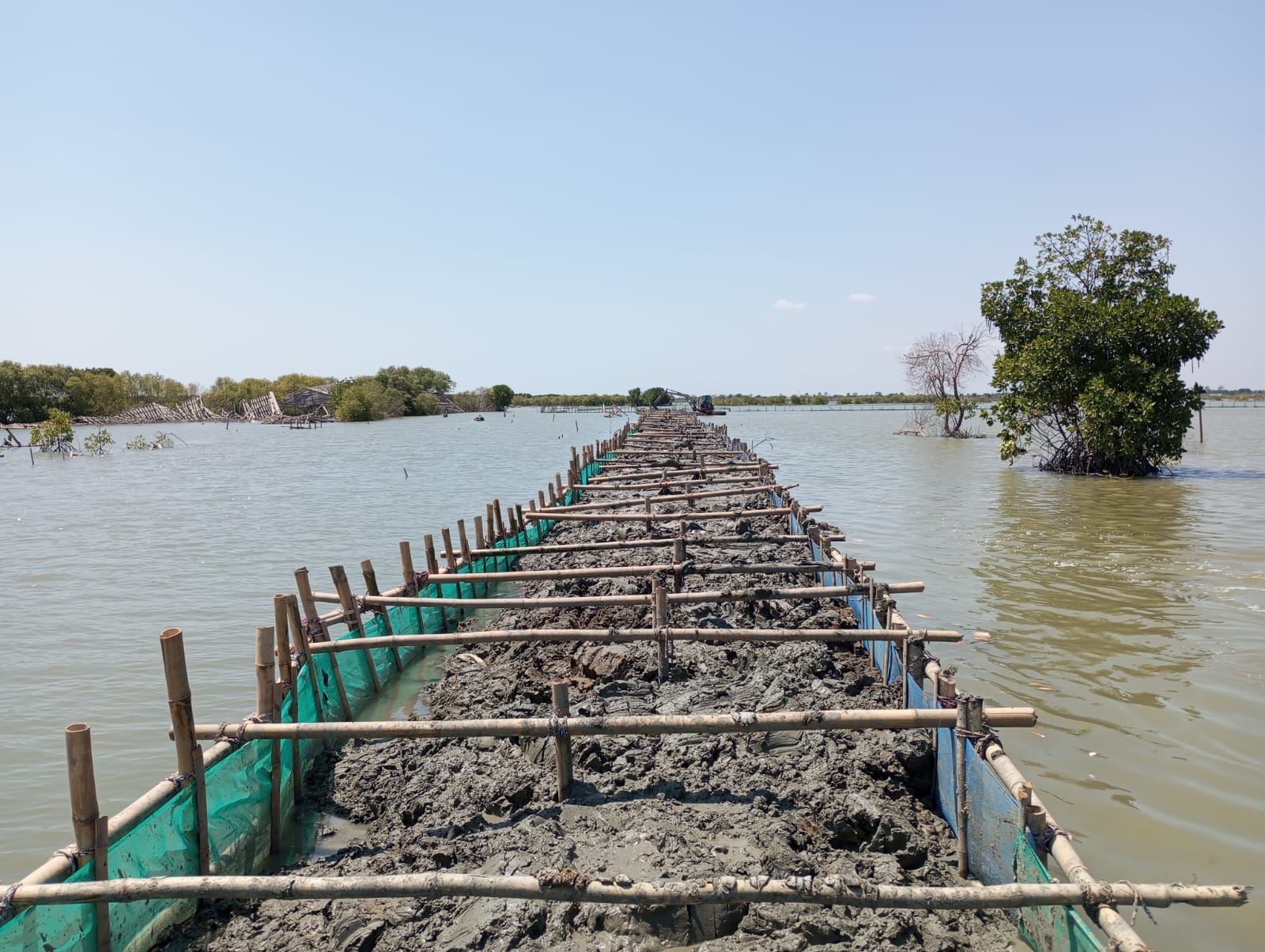
With all these limitations, Sunaji is committed to maximizing the opportunity of 800 hectares-900 hectares of ponds in his village to bring in investors who are willing to invest in the people's salt ponds that are currently underway.
Sunaji does not deny that climate change concerns have the potential to make coastal villages disappear. However, he said that his villagers were not too interested in the discourse and chose to move from the existing.
"The government's food security program has given us a new spirit, including spending our own funds to repair the dykes and rebuild the ponds. The commodity has changed to salt, not because we don't value milkfish, but salt is more profitable," he explained.
This week, Sunaji scheduled an audience with West Java Governor Dedi Mulyadi, and finalized the pond profiling with the help of a technical team from IPB and Bakrie University. Through this profiling , he expects investors to be more confident in mobilizing salt production in Ambulu Village.
"After we dam it ourselves, entrepreneurs or the government can use this pond. The important thing is that it is productive and beneficial for all," he concluded.
It doesn't have to be tilapia
However, the government needs to consider the landscape conditions of smallholder ponds in each region to more accurately map the ponds to be revitalized. The risk of loss due to massive cultivation without in-depth assessment also needs to be mitigated.
Member of Commission IV of the House of Representatives and Chairman of the Indonesian Aquaculture Society Rokhmin Dahuri warned that the projected failure of the first phase of 20,000 hectares of ponds is as big as the projected benefits that the government envisions. The potential failure can occur from both the demand and supply side.
Ecologically, Rokhmin underlined that the cultivation of one species of fish on a giant scale is at risk of causing an explosion of disease outbreaks as happened in tiger shrimp(Penaeus monodon) cultivation in Pantura, coastal South Sulawesi, and the eastern coast of Aceh in 1985-1993. The same is true for large-scale vaname shrimp farming in Lampung.
Rokhmin assessed that actually along the Pantura there are still several suitable cultivation species. Such as milkfish, mangrove crab, soka crab, mud grouper, in addition to tiger shrimp and vaname shrimp. "Cultivation techniques can also choose monoculture, polyculture, or silvo-fishery with mangrove forests," said Rokhmin when contacted by SUAR, Tuesday (23/9).
Meanwhile, from a market perspective, massive tilapia farming can create oversupply at harvest time, both in the domestic and export markets. This is because consumer tastes and preferences have not been fully tested in favor of tilapia from Indonesia. The volume of domestic and export uptake is also limited.
So, Rokhmin warned that not all Pantura ponds that will be revitalized should become tilapia farming centers. "It must be accompanied by several other suitable species. Maybe saline tilapia is enough for only 10,000 hectares. In addition, there needs to be socialization and promotion to find tilapia markets in the country and abroad," he explained.