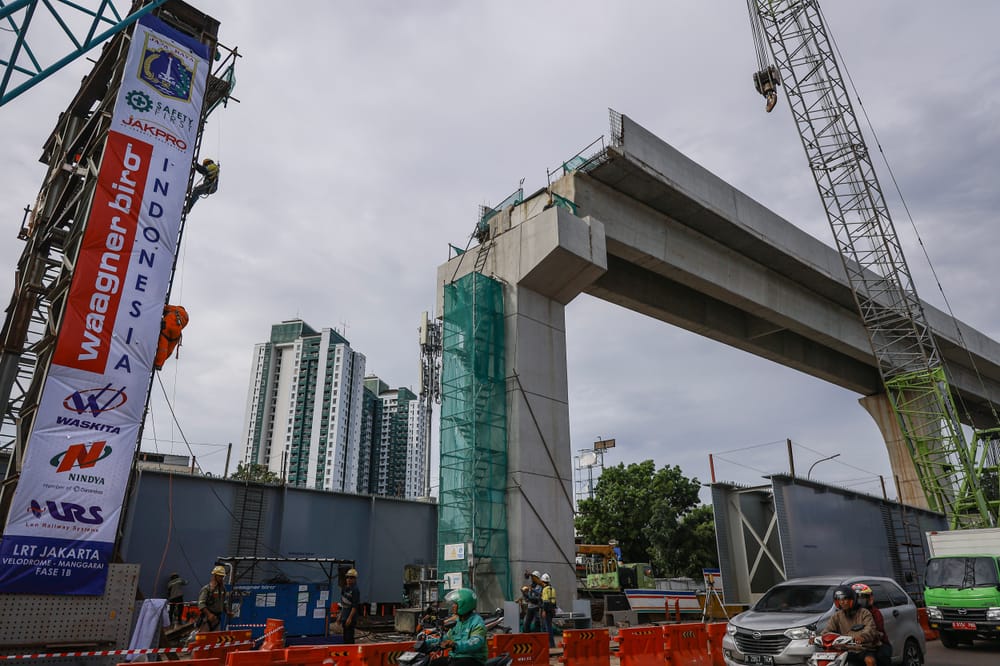

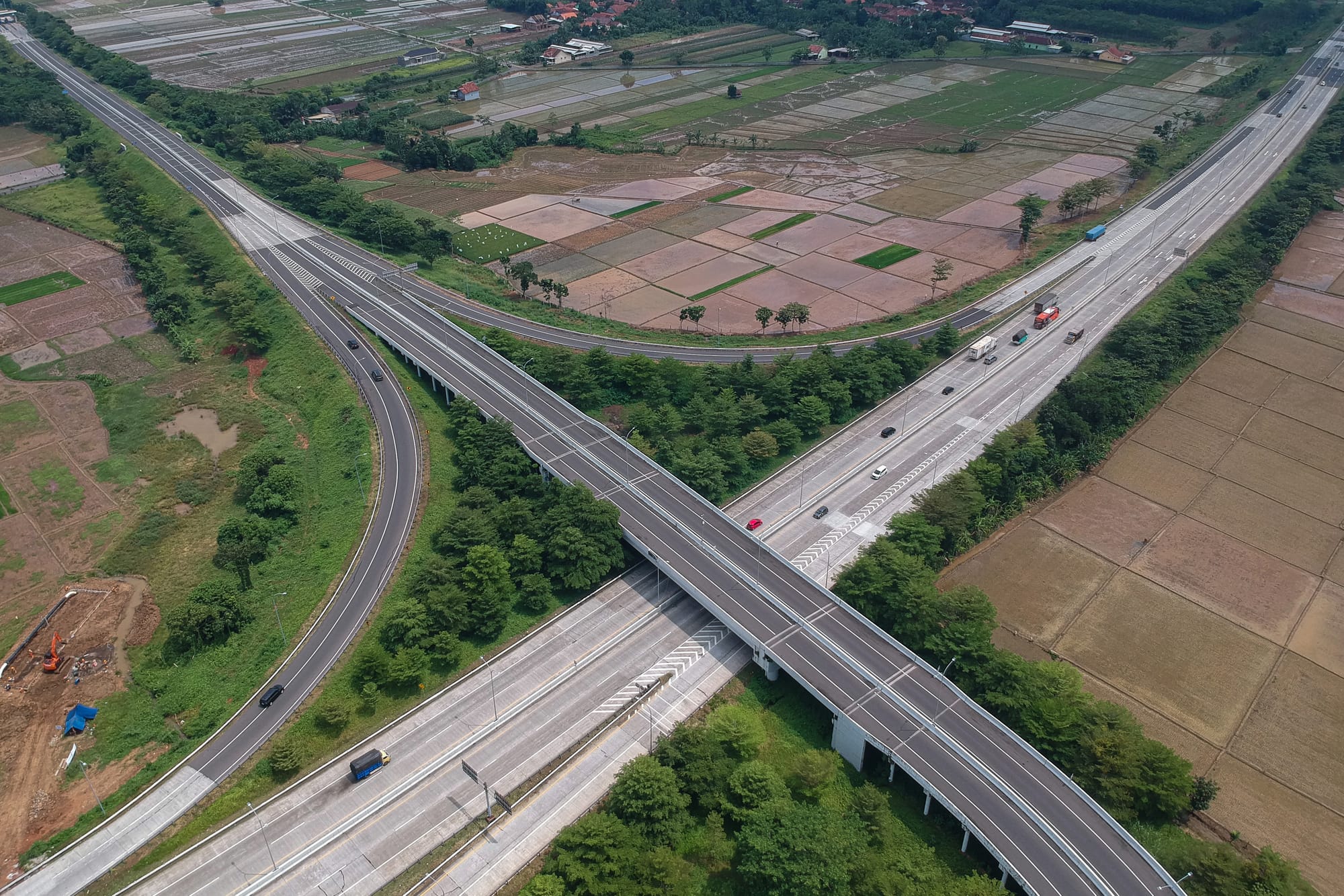
The government will prioritize more equitable infrastructure development across various regions amid ambitious targets to achieve 8% economic growth.
Several sectors that will be prioritized include achieving food security, energy security, and water security; improving human resources; strengthening connectivity; and environmental sustainability.
Coordinating Minister for Infrastructure and Regional Development Agus Harimurti Yudhoyono said that opening a single channel is needed to attract infrastructure investment and innovative financing.
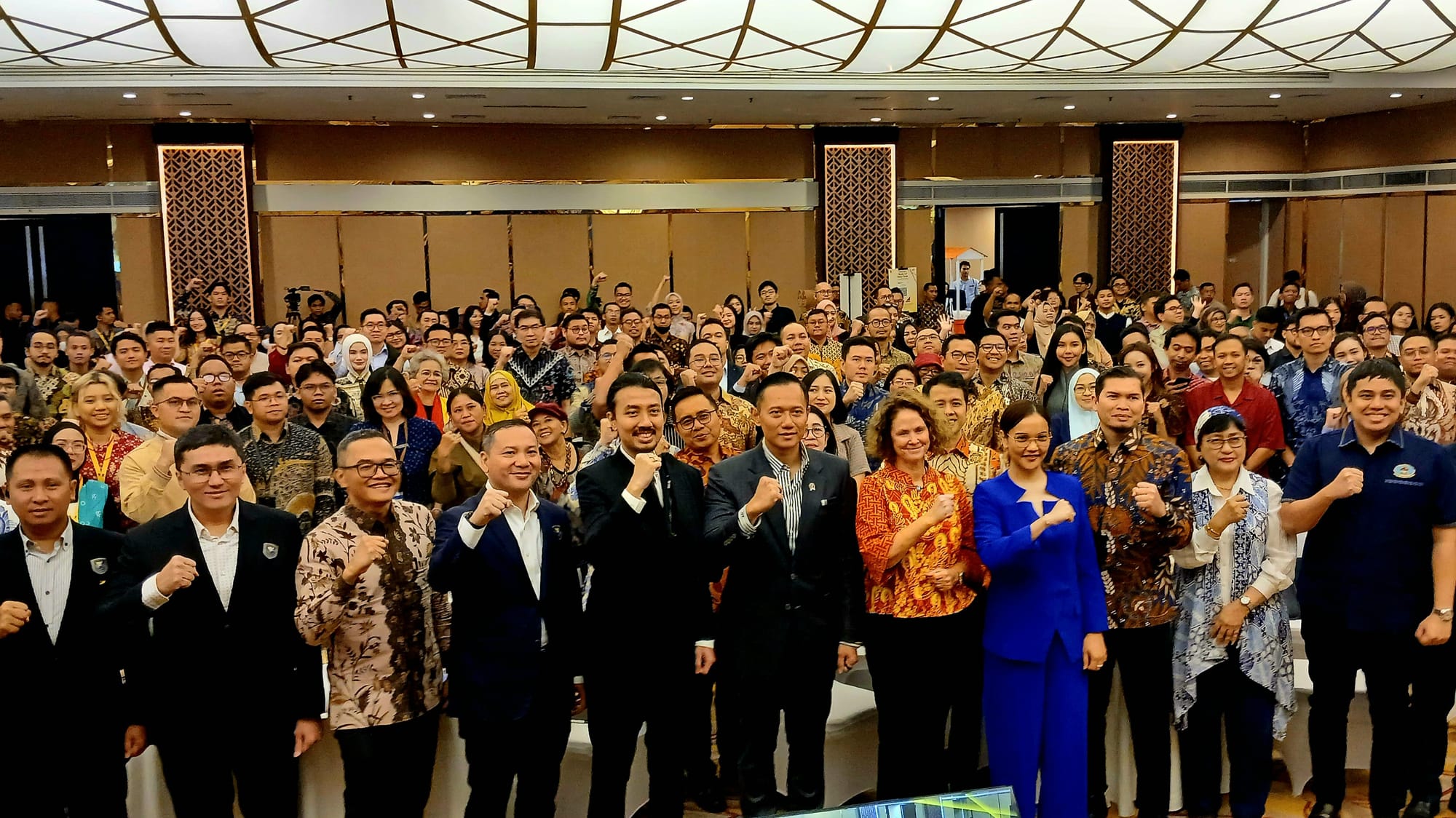
"Inclusion is an important multiplier in achieving 8% economic growth, but infrastructure connectivity is the foundation. Therefore, infrastructure needs to have a direct impact, and the measure of successful development is the change in the lives of the target community," said Agus during his keynote speech at the Balairung Dialogue 2025 in Jakarta on Tuesday (09/12/2025).
Agus said that his office learned from the floods and landslides in Aceh, North Sumatra, and West Sumatra that connectivity means everything. From there, the government is determined that infrastructure not only needs to be rebuilt, but built stronger and more resilient.
In terms of basic infrastructure, development is focused on food estates, dams and irrigation, and renewable power plants. In terms of human resource development, public schools are being built alongside public housing, sports facilities, and SPPG kitchens to provide free nutritious meals to all Indonesian children.
Stronger connectivity is being driven by the Ministry of Transportation, state-owned transportation companies, and Injourney. Meanwhile, the priority of environmentally sustainable infrastructure is manifested in Danantara's investment support for waste-to-energy projects and the construction of sea walls and coastal embankments in coastal cities in northern Java that are experiencing land subsidence.
"Our synergy is not only about infrastructure, but also about creating equitable and balanced regional development. Dialogue is the best way to formulate impactful development strategies, with infrastructure as the foundation and inclusion as the multiplier," Agus concluded.

To ensure that these four priority objectives are achieved simultaneously, Deputy for Basic Infrastructure Coordination Rachmat Kaimuddin has confirmed that the government will abandon the "build and forget" approach.
Every infrastructure development project will be thoroughly examined in terms of its impact on improving people's living standards, not just in terms of budget absorption and the number of projects completed.
"I emphasized to the technical ministries that I do not want to see the number of development projects as output, but rather as outcome. I do not want to see how many cubic meters of storage capacity there is, but rather how many hectares can be harvested and stored. It is not how long the irrigation system is, but rather how much the harvest has increased because of the irrigation system," explained Rachmat.
Pursuing a threefold increase in infrastructure investment, the Coordinating Ministry for Infrastructure inaugurated the Infrastructure Project Facility Office ( IPFO) on October 22, 2025, as a means for the government to facilitate private infrastructure investment. In addition to compiling a catalog of projects planned by the government, the IPFO also serves as a one-stop service for investors interested in financing development.
"IPFO brings together our infrastructure needs and the private sector, and hopefully opens up a space for dialogue to address the problems experienced by investors in the field. Our plan, if there is time, is to hold a mini forum on private participation in government infrastructure development," concluded Rachmat.
Reducing risk
Although opportunities for private participation are open in financing government infrastructure projects, Senior Investment Director Danantara Sunata Tjiterosampurna reminds us that there are three aspects that investors pay close attention to in an infrastructure project, including the waste-to-energy project that Danantara is preparing in 32 cities/districts throughout Indonesia.
"First, the certainty of cash flow from the offtaker, which will determine bankability and sustainability. Second, risk allocation. Who should bear the risk and the percentage of funds provided by investors, banks, and public funds. Third, regulatory certainty, because infrastructure development will only yield returns in the long term," he said.
Sharing his views with Sunata, Director of Public Financing and Project Development at Sarana Multi Infrastruktur (SMI), Faaris Pranawa revealed that one of SMI's studies found that if infrastructure development acceleration relies on budgets sourced from TKD and local revenue, it would take 34 years for a region to complete all of its current targets.
Faaris explained that SMI's research findings linked the extent of regional dependence on TKD, in addition to cash flow issues, risk allocation, and legal certainty in the division of responsibilities between the government and the private sector. SMI, as a development finance institution, was mandated to provide financing for projects, accompanied by technical assistance for planning and risk management.
"We take the risk of covering the government's share so that the private sector can feel more comfortable entering the project. For example, Trans Sumatra. We first entered as lenders because no banks were willing to participate. The same applies to geothermal energy, where if exploration fails, we will take 50% of the risk. Currently, SMI's portfolio accounts for 14% of the financing for all renewable energy projects in Indonesia," explained Faaris.
According to Faaris, innovation is key to making public infrastructure projects attractive to the private sector. Therefore, even though SMI is ready to step in to mitigate risks, local governments must also be proactive in seeking financing from market instruments outside of central government transfers. SMI plays a role as a catalyst and support, while the engine of growth remains with local governments.
"We have several ways to mitigate infrastructure project risks. Of course, the first is to have resources that can be disbursed. We also prepare the equity portion of the project, support project owners by issuing guaranteed holding bonds, as well as channeling grants. All of this is aimed at increasing the bankability of a project," he concluded.
Green projects are riskier
The need for safety buffers to mitigate the risks of public infrastructure projects cannot be separated from the characteristics of infrastructure development, which increasingly requires attention to environmental aspects. However, according to Bank Permata Chief Economist Josua Pardede, "green" projects are relatively uncertain and cannot be borne by banks alone.
"There needs to be a guarantee scheme and alternative financing so that banks not only optimize'brown' projects, but also boost the green economy through syndicated financing and liquidity incentives, in addition to increasing the profitability of the infrastructure portfolio itself," explained Josua.
By diversifying financing methods, the government is more focused on ensuring that the ultimate goal of promoting green infrastructure financing is not only to reduce carbon emissions, but also to create new sources of growth that can drive 8% economic growth.
"There needs to be clear and measurable security and law enforcement ( SLE). Vietnam, which has successfully financed its digital infrastructure from the private sector, has appropriate and timely law enforcement. The OSS prepared by the government through PP 28/2025 must also be followed by a sandbox that can accelerate innovation, without neglecting the principle of prudence in the financing mechanism," he concluded.