"The automotive industry is complex," said General Secretary of the Indonesian Automotive Industry Association (Gaikindo), Kukuh Kumara. He explained that one car consists of around 30,000 components, and thousands of manufacturers who make them in Indonesia. The automotive sector is a capital-intensive and labor-intensive industry.
So, when economic conditions are depressed, people's purchasing power weakens, and consequently car sales fall, the impact can be everywhere. Surprisingly, last year Indonesia only sold 865,000 cars, while Malaysia sold 816,000.
This is despite Indonesia's population of 280 million, four times that of Malaysia's 34 million. Car sales in Malaysia can soar because the government has incentivized the automotive industry since the pandemic. Meanwhile in Indonesia, incentives only run for two years, 2021-2023. "That's what makes it harder for us to compete," said Kukuh.
The government has indeed provided incentives for the automotive industry. Such as the relaxation program of the Government Borne Luxury Goods Sales Tax (PPnBM-DTP) for motor vehicles launched by the government in March 2021, and this effectively boosted the utilization of the national automotive industry amid a drastic decline during the Covid-19 pandemic.
"After the incentives were implemented, sales immediately increased, and the increase was not unmitigated. It was proven that with the PPnBM removed for a while, sales immediately increased," said Kukuh.
According to Kukuh, this stimulus aims to keep these factories running, including their component factories. "And, we have proven that government revenue has soared. I hope the government can think about that," said Kukuh.
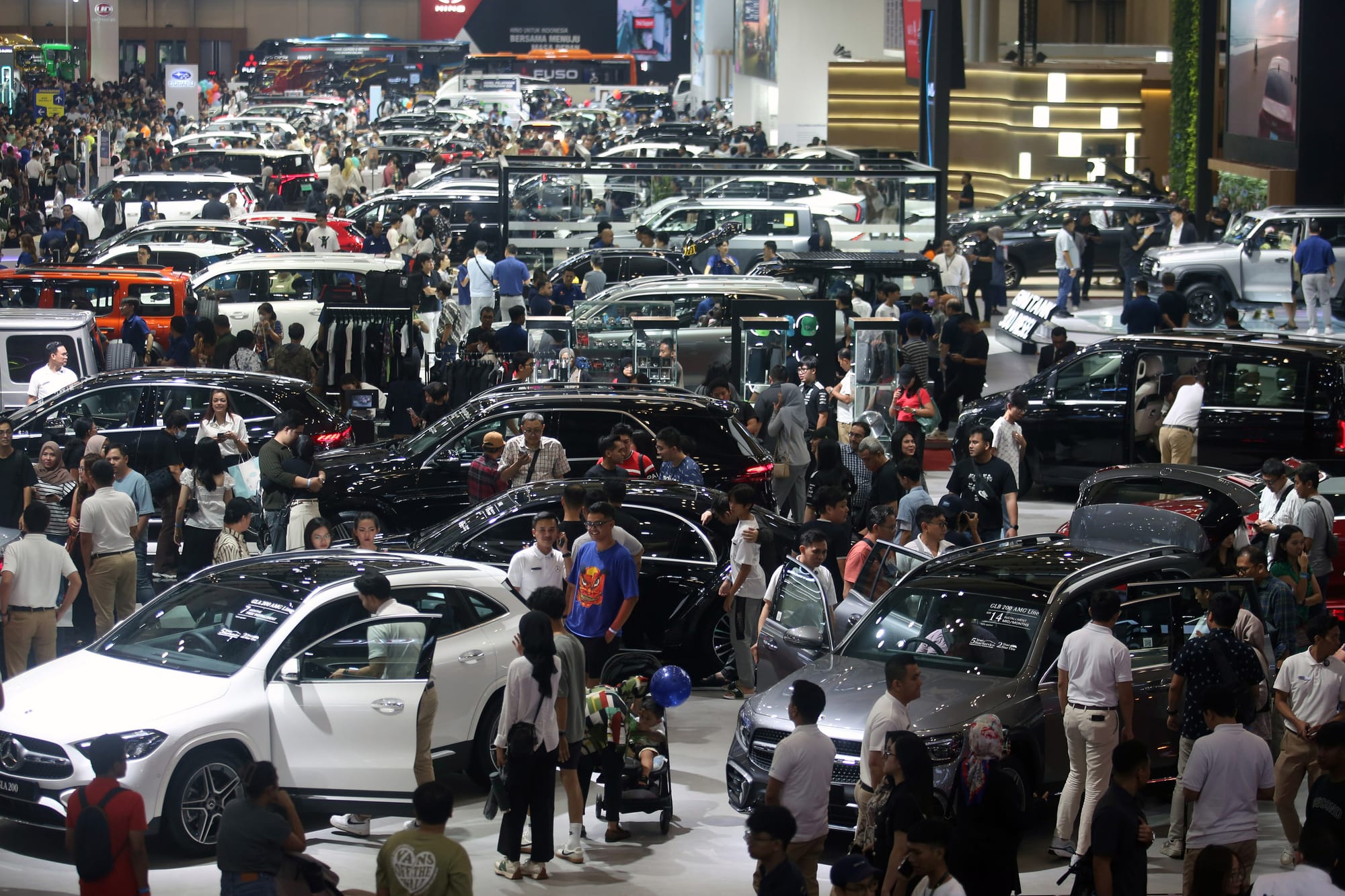
After only two years of existence, the incentive has since been abolished. Amidst the instability of the world's economic conditions, the automotive industry had to fight for itself. However, the struggle in the end has not been able to push back the passion of this industry.
Automotive factories in the country have laid off around 7,000 people because sales have not increased. This industry absorbs 1.5 million workers. If sales volume continues to decline, the industry will be disrupted, employment will decrease, and contribution to economic growth will weaken.
The main problem is purchasing power. Usually car sales can be above 1 million units per year, but now it is stagnant at 865,000.
The main problem is purchasing power. Usually car sales can be above 1 million units per year, but now they are stagnant at 865,000. The middle class, there are about 10 million people, its purchasing power has only increased by 3 percent, while the price of new cars has increased by 7.5 percent.

As a result, consumers are turning to used cars. The used car market now reaches more than 2 million units, which means that the new car industry is not growing and labor absorption is reduced.
"Therefore, in the short term, we still need incentives. In the long term, we need tax restructuring," said Kukuh.
Cars like the Avanza or Xenia have become a necessity for daily mobility, even used for online transportation services. Thus, this type of vehicle should no longer be classified as luxury goods subject to PPnBM.
Currently, the Avanza is produced in Indonesia, but the annual tax is Rp5 million. While in Malaysia it is only around Rp 500,000, and in Thailand it is even cheaper, around Rp 150,000. "This difference is clearly burdensome for our consumers," said Kukuh.
In addition, obstacles also come from raw materials. For example, Indonesia has steel mills and rubber processing plants, but the quality and price of the products do not meet the standards of the automotive industry. So, they still have to be imported. If they can be supplied domestically, the industry will be stronger.
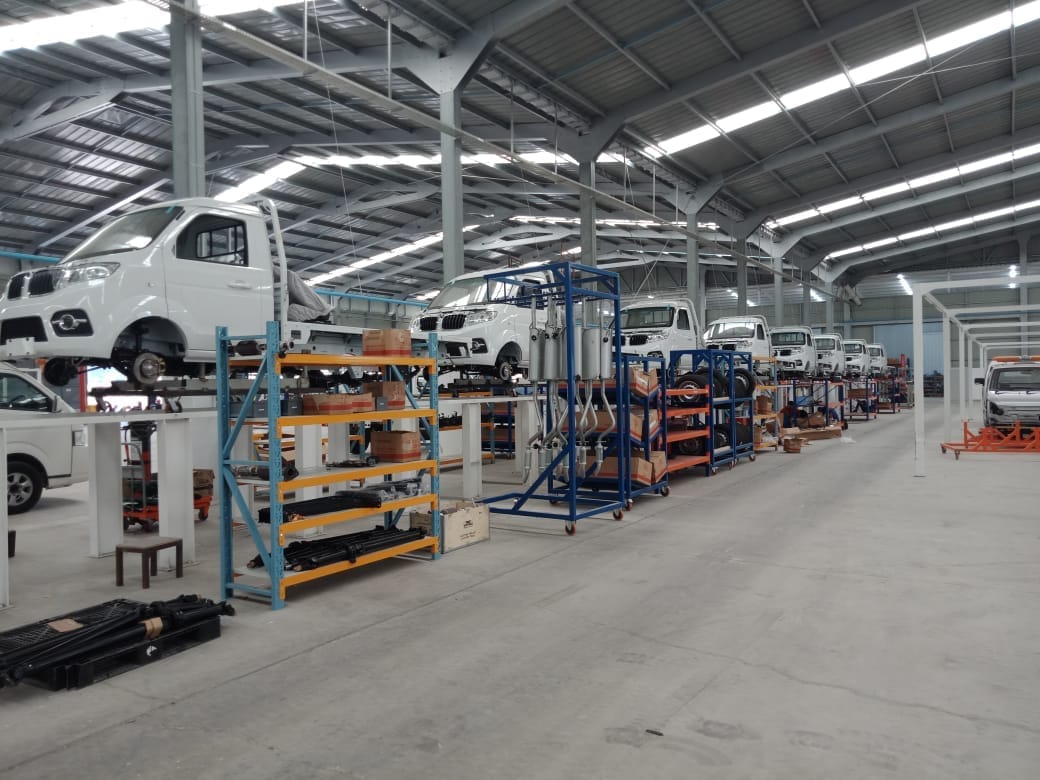
There is also the issue of legal certainty. Rules that change frequently disrupt the rhythm of the industry. "The automotive industry uses a just in time system. So, if even one component falters, production can stop and it is expensive to start again. That's what policymakers often don't understand," he said.
The point is, if people can be encouraged to buy new cars - not just used cars - the industry will grow. With a large population, Indonesia has the potential to produce 3 million units per year. "That will attract investors," said Kukuh. But it all comes back to policy support, incentives, raw material quality, and legal certainty.
Change the rules for balance
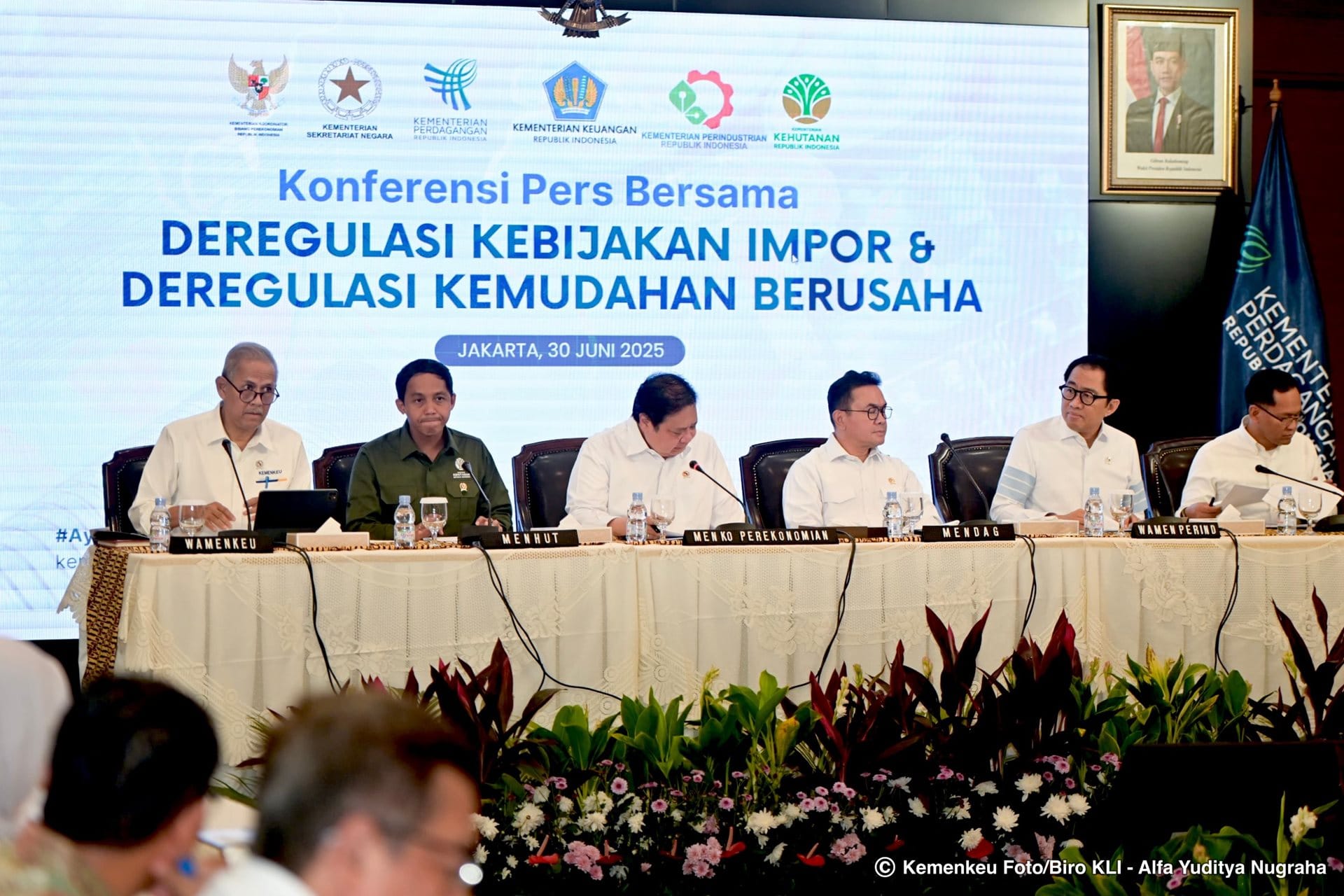
At the end of June 2025, the government began to make changes to the rules that aim to provide ease of doing business to business people in Indonesia. One of them is related to the simplification of import regulations.
With the Deregulation of Import Policy and Ease of Doing Business, the government, in this case the Ministry of Trade (Kemendag) revoked the Minister of Trade Regulation (Permendag) Number 36 of 2023 jo Number 8 of 2024, and replaced it with Permendag Number 16 of 2025 concerning Import Policy and Regulation.
In addition, the Ministry of Trade also issued a new regulation consisting of eight commodity clusters to facilitate changes, as the regulation is dynamic.
The eight clusters of regulations, in accordance with commodity clusters, are MOT 17/2025 on the Policy and Regulation of Imports of Textile and Textile Products; MOT 18/2025 on the Policy and Regulation of Imports of Agricultural and Livestock Goods; MOT 19/2025 on the Policy and Regulation of Imports of Salt and Fishery Commodities.
MOT 20/25 on the Policy and Regulation of Imports of Chemicals, Hazardous Materials, and Mining Materials. Furthermore, MOT 21/2025 on the Policy and Regulation of Imports of Electronic and Telematics Goods; MOT 22/2025 on the Policy and Regulation of Imports of Certain Industrial Goods.
Then, there is MOT 23/2025 on the Policy and Regulation of Imports of Consumer Goods; and MOT 24/2025 on the Policy and Regulation of Imports of Non-New Goods and Non-Hazardous and Toxic Waste.
Currently, the nine regulations are in the promulgation stage and will become effective 60 days after promulgation. The government is committed to continuously monitoring and evaluating the impact of these policies to ensure they are beneficial to the business world and the wider community.
Establishment of TKDN Deregulation Task Force
The government is also currently discussing deregulation regarding the obligation of the level of domestic content (TKDN). The government has also formed a special Deregulation Task Force on TKDN and discussed changing the format to be based on innovation and incentives, not just the mandatory percentage of domestic components, as part of an economic policy package to increase industrial flexibility and competitiveness.
This deregulation aims to make it easier for businesses to apply for TKDN certificates, speed up the process, and make it cheaper, as well as in response to the need for TKDN relaxation in negotiations with the United States.

This policy is also part of the negotiation strategy with the United States (US), which imposes reciprocal tariffs and requests TKDN exemptions for US products.
The government recognizes that rigid TKDN rules lack flexibility and may discourage investment by global technology companies that are not ready for the rules.
From the business side, Chairperson of the Indonesian Employers Association (Apindo) Shinta Kamdani stated that her party encourages rules that can emphasize balance. Because not all industries are ready to meet the high TKDN target, because the conditions of each sector are different. Some are ready, some are not.
Therefore, the government needs to create a roadmap so that the implementation of TKDN does not actually make it difficult for businesses, especially those that still depend on imported raw materials. "We support incentives for companies that can maximize TKDN, not just sanctions," he said.
Executive Director of the Indonesia Mining Association (IMA) Hendra Sinadia emphasized that from the perspective of business actors, deregulation should bring the spirit of simplifying rules that have been burdensome. If there are too many rules, it automatically increases business costs.
From the perspective of business actors, deregulation should bring the spirit of simplifying rules that have been burdensome. If there are too many rules, it automatically adds to business costs.
In fact, all sectors, whether energy, transportation, fisheries, plantations, or hotels, certainly hope that their operational costs can be reduced. "Therefore, deregulation is needed so that operational costs can fall," he said.
In the context of energy, he added, especially coal, which until now has contributed almost 70% to national electricity, deregulation will be very helpful. If the operational costs of coal companies can be reduced, profits can be maximized.
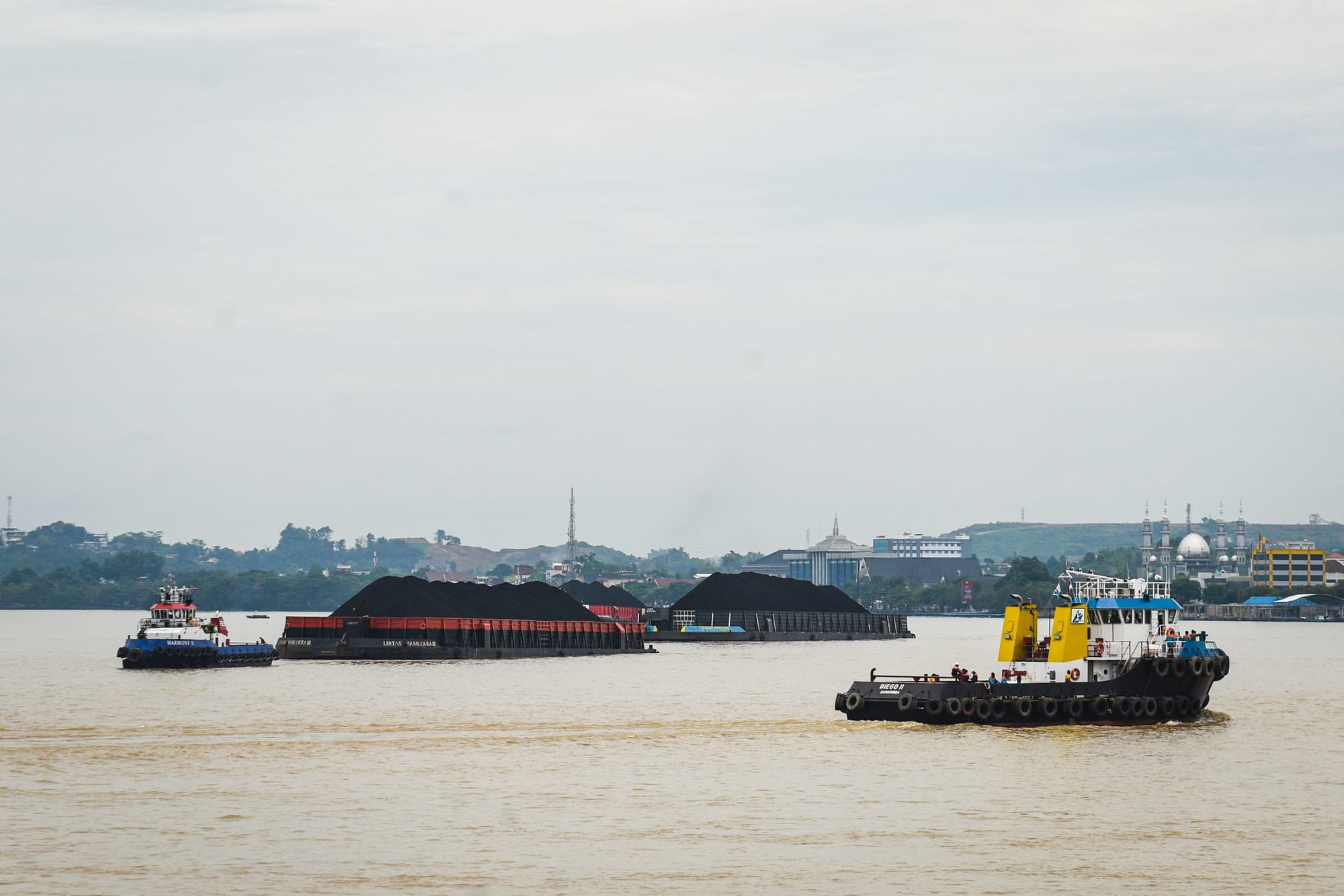
As a result, entrepreneurs in this sector can also pay more taxes, expand investment, buy equipment, and create new jobs. "So, deregulation ultimately contributes to economic growth," he said.
To make the investment climate in mining more credible, Hendra said, comprehensive deregulation is needed. For example, regulations regarding high royalties or the obligation to store DHE (foreign exchange export proceeds) make operational costs heavier. If these regulations are simplified, legal certainty is guaranteed, and costs are more competitive, then investors will be more interested in entering. If there are no significant changes, we will lose the competition.
Need to accelerate rule improvement
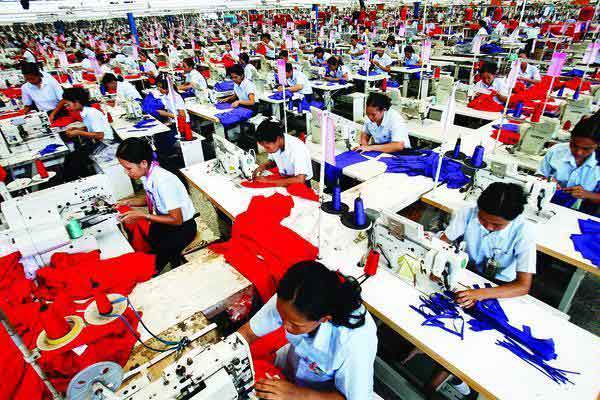
Vice CEO of PT Pan Brothers Tbk and Deputy Chairperson for Trade of the Indonesian Textile Association (API), Anne Patricia Sutanto, emphasized that the main challenge for industries such as textile and textile products (TPT) is licensing and regulation.
He said the government had begun to fix the rules, but the pace was still too slow compared to the needs of global competition. "Our competitors are not only fellow producers in Indonesia, but also Vietnam, Bangladesh, Cambodia, Myanmar, China, Turkey, and Egypt. They are more efficient because licensing is simpler and cheaper," he said.
Anne emphasized that the acceleration of regulatory simplification is an important requirement for the national textile industry to improve competitiveness. Deregulation will have a direct impact on lower production costs, which in turn will improve the free on board (FOB) value of Indonesia's export products. "If costs go down, we will automatically be more competitive. Market share can increase and free trade agreements can be optimally utilized," he said.
He assessed that without significant changes, Indonesia risks losing the momentum of economic diplomacy that has been carried out by the government. "If we are not competitive, how can we optimally utilize agreements with Europe, America, and RCEP?" he said.
For Anne, the biggest challenge for the textile industry is not the market, but the government's ability to create an efficient and competitive business climate. Without that, she said, Indonesia will only be able to maintain its existing position, even possibly losing market share.
Regarding the government's intention to deregulate, according to CSIS Head of Economic Department Riandy Laksono, so far several deregulations have only covered hundreds of HS Codes. Whereas the goods traded in the world are tens of thousands. So the government still has a long way to go.
President Prabowo and his administration need to accelerate this. Moreover, the potential for production relocation is still large due to the high tariffs imposed by the United States on China. "Indonesia should be able to attract factories from China for export to Europe, the Middle East, and other regions, not necessarily to the United States," he said.
He proposed that deregulation can be done in three main areas: trade deregulation, labor reform, and investment regulation improvement.
First, current labor regulations do not benefit anyone. Workers are not protected, while the private sector objects to the rigidity of the rules.
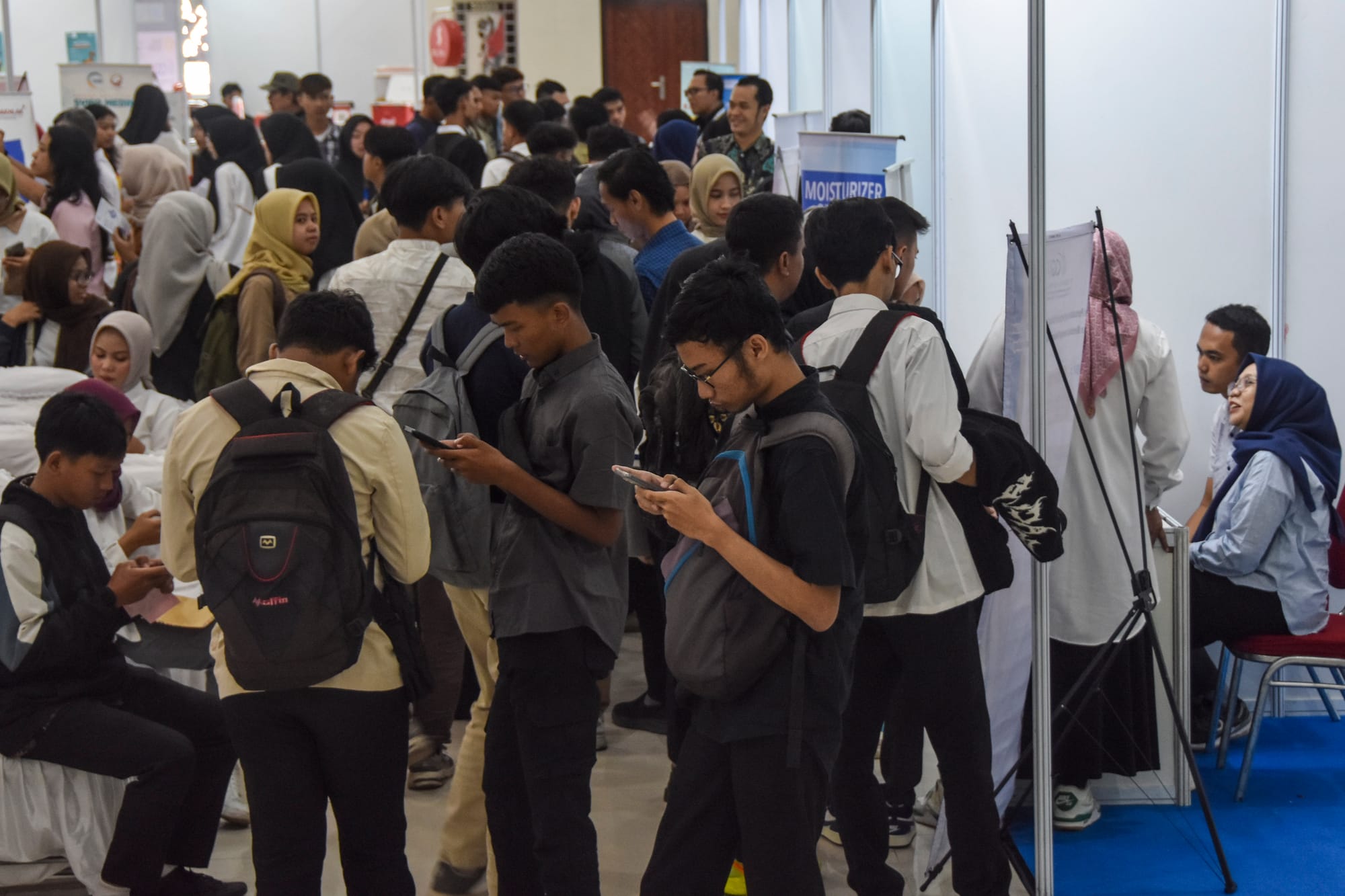
Compliance in paying the minimum wage is only below 40% severance pay for laid-off workers is only about 30%, and social protection is still low. On the other hand, the high minimum wage does not reflect real wages, so factories are reluctant to enter. As a result, employment opportunities in the country are lost. Therefore, labor reform is urgent.
Second, investment regulation. Legal certainty is a key factor. Investors from the US or Europe rarely enter because they demand certainty that we cannot offer. More investors from China, Hong Kong, or other Asia are used to dealing with uncertainty in developing countries.
If trade, labor, and investment regulations are improved, Indonesia can attract more factories, increase the number of formal workers, expand the tax base, and ultimately strengthen state revenue.
As a result, Indonesia's per capita investment is only around US$1,000, far behind Malaysia, Thailand or Vietnam which are twice to four times higher.
"If trade, labor, and investment regulations are improved, Indonesia can attract more factories, increase the number of formal workers, expand the tax base, and ultimately strengthen state revenues," he said.
Minister of Trade Budi Santoso, when confirmed by SUAR regarding the need for incentives and the expansion of simplification of these rules, admitted that the government is preparing it. "It is still being evaluated," he said.
Authors: Mukhlison, Harits Arrazie, Dian Amalia Ariani