
Amidst the prevalence of disasters, there is a growing awareness of the need to implement a green economy. Not only does it create an economy that is in harmony with environmental conservation, but the green economy also has two "engines" that can be optimized to drive economic growth by up to 8%. These two engines are investment in the green economy and the Indonesian carbon market.
Reducing greenhouse gas (GHG) and carbon dioxide (CO2) emissions from the atmosphere, also known as decarbonization, has become a goal for investors looking to invest capital in a country, including Indonesia.
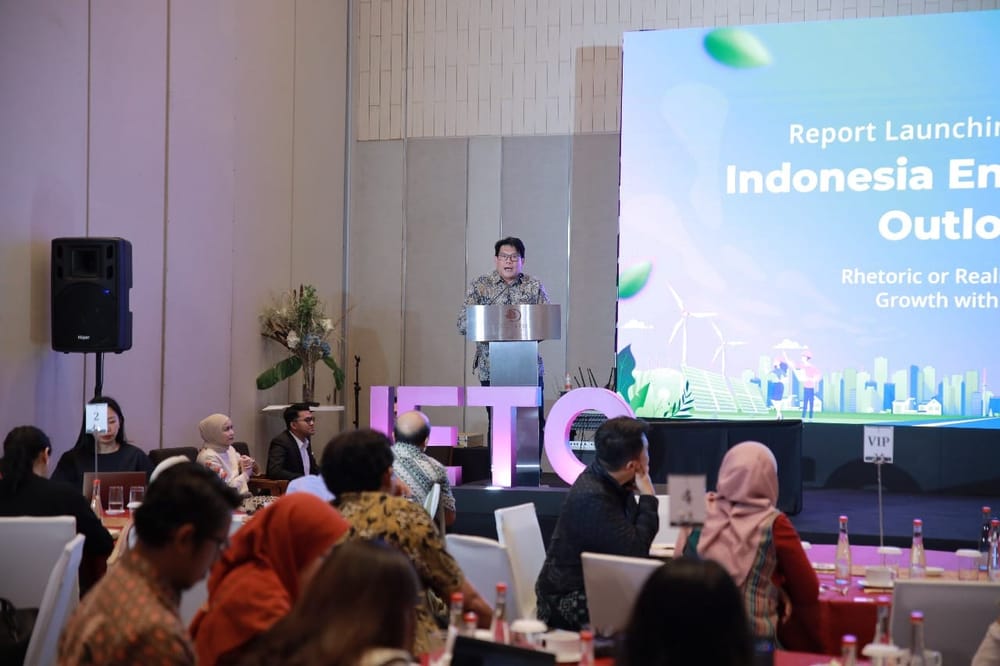
On Monday (12/15/2025), the National Economic Council stated that mitigating climate change from the perspective of manufacturing and carbon trading are two key strategies for Indonesia to increase its appeal to foreign investors who are more interested in the green economy.
This is being done to achieve economic growth of 8% by 2029.
The Chairman of the National Economic Council (DEN), Luhut Binsar Pandjaitan, said Indonesia needs USD 200-250 billion in investment per year to achieve this ambitious target.
"Indonesia's economic growth targets must not only be faster and more concrete, but also more inclusive and sustainable, taking into account climate change as an existential threat. We must find a balance between growth and sustainability for the sake of future generations," said Luhut in Jakarta on Monday (12/15/2025).
The economic consequences of climate change, Luhut emphasized, are spurring Indonesia to invest more in low-carbon and sustainable economic sectors. One of these is ensuring that carbon trading is more credible and fully in line with Indonesia's National Determined Contribution ( NDC) of 31.89% by 2030.
Developed countries look down on developing countries because they are often considered to lack transparency in carbon trading. It is important for us to formulate concrete plans to balance high growth and sustainability in order to gain and maintain international trust," he said.
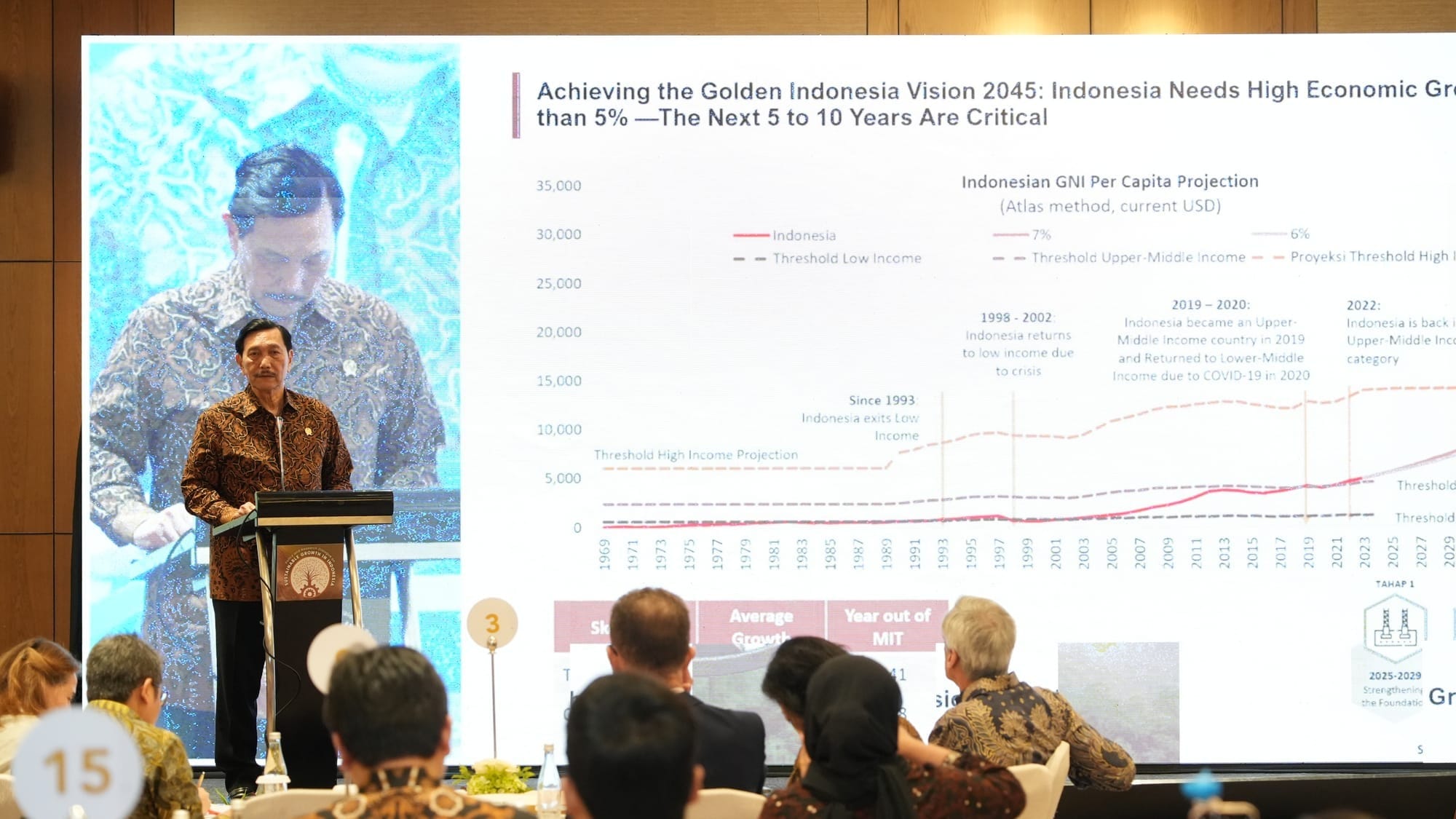
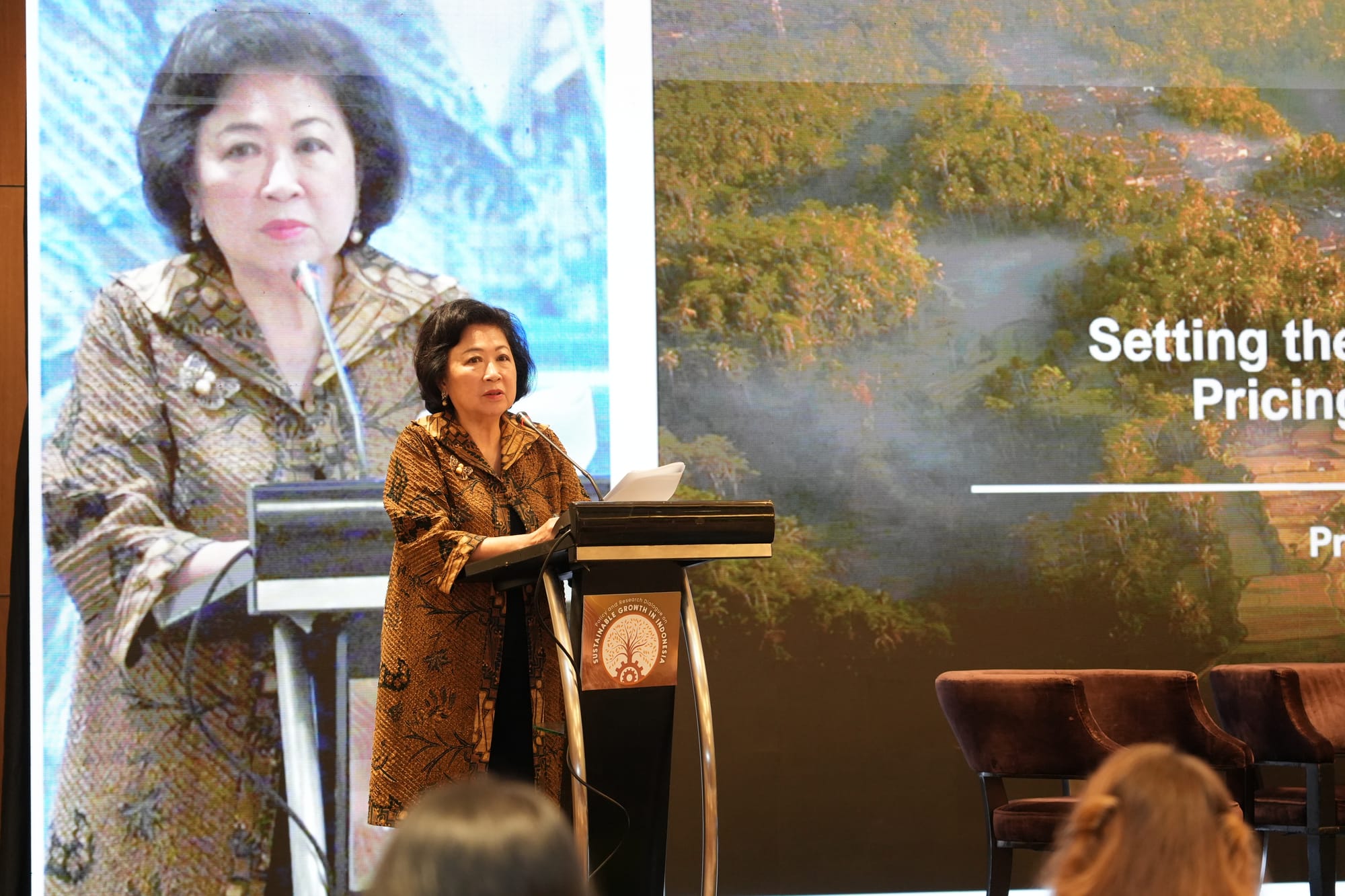
Supplementing Luhut's explanation, Deputy Chair of the National Economic Council Mari Elka Pangestu explained that Indonesia's structural problems, which are highly dependent on high-carbon industries such as coal mining, iron and steel, chemical products, cement, and so on, have made Indonesia the 8th largest emitter in the world, with greenhouse gases accounting for 43% of national carbon emissions.
Nevertheless, Mari stated that the economic opportunities in green growth are enormous. That is why DEN recommends that the government improve the competitiveness of low-carbon manufacturing industries while simultaneously strengthening green industries such as renewable energy, EVs, agroforestry, and green construction.
"This transition is essential to keep Indonesia competitive. Investors are increasingly demanding that supply chains meet green criteria. Investors are also increasingly curious about a country's track record and trajectory in implementing decarbonization based on holistic institutional reforms," he explained.
In addition to planning green product standards, the application of Carbon Economic Value (NEK) for various high-carbon commodities is one of Indonesia's efforts to implement a green growth strategy. However, NEK will only work effectively if it finds the optimal point: not too high and hitting industry players, but not too low to maintain the integrity of business actors in implementing it.
Currently, with NEK participation inthe compliance market reaching only Rp84-85 billion per year, Indonesia needs to take a comprehensive approach in developing a high-integrity carbon market in accordance with the mandate of Presidential Regulation No. 110 of 2025 concerning the Implementation of Carbon Economic Value Instruments (NEK) and National Greenhouse Gas (GHG) Emission Control.
"Carbon governance needs to be more decentralized with a national steering committee overseeing the entire ecosystem. By delegating sectoral carbon governance responsibilities, ministries are expected to implement a national carbon registry system that is interoperable, transparent, traceable, and of high quality," Mari concluded.
The ecosystem must be supportive
As a replacement for Presidential Regulation No. 98 of 2021, Senior Advisor to the Minister of Forestry Edo Mahendra said that Presidential Regulation 110/2025 changes the paradigm regarding NEK, which was previously considered residual, to become a key instrument for Indonesia in its efforts to achieve its NDC by 2030.
In addition, Presidential Regulation No. 110/2025 outlines the decentralization of carbon ecosystem management, emphasizing the role of technical ministries such as the Ministry of Energy and Mineral Resources, the Ministry of Industry, the Ministry of Forestry, the Ministry of Environment, the Ministry of Maritime Affairs and Fisheries, and the Ministry of Agriculture in handling carbon offsets in their respective fields.
"Decentralized governance in the carbon ecosystem emphasizes that ministries understand the magnitude of their sector's contribution to cumulative carbon emissions and its impact on NDCs. With this understanding, they are more responsible for optimization based on the characteristics of their respective sectors," he said.
Read also:
 Mukhlison Widodo
Although decentralized carbon governance requires ministries to be more accountable and has already regulated the carbon budget for each sector, Executive Director of the Indonesia Research Institute for Decarbonization (IRID) Kuki Soejachmoen emphasized that the absence of clear targets has prevented the formation of a domestic carbon supply and demand ecosystem.
Kuki emphasized that the main characteristics of compliance-based carbon trading are clear targets and carbon registration methods that comply with international standards. In Presidential Regulation 110/2025, these registration methods have been made possible and Indonesia is already on the right track.
"Therefore, with the right regulations in place, the challenge lies in implementation. We must ensure that any carbon transactions carried out do not result in overselling. Don't forget, the idea of decentralization requires agencies that truly understand carbon trading in its entirety," concluded Kuki.
Global interests
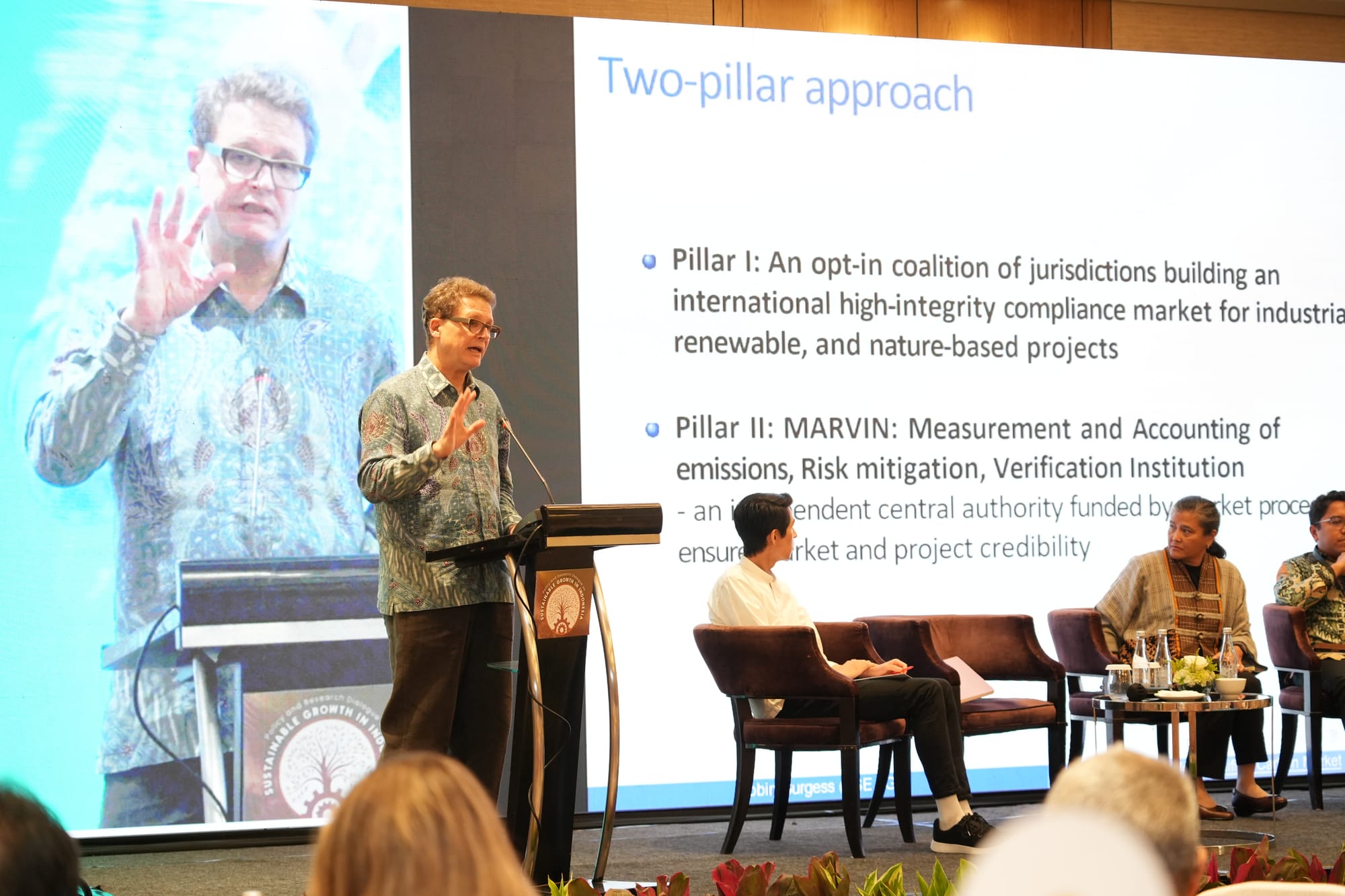
Indonesia's efforts to establish a highly credible domestic carbon trading system are not dissimilar to the experiences of other countries striving to implement the 2015 Paris Agreement. However, Professor Robin Burgess of the London School of Economics emphasizes that these efforts tend to be fragmented. In fact, the task of reducing carbon emissions is a global concern.
"A two-pillar approach is needed to ensure that this practice is not continued. At the international level, a cross-jurisdictional political coalition is needed to enable the formation of a single carbon market for nature-based and renewable projects. This coalition will be overseen by an independent committee within the country, primarily to ensure the credibility of traded carbon projects," he said.
This year, the world has 80 NEK instruments in more than 50 countries that collectively handle 28% of global GHG emissions. Various innovations in carbon trading practices have led to the creation of a green technology market. According to Burgess, Indonesia should enter this market and reap the benefits, including increased access to clean and affordable electricity.
"So many innovations have enabled electricity emissions to fall. Through global decarbonization with a single carbon market, advancing the credibility of carbon trading means opening up even greater investment. The key is to ensure that carbon projects are not excluded in the name of political interests," said Burgess.
Sharing Burgess's view, Stanford University Economics Department lecturer Allan Hsiao stated that after years of Indonesia, Congo, and Brazil occupying the top spots in global deforestation rankings, another approach from a more positive perspective must acknowledge Indonesia's hard work in pursuing nature conservation.
"In 2010, Norway provided USD 1 billion in incentives to curb deforestation in Indonesia and Brazil, but this is relatively small compared to Indonesia's revenue from palm oil plantations. Brazil also made progress, but then regressed during Jair Bolsonaro's administration," said Hsiao.
Reflecting on this reality, one of Hsiao's studies found that because the characteristics of environmental regulation are very complex, policy focus needs to be directed beyond mere implementation to include legal mechanisms that ensure the durability of such regulations in the face of political interests.
"The stronger the carbon emission regulations, the less politically sustainable they are. Conversely, weak regulations are more politically supported, even though the targets are lower. A strong political commitment to smart conservation will reduce this kind of trade-off , namely effective regulations and truly appropriate targets," he said.