

Instead of simply waiting for job opportunities to open up, young people can turn side activities into promising sources of income in the future. The key is the ability to discover, understand, and transform passion into a driving force to get started and a source of motivation when things go wrong. Two young entrepreneurs have successfully proven the power of passion for their businesses.
Ten years ago, Melvin Hade never imagined that life would lead him to become a retail investor today. After completing his bachelor's degree in economics from the University of Indonesia with the highest grade point average (GPA) in seven semesters, his internship experience at three major banks paved the way for him to be accepted as a partner at a leading consulting agency.
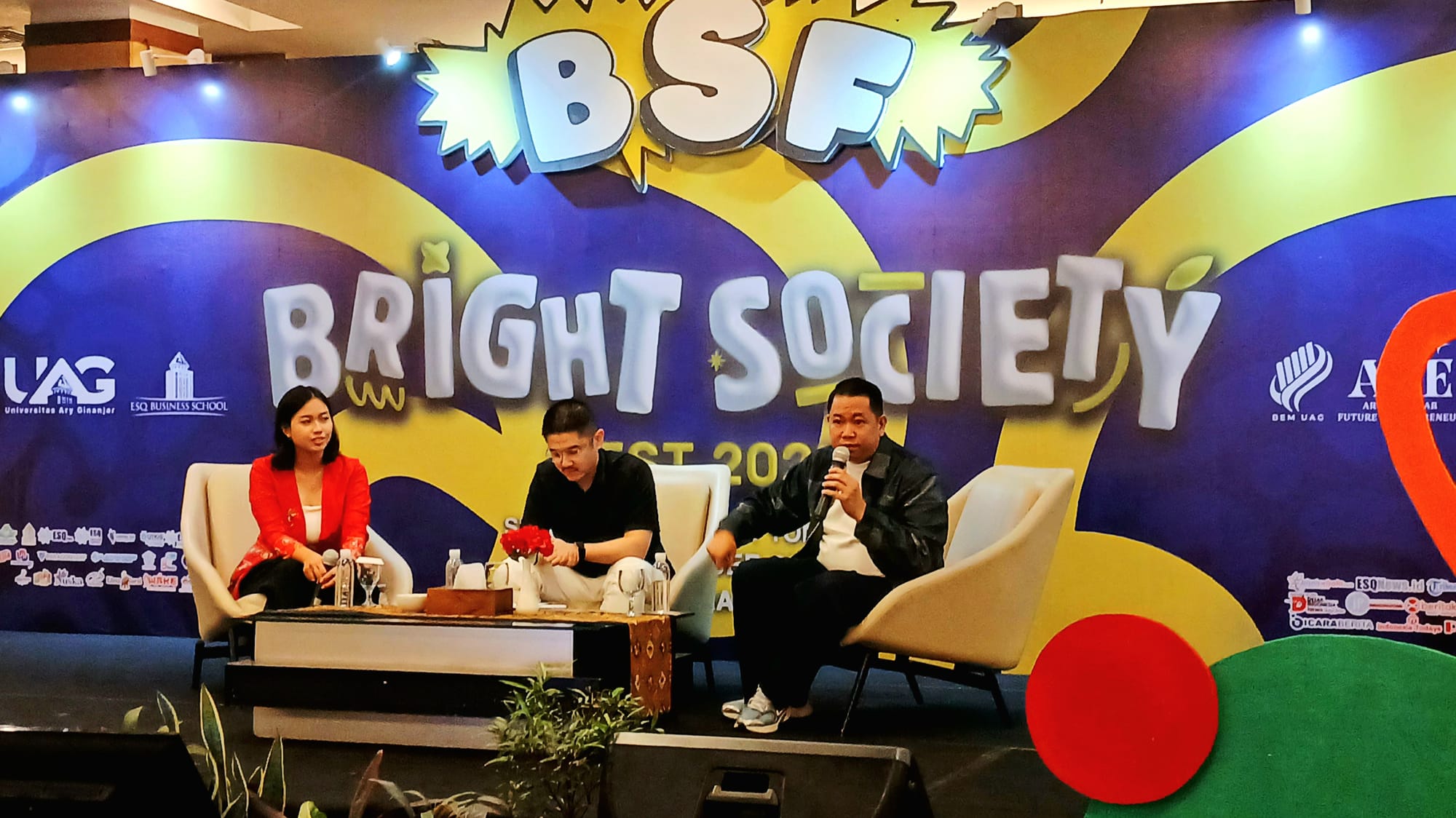
"When I graduated, it never occurred to me to turn my passion into a career or business. In the United States or Western culture, perhaps that is common, but coming from an ordinary family, I prioritized responsibility over passion," said Melvin when sharing his story at the "Side Hustle Era: Turn Your Passion Into a Business From a Young Age" talk in Jakarta on Saturday (12/15/2025).
Melvin's career achievements at the consulting agency at that time were nothing short of a dream for all young people. However, the 30-year-old man said that between his work of presenting ideas, negotiating, and storytelling, Melvin gradually discovered something he had not realized before: a retail business segmented into three aspects: wellness, lifestyle, and F&B.
Armed with ten years of experience as a consultant, Melvin understands one important thing: in the retail business, for products with similar substance, deep and convincing storytelling is just as important as the quality of the product being offered.
The synthesis of soft skills in communication , storytelling, and pitching gained from his experience as a consultant and his passion for the retail business were the main drivers behind Melvin's decision to establish Kayella Consumer Partners, a venture capital firm that injects capital into segmented retail businesses, such as beauty clinics, fitness centers, online grocery stores, stem cell clinics, and so on.
"When I am passionate, I automatically feel more confident and understand those three areas better than mining, for example. I don't know where to start and I 'm not passionate about it. From this, I think that when you find a passion, that is the niche you should focus on. I found mine in the retail business," he said.
Although it looked smooth from the outside, Melvin did not deny the enormous challenges he faced when he decided to quit his job as a consultant and start Kayella Consumer Partners. Externally, his rapid success made many of his colleagues jealous, and they tried to dissuade him through rumors and character assassination.
Meanwhile, internally, Melvin was plagued by doubts about whether his decision was the right one. According to him, differences in risk tolerance and social safety nets greatly determine when someone can start focusing on developing a side business as a source of income and leaving their main job as their primary source of income.
"There are two types of confidence among business pioneers: confidence and delusion. Confidence is when we believe in something, but remain skeptical of ourselves, so that we can see the other side when we fail. For those who have passion, failure is a stop, while for those who don't, failure is the end of everything," said Melvin.
From his experience of starting a venture capital firm at a young age, Melvin reveals three catalysts that helped him turn his passion into fuel for starting a business.
First, a keen intuition to study, assess, and map out the business realistically over the next 5-10 years. Second, the ability to deliver contributions before business partners expect them, thereby creating integrity. Third, a purpose in life that gives a person perseverance. Without these three things, passion is nothing more than a hobby that happens to be profitable.
"My persistence comes from my life goal of making my parents smile. When I reached that point, I understood that persistence and experience are the greatest treasures, not connections or intelligence," concluded Melvin.
Learning by doing
Sharing his views with Melvin, founder of TEAMUP Circular Creative Business Ecosystem and CEO of M Bloc Space Ahmad Romero Comacho emphasized that turning passion into a business does not come with a manual or guidebook. However, that does not necessarily mean that one cannot learn how to get started.
"My first business after graduating from college fell apart within a year. It was very stressful because I had debts. I was realistic: I applied for a job as a salesman at an automotive company. There, I learned aspects of management that allowed my passion for creative economics to generate profits," said the man who is fondly known as Popo.
Starting from his concern about not being able to find a suitable event organizer for his old office's marketing events, Popo started TEAMUP from his circle of friends. Instead of using conventional marketing methods, Popo practiced marketing from the very beginning by inviting very specific partners: graffiti artists!
" Marketing activities through graffiti competitions not only attracted enthusiastic artists who were willing to travel from far away, but also succeeded in increasing the market share of motorcycle sales, because the brand value we were trying to develop was compatible with that marketing method," said Popo.
When his experience as a salesman who once set a record of selling 2,000 motorcycles in one month met his passion for the creative economy, Popo found his path to developing his own creative business ecosystem in 2019. A year later, when the Covid-19 pandemic was raging, Popo chose to resign after 12 years of working in the automotive company to develop TEAMUP.
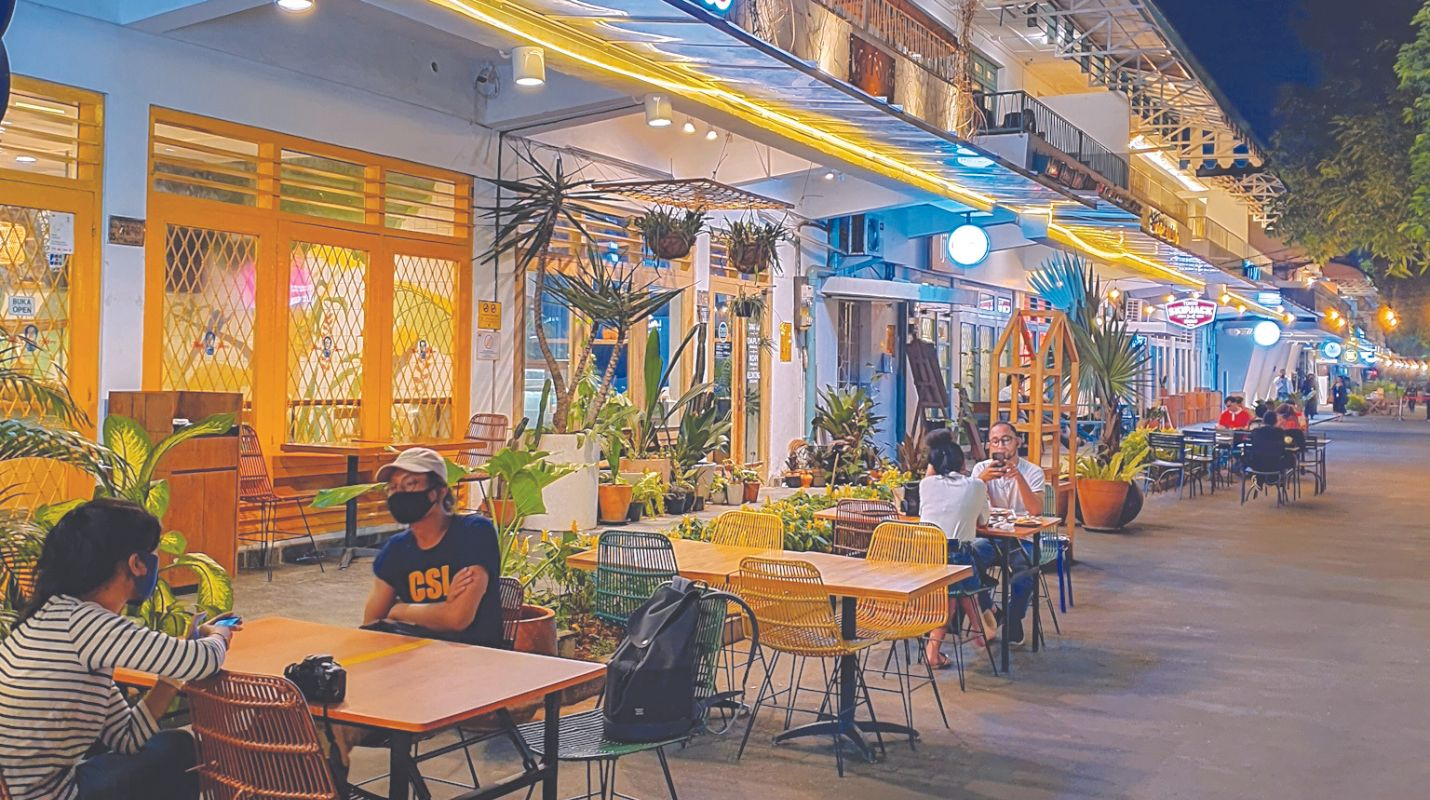
Under the TEAMUP banner, Popo leads six subholding companies and nine core companies that share a common thread of community engagement, digitalization, and creative space. As a result, TEAMUP's touch through Ruang Riang Millenial, which manages M Bloc Space, has succeeded in restoring the glory of the Blok M area as a creative space for young people, as have Urban Forest Cipete and Cibis Park Cilandak.
"When we have an event, such as ideaTalks or ideaFest, we hold it at M Bloc. The production is assisted, digital amplification is encouraged, and catering is provided by Ruang Kopi, our F&B. It's a circular ecosystem that continues to revolve within the company itself. Our strategy is not to compete, but to dominate from the start," he said.
In developing a creative business ecosystem, Popo realizes that a person's creative energy does not necessarily enable them to understand operations, system development, risk management, and supply chains as the main pillars of business. Therefore, Popo does not hide the fact that his success as an entrepreneur is inseparable from his 12 years of experience working as a professional.
"Challenges are learned when you are at the bottom, so when you start a new business, there is no time to fail. Every place has something to learn, understand what the business ecosystem is like. When you master a field of business, the challenges will disappear on their own," said Popo.
Complementing Melvin's motivational perspective, which emphasizes intuition and integrity, good interpersonal relationships are key to Popo's ability to maintain his creative business ecosystem. The artists he has collaborated with are full partners who are treated as members of a professional team.
"By maintaining good relationships, they will help us with just one call . More than just business, I believe in the value of life through friendship. I myself don't really pursue personal branding, because money is not more valuable than the values of life that I gain from that cooperation," concluded Popo.
Must be encouraged
On the same occasion, Deputy Minister of Talent Development and Competitiveness at the Ministry of Cooperatives Destry Anna Sari revealed that an important lesson from the success of young entrepreneurs is the clarity of the vision and values that drive their businesses.
With a clear vision and values, thestartup , now known as , is no longer overlooked. According to him, cooperatives can be an alternative for young people who are interested in developing a business based on their passion .
"We are planning a major push for cooperatives. With the strength of young people, our cooperatives can become international companies. Economic transformation cannot be achieved if young people do not see the big picture," said Destry.
Although a clear vision in business is necessary and very important, educator and founder of ESQ Business School, Ary Ginanjar Agustian, emphasizes that what determines whether or not young people achieve their business goals are the values that serve as guidelines for achieving those dreams.
"If vision is the direction, then values are the body that makes it happen. We want Indonesia to be for the Indonesian people by 2045. We don't want to achieve a Golden Indonesia, but have Indonesians become servants in their own homes because they don't enjoy anything," concluded Ary.