Many Indonesians become migrant workers because there are few decent jobs in their own country. Training institutions and placement companies are critical to success.
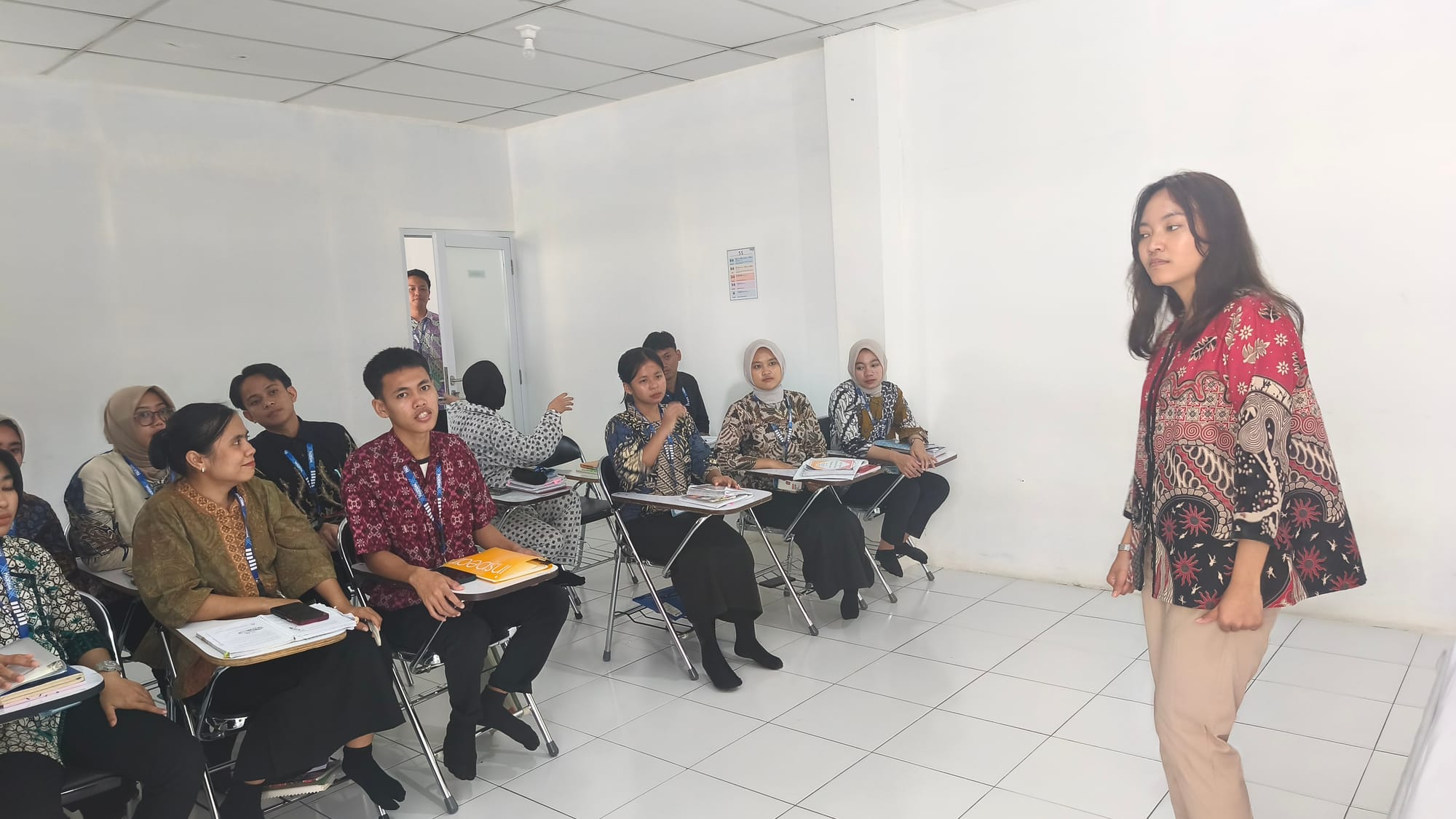
The room was box-shaped. The four sides of the walls were white. A fan unit was attached to one side of the wall, moving right and left, blowing cool air into the room.
In the classroom of LPK Tri Indonusa Gemilang, Japanese words echoed. Rose Lina, a sensei, guides the lesson patiently, inviting the 16 other people in the room to pronounce word by word and sentence by sentence correctly. They were all wearing batik.
While listening to Sensei Rose, the 16 people also focused on the blackboard that the projector was shooting. They noticed the various kanji that appeared there. Most immediately opened their notebooks and wrote down what Sensei Rose was saying. A few opted for a shortcut: taking pictures. The rest struggled against sleepiness, supporting their chins with their hands to keep from falling asleep.
That morning, after doing taisho exercises, they started the lesson by reciting the Japanese times. Sensei Rose repeatedly asked questions. Anyone who knew the answer could answer immediately. Occasionally, Rose would randomly appoint a student to answer her questions.
"Nanji ni nemasu ka? (What time do you go to bed?)," Sensei Rose asks. The students' answers varied, but there was a pattern: between 9 and 12 at night.
Rose went on to ask a new question. "Nanji ni okimasu ka? (What time did you wake up?)"
He again pointed to a student at random. As soon as the student answered, the classroom was filled with laughter. He answered at 11. At that time the wall clock showed 10.30.
The study session continues. The projector screen now displays many incomplete Japanese sentences. Students are asked to read the sentences carefully. Again, randomly, Rose asks them to come forward and complete the sentences directly on the blackboard.
No laughter broke out this time. Whichever student Rose appointed, managed to complete the sentences correctly. It seemed that the students had really mastered this basic material.
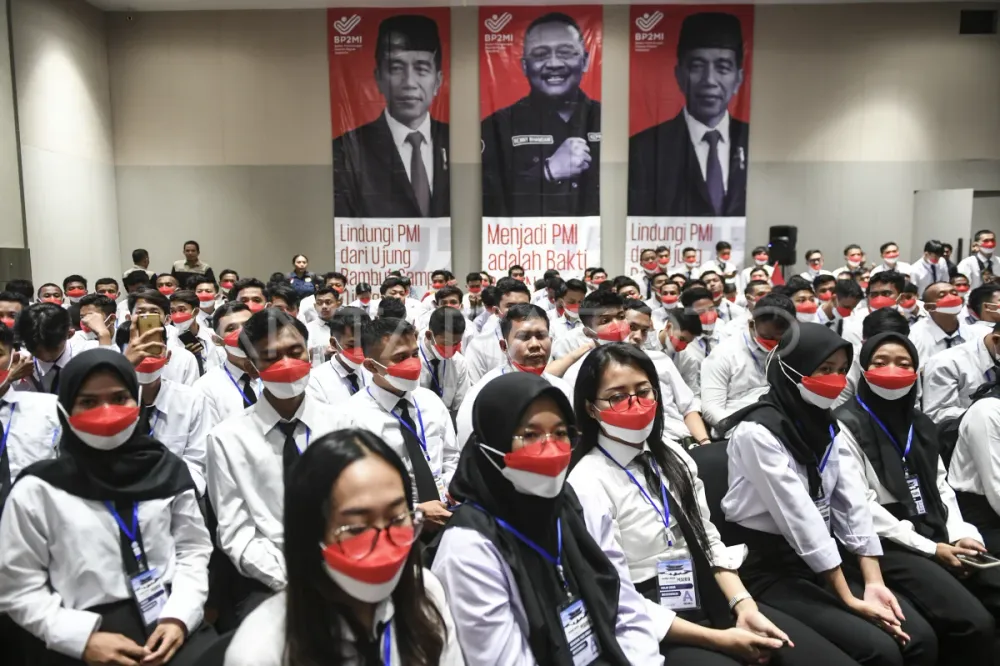
There are 16 students who are learning Japanese, they are prospective Indonesian migrant workers (CPMI) destined for the land of the rising sun, Japan. The variety of jobs is diverse, ranging from caregivers, construction, to food processing.
Rose said that Japanese language skills are very important for CPMIs to master. "Many cases of bullying against foreign workers in Japan occur because they do not master the language."
The projector screen changed to show details of a worker's activities in Japan. Rose played a voice recording. All her students listened seriously, preparing to answer the questions Rose would ask.
Before they were asked to answer, the clock struck 12:00. Lunch break.
Students returned to class at 13:00. But this time something was different. The number of students halved. "Some of them moved to the class on the first floor. They continue learning chukyu, an intermediate level language course," Rose said.
Students who remained in Rose's class resumed shokyū (basic level material). Japanese echoes in the room again. The projector screen is turned on. Rose asked questions, CPMI answered. Conversation after conversation continued.
The projector screen shows a sketch of the living room of a house that has been destroyed. "This is the house as if it had been hit by an earthquake," Rose said. Taking turns, Rose asks students to come to the front of the class to describe the sketch orally. This practice is called happyou.
Some CPMIs were seen opening notebooks and starting to write. "Write it down first, so it's easier to remember," said one CPMI to his friend. Some were seen chatting, practicing exercises directly with friends sitting next to them.
Going for the Dream
Going to Japan has been Ganda Nur Cahya's dream since childhood. For her, the land of Sakura is not just a place from her favorite anime shows, but also an opportunity to improve her family's economic condition. Now, at just 18 years old, Ganda is preparing for that big step through training at LPK Tri Indonusa Gemilang.
Born and raised in Bandung, Ganda was raised by her grandmother and aunt. Her father died when she was two years old, and her mother left after giving birth to her. "I really didn't know what it was like to really have a mother," she says quietly. After her grandmother passed away in 2020, she lived entirely with her aunt and older sister.
Ganda's education had its twists and turns. He first entered a health school in Bekasi, but only lasted a week because he was embarrassed by the number of students in the class. He then ran away to Bandung and attended SMKN 7 Baleendah. But not long after, his uncle called and asked him to return to Bekasi. There, Ganda continued his education at SMK Yayasan Magda Nusantara, majoring in automotive until he graduated.
At SMK Yayasan Magda Nusantara, Ganda met Suratman, a teacher. Suratman had never taught Ganda. Their introduction happened by accident. Suratman's motorcycle broke down at school. Ganda offered to help him fix it.
From there, they interacted frequently. Suratman often left his wares with Ganda at school, who happened to sell cimol and basreng. Ganda told him about her desire to go to Japan.
It was a match made in heaven. Suratman turned out to be an LPK manager in Bekasi. "He told me the requirements and where to study," Ganda said. Suratman then introduced Ganda to Veronica Suratman, the Recruitment Manager at LPK Tri Indonusa Gemilang.
After graduating, she chose the caregiver or kaigo path. This field felt most suitable because she had taken care of her sick grandmother. "I'm not afraid of being dirty," she said. In addition, kaigo is considered to give her more opportunities to communicate directly with Japanese people, so that her language skills can continue to develop.
Ganda also considered income. She compared several job options in Japan before finally settling on kaigo. Based on the results of her search, income as a caregiver for the elderly can reach 25 million rupiah per month, higher than food processing which is around 20 to 21 million.
Prior to attending training at LPK Tri Indonusa Gemilang, Ganda had worked part-time. One of them was at a chicken stall in Bekasi as a cook. He worked from late afternoon to early morning, then slept for a while and went back to school. This routine was followed for five months.
He also tried working in a logistics warehouse, but only lasted a week. The heavy workload made his body collapse. "The load was heavy, 30 to 50 kilos a sack," he said. After that, he realized that he could no longer force himself to work while training.
Ganda then discussed it with her brother, and they agreed that she should focus on her studies. He admitted that he felt guilty because he could not help the family economy. However, his brother kept convincing him to stay committed. "Finally, I focused here. So I'm not going anywhere," said Ganda.
For the training costs, Ganda used a bailout scheme. Her brother paid a down payment of Rp7.5 million, and the rest will be paid in installments after she is employed. According to him, this system is very helpful as he does not need to burden his brother further.
Every day, Ganda entered at eight in the morning and attended study sessions until the afternoon. For him, kanji is both the hardest and most interesting part. She enjoys the process of writing characters that have unique shapes. She feels challenged to master them and says she prefers writing practice to reading.
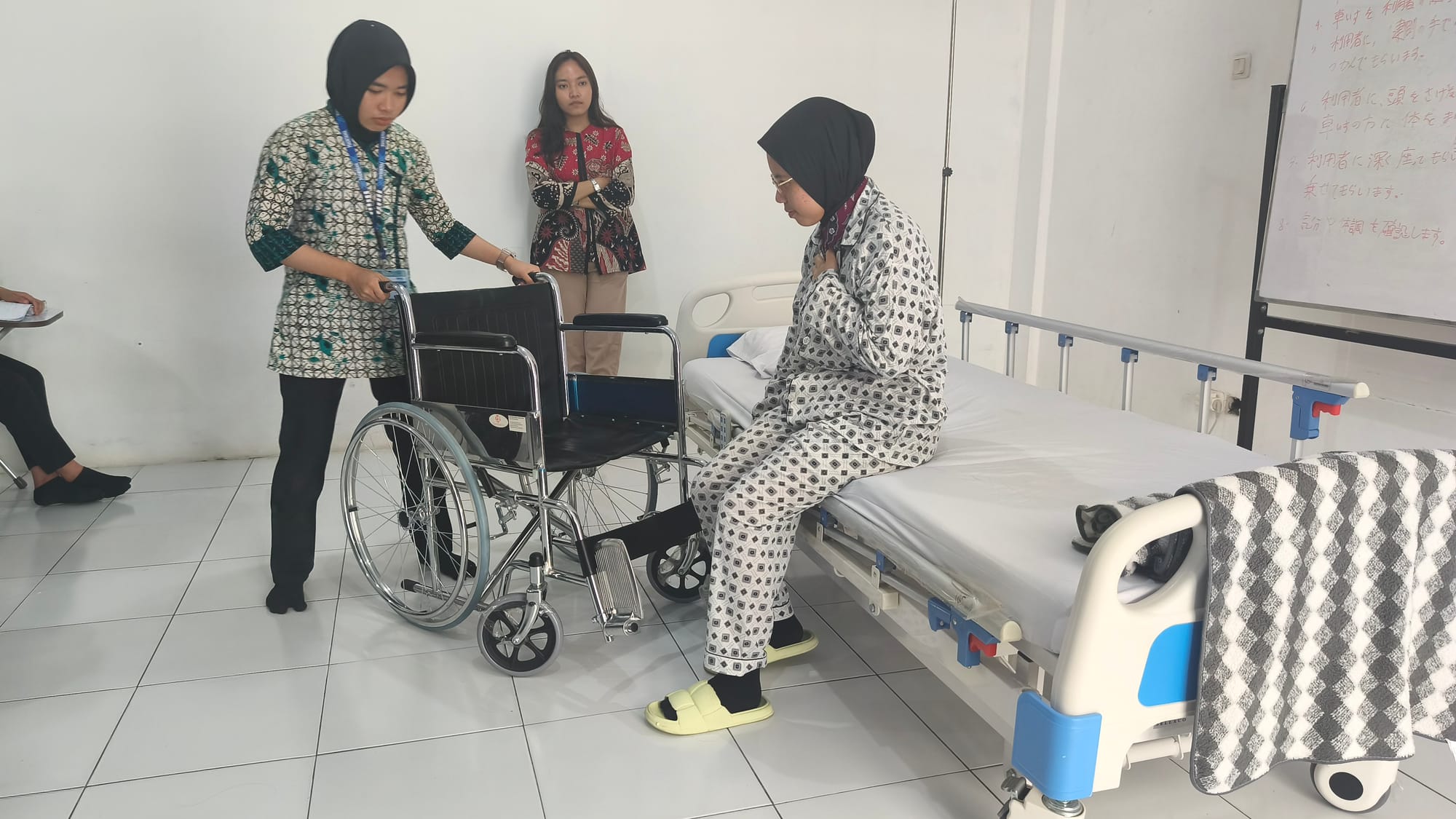
The training also covers basic technical material about the kaigo world. For example, the correct way to lift a patient, procedures when an incident occurs, and how to make daily work reports. The reports are written entirely in kanji, so reading and writing skills are crucial.
Although they have not practiced directly during the training, participants are still provided with an understanding through illustrated modules and group discussions. Ganda himself has only been training at LPK Tri Indonusa Gemilang for about a month, so he has not yet entered the practical stage. All practical skills will be tested later in the special skilled worker (SSW) exam outside the LPK.
Ganda realizes that her path is not easy, but she is determined. She wants to repay the sacrifices of her aunt and brother, people who have replaced her parents since childhood. "If I can't make my biological mother happy, maybe I can make my aunt happy," she says.
Sacrificing for the Future
Unlike Ganda, who wanted to go to Japan from the beginning, Sari, let's call her by that name, became a migrant worker in Japan out of necessity. Forced by economic pressure. After giving birth to her first child, Sari, who was unemployed and lived with her small family in a rented house, had to consider the ideal of becoming a housewife who only took care of her children. Eventually, the option to work abroad was born, and Japan was the destination.
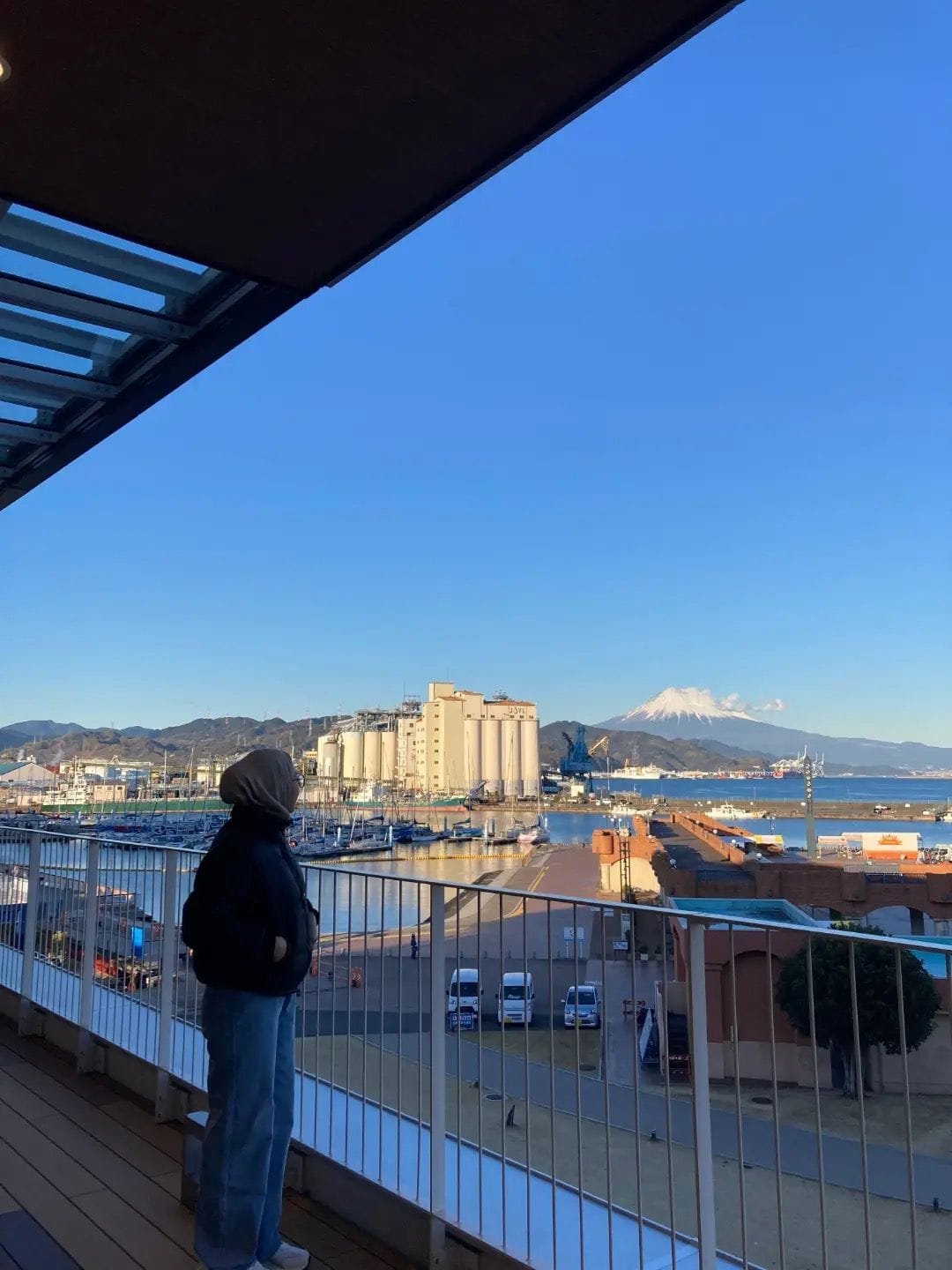
Her experience working as a staff member in a factory, earning slightly more than the minimum wage, convinced her that moving to a foreign country was a rational choice. "Thinking about the salary in Indonesia, you would want to take the house through a mortgage, then if you want to save, it's who knows how many years," she said.
Initially, it was her husband who tried his luck as a migrant worker, but failed to get selected to enter a training institution. The husband's failure turned into a passion for S, which led her to successfully enter an LPK called Hadetama. The struggle to enter the LPK, which is located in Bekasi, must go through a year of convincing the family.
The consideration is that there are children who need maternal care. However, economic factors are again the main consideration. Children also need a future, and proper education is the gateway to success. "Relying on my husband's salary is enough for daily life, but to save for building a house and saving for children's education, it's very tight," Sari said.
This background made Sari even more determined to study at LPK. She then applied to work as a migrant worker in Japan as a caregiver for the elderly. She went through every language and technical training. Until finally, no more than a year of forging herself in training classes, Sari managed to leave for Sakura Country in 2024. She got this after passing the Specified Skilled Worker or SSW certification. The work certificate was obtained after successfully passing the Japanese language exam, which was not easy to pass.
It has been one year since Sari worked in Japan as a caregiver. She was placed in an elderly home in Shizuoka Prefecture, close to Mount Fuji. She remembers twisting her back when she lifted a patient in the wrong position in the early days of her job. She also remembers the pain in the calves of her feet as she followed the rhythm of her senior's nimble walk to the patients floor by floor.
Sari's workplace is divided into three floors, with one floor dedicated to the elderly who are unable to move. Energy and emotions are drained when caregivers are assigned to that floor. For Sari, the early days were challenging as language acquisition was still an issue.
This is because if you choose the wrong vocabulary, there will be miscommunication so that the needs of the elderly can be missed. Fortunately, Sari said, the work culture there helps each other. "The work must be fast. No work can be delayed. (But) the team work also works and is open to accepting the shortcomings of workers," she said.
It's been a year since she started working, and it's been a whirlwind of moments. Sari takes care of at least dozens of elderly people every week. She still vividly remembers the mouthful after mouthful of food she was given, the sanitary napkins she changed, and carrying her elderly parents around. "Seeing the elderly who often brood, then suddenly smile, it makes me happy. There are also elderly people who rarely speak, then say thank you to us, some even remember our names, it's a source of pride," Sari said.
After only a year of starting, Sari also feels that there has been an improvement in her economic quality. Her dream of owning a house began to take shape in the first year. Working eight hours a day, divided into three shifts, she earns a salary of tens of millions of rupiah, 21 million to be exact. Of that amount, six million is deducted for health insurance, taxes and housing costs, which are paid 50:50 with the employer. "The 10 million part can be saved. (And) 6 million for daily life," she says, who doesn't forget to send money to her husband every month.
Such a large salary is worth it when calculated with the cost of education at the LPK, which amounts to 12 million rupiah and plus departure costs of approximately 28 million rupiah. Sari estimates that she can save enough to build a house by working for five years. The cost of children's education is also predicted to be met within the span of work.
When her savings were accumulated, Sari was already looking at land in the Temanggung area to build her dream home. For her, her future home will not be measured by size and design, but by how far it becomes a place to come home to. Also, a plot of land and building will symbolize a new chapter of life. "Now I have a small family, and how I now form this family with the hope of being better than my previous family," she said.
Talking about building a family, Sari thought Japan would be a good place to start a new journey. Her husband and children would be brought along. All of this was sparked by the governance in the country, which was considered too good compared to her homeland.
Starting from the quality of public services, culture to education, which is considered suitable for growth and development. "But if I return to Indonesia, I think of building a fashion business, making my own clothing brand. I also think about opening a grocery store," he said.
To Placement Country Through LPK
One of the successes achieved by Sari is also due to the support of the Job Training Institution or LPK which is at the forefront in ensuring the quality of migrant workers. In addition to quality, LPKs must be able to spark a sense of desire in prospective migrant workers. LPK Hadetama, located in Bekasi, West Java, uses the reality of the needs of the labor market as a caregiver in Japan as selling material.

Speaking of quality, the target of prospective migrant workers is vocational high school students. At least a dozen vocational schools in the Jabodetabek area have entered into an agreement to increase the number of graduates entering the training class. Health-focused universities are also being targeted.
"We conveyed the potential for work in Japan. There is a lot of demand (for caregiver jobs) in Japan. It's like in Japan, one Japanese person is fought over by 100 companies because there are so many workers who want to become caregivers," said Hadetama LPK Manager, Saffana to SUAR.
Saffana said that the number of LPK students who are caregivers has been sent to work in Japan since 2021 or two years after the LPK was established. Around 500 caregivers have been flown to Sakura country until mid-2025. "What is clear is that the trend continues to rise. Last year's caregiver target was 200 students. This year the target is 300 students," he said.
The emphasis on human resources from the SMK education level is in line with research from the Indonesia Business Council, which projects that a large number of migrant workers come from this level of education. Moreover, the data shows that the open unemployment rate is dominated by vocational graduates.
"What we offer is also about high salaries, job security because in Japan, the placement cannot be in the individual sector because at least elderly homes and elderly daycare. But we also send placements in hospitals," said Saffana.
"In the sixth month, you can already feel the difference in economic quality. And I see that alumni who have been working for three years when they return home can already buy cars and houses," he added.
From experience, the salary range for caregivers starts at Rp13 million. The difference in starting salary is influenced by the institution where the worker is based. If in a hospital, the starting salary is around IDR 20 million. The amount of salary can be obtained after passing the SSW certification.
Saffana said that usually the certification exam can be passed through intensive training for 8 months. During the training, LPK students must spend up to Rp12 million for accommodation costs during training and the certification fee itself. "We have also prepared a fund. There is cooperation with banking institutions including cooperatives," he said. S
Mukhlison, Rohman Wibowo, and Harits Arrazie