

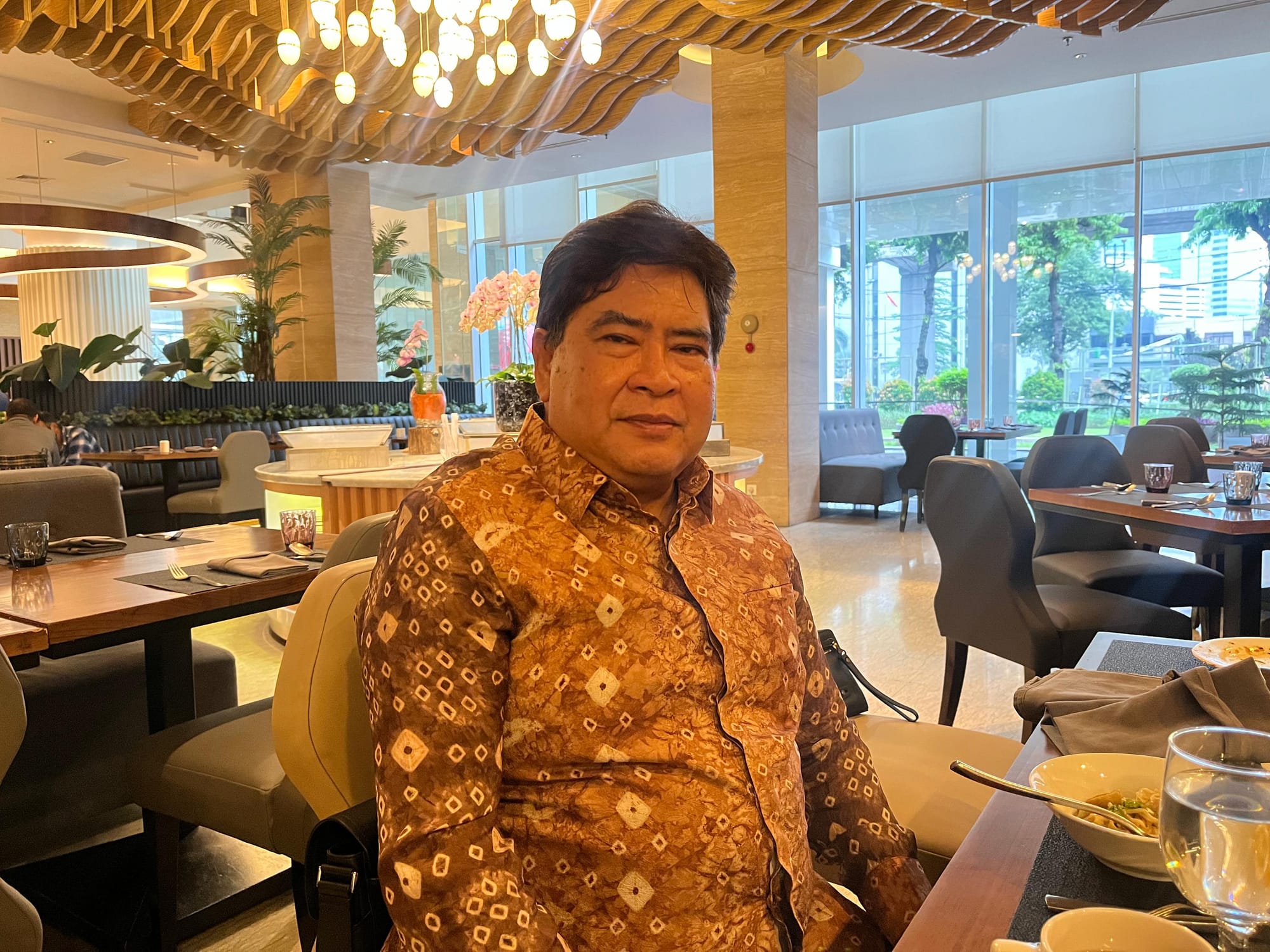
That afternoon, Bob Azam swung his steps out of the discussion room. After being a speaker at the Roundtable Decision: The Economic Power of Indonesian Migrant Workers organized by SUAR, Thursday (19/9), the Vice President Director of PT Toyota Motor Manufacturing Indonesia (TMMIN) went down the stairs to the ground floor restaurant of a hotel in South Jakarta.
The restaurant looked deserted. Several tables were occupied, but Bob immediately headed for one of the empty corners. There, waiting for his professional colleagues such as Andi Hartanto from PT Astra Honda Motor, there was also Ayu Kartika Dewi from the Indonesian Business Council.
While waiting for the main course to arrive, SUAR reporters approached Bob. Our conversation began. For Bob Azam, finding ways to balance work and personal life comes first. On weekends, he chooses karaoke as one of his regular activities on his days off.
"My hobby? Karaoke," she answered quickly, smiling broadly, Thursday (18/9).
For an executive accustomed to a busy schedule, karaoke is a simple yet meaningful respite.
"In business we are constantly competing, karaoke is a place to release everything," Bob said.
Karaoke isn't just entertainment, it's creating its own stage with him as the star. "I'm the neighbor's entertainer," he says, making his colleagues at the table chuckle.
Often in her spare time, she sings at home, alone. Sometimes with family or guests who come to visit.
"As long as my neighbors don't complain, my vote is still safe," he said.
Besides entertainment, Bob sees karaoke as therapy. "Usually when I'm stressed, I sing. After that, I'm more ready to face the day," he said.
Roadside culinary
If karaoke is his way of unwinding, then culinary hunting is his 'ninja' way of getting grounded.
Not going to eat at a fancy restaurant, but to a stall or roadside stall. Bob remains loyal to hunting for simple food. Usually, he gets recommendations from other people or sees it on TikTok.
"I like to look for warteg or hidden gem restaurants. Sometimes I find good ones, sometimes I get cheated," she says.
Weekends are her favorite time to channel her culinary hobby, apart from karaoke. Because Jakarta's traffic is smoother, he can freely walk down the narrow streets of Tangerang and Jakarta. The goal is just to try a plate of local food.
"It is precisely the cheap ones that have an impression. There are also memories of school days, canteens or stalls that still exist today. It feels so nostalgic," he said.
"It is precisely the cheap ones that have an impression. There are also memories of school days, canteens or stalls that still exist today."
When asked about his favorite food, Bob Azam admitted that it was difficult to choose. "I'm a food enthusiast, so there are a lot of things I like," he said.
When the waiter came to serve a bowl of Javanese noodles at the table, he immediately smiled and replied, "I also like this, mie jowo," Bob said.
After offering his colleagues a meal, he told them that the bakmi jawa in front of Bentara Budaya, Palmerah, is one of the best in Jakarta, according to him.
At that time he might have forgotten to mention rawon, until Ayu, who was sitting opposite him, joined in, "Rawon? Doesn't Mr. Bob also like rawon?" she chirped.
Bob just chuckled, nodding in agreement. He admitted that the combination of thick black broth from keluak with tender meat filling was always one of his favorites.
For rawon itself, Bob has high standards. "It's still the most authentic if you eat it in Malang. In Jakarta there is also, but Rawon Dengkul in Malang is the best," he said firmly.
His drink is simple: wedang jahe. "It's not because of a healthy lifestyle, it's because I'm old," he says with a burst of laughter.
Nostalgic Taste of Javanese Bakmi
The SUAR team had the opportunity to try the Bakmi Jawa Palmerah dish recommended by Bob.
On Friday afternoon, the alit stall in the front corner of the Bentara Budaya Jakarta courtyard was bustling with customers. Most of them are private sector employees, interjecting conversations about work while waiting for the dishes to cook.
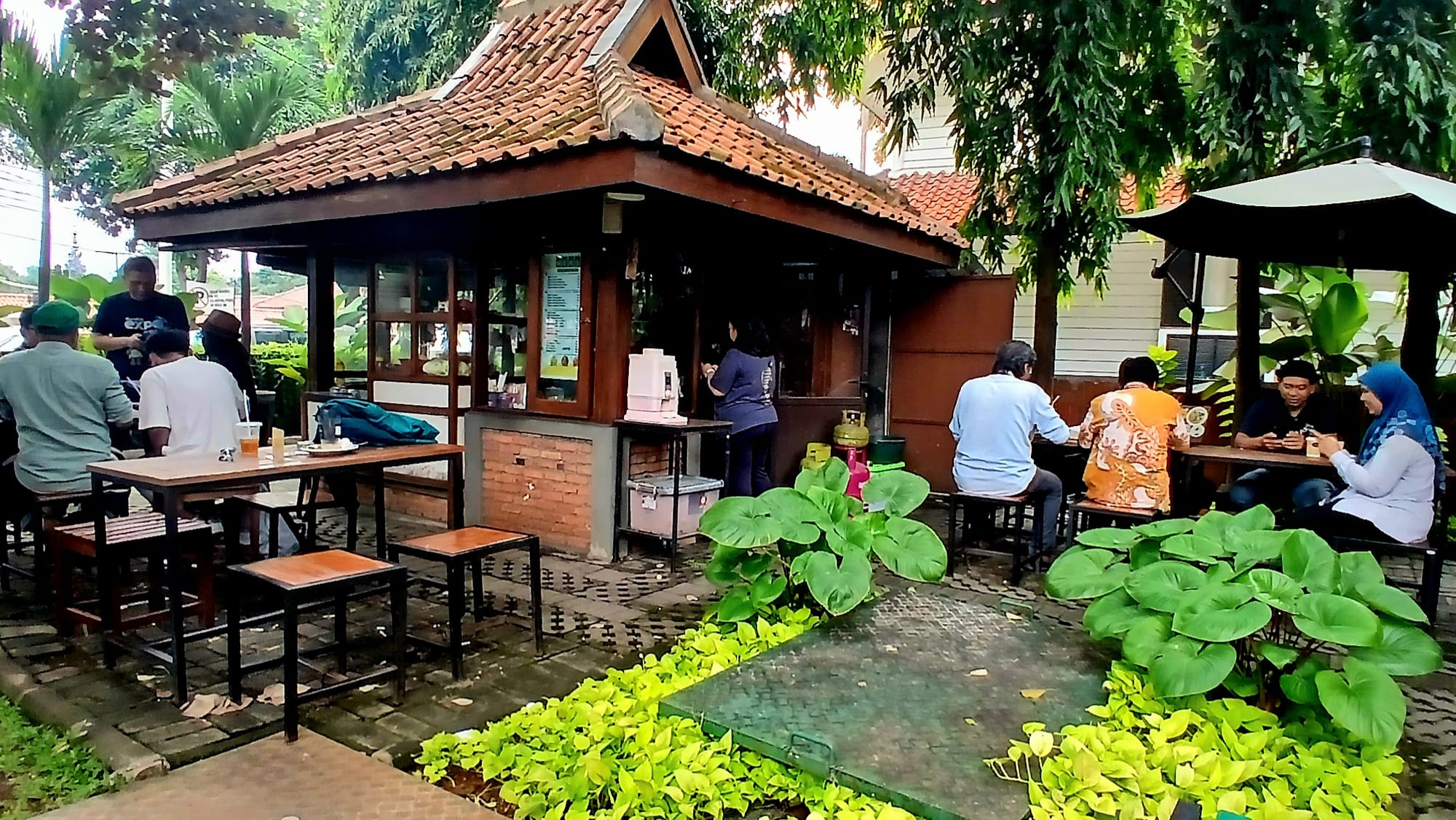
Chef Ahmad Firdaus, 33, deftly cleans the wok after finishing an order. Among the menu's offerings of boiled noodles, fried noodles and capcay rice, the boiled noodles are the most popular.
Since 2017, the 5-by-5-meter kitchen has been smoking serving visitors every day.
"It used to be 150 servings a day. Now it has decreased somewhat, because there is an employee canteen inside, there are more menus," Firdaus told SUAR.
According to him, in addition to the employees and visitors of Bentara Budaya Jakarta, a number of important guests have also ordered his creations, ranging from businessmen to political figures.
Cook noodles with charcoal
Skillfully, Firdaus cracked an egg into the wok. As soon as the fire was smoking, he added a mixture of chicken stock and spices.
The savory aroma of a mixture of broth and seasonings immediately spreads, tickling every nose. Shredded cabbage, celery, tomatoes and shredded chicken thighs soon clash in the wok with a thick bundle of yellow noodles. A churning, murky white broth signals that a portion of boiled noodles is ready.
Bob's taste buds may indeed be tested. A portion of warm noodle soup is a delight to sip. The strong fragrance of garlic and pepper mix is interrupted by the light savory chicken broth. The thick noodle texture absorbs the savory soup to the maximum, combined with the abundant shredded chicken.
Bob's taste buds may indeed be tested. A portion of the warm noodle soup is a delight to sip.
It's almost as fast as cooking a portion of boiled noodles.
"Yes, we still use charcoal, Mas. The smell is different, and it affects the taste of the buns," Firdaus said as he continued cooking.
He pointed out the charcoal flame under the wok as he held up a portion of freshly cooked noodles. Just as SUAR was about to leave, a customer who had just come to order was disappointed after Firdaus said the boiled noodles were gone, and there were only a few portions of fried noodles left.
Do you want to try this Javanese noodle recommended by Bob Azam?