

Last weekend, the Indonesian government officially issued Presidential Regulation (Perpres) Number 110 of 2025 on the Value of Carbon Economy (NEK), which is expected to accelerate the growth of the voluntary carbon market in the country.
The regulation also replaces the previous regulation Perpres Number 98 of 2021 concerning the Implementation of Carbon Economic Value for Achieving the Nationally Determined Contribution Target (NDC) and Controlling Greenhouse Gas Emissions in National Development.
The new rules are expected to ensure that carbon trading is protected and able to maximize competitive advantage.
Minister of Environment Hanif Faisol Nurofiq revealed that the government views the economic value of carbon as a cross-sectoral and cross-country issue. However, without a clear agreement in implementing Article 6 of the Paris Agreement, each country develops its own scheme in carrying out carbon trading. These different schemes have led to the birth ofvoluntary carbon markets (VCM) in various countries.
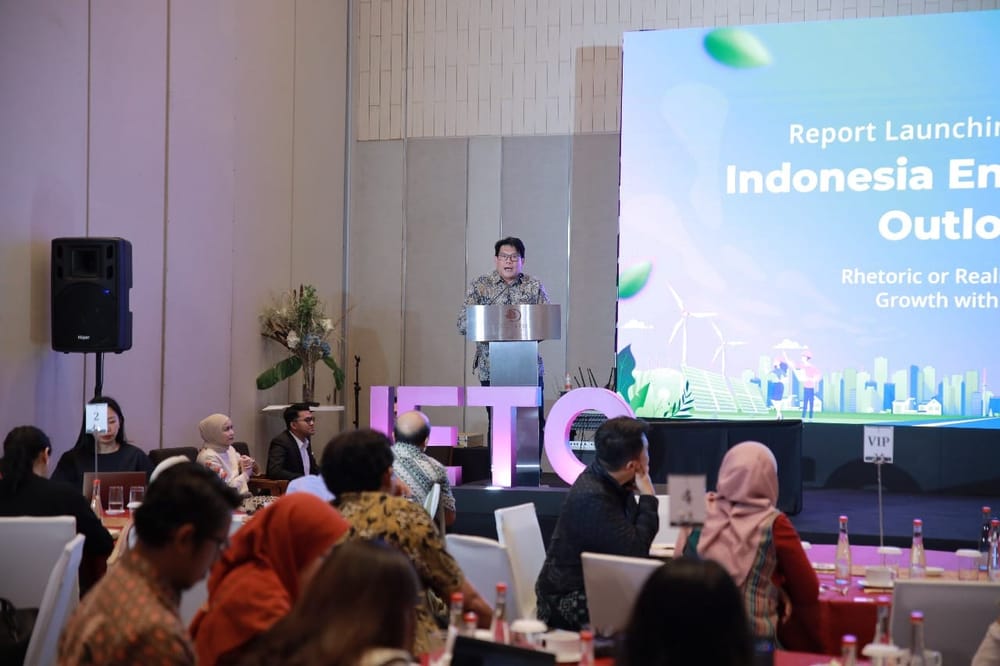
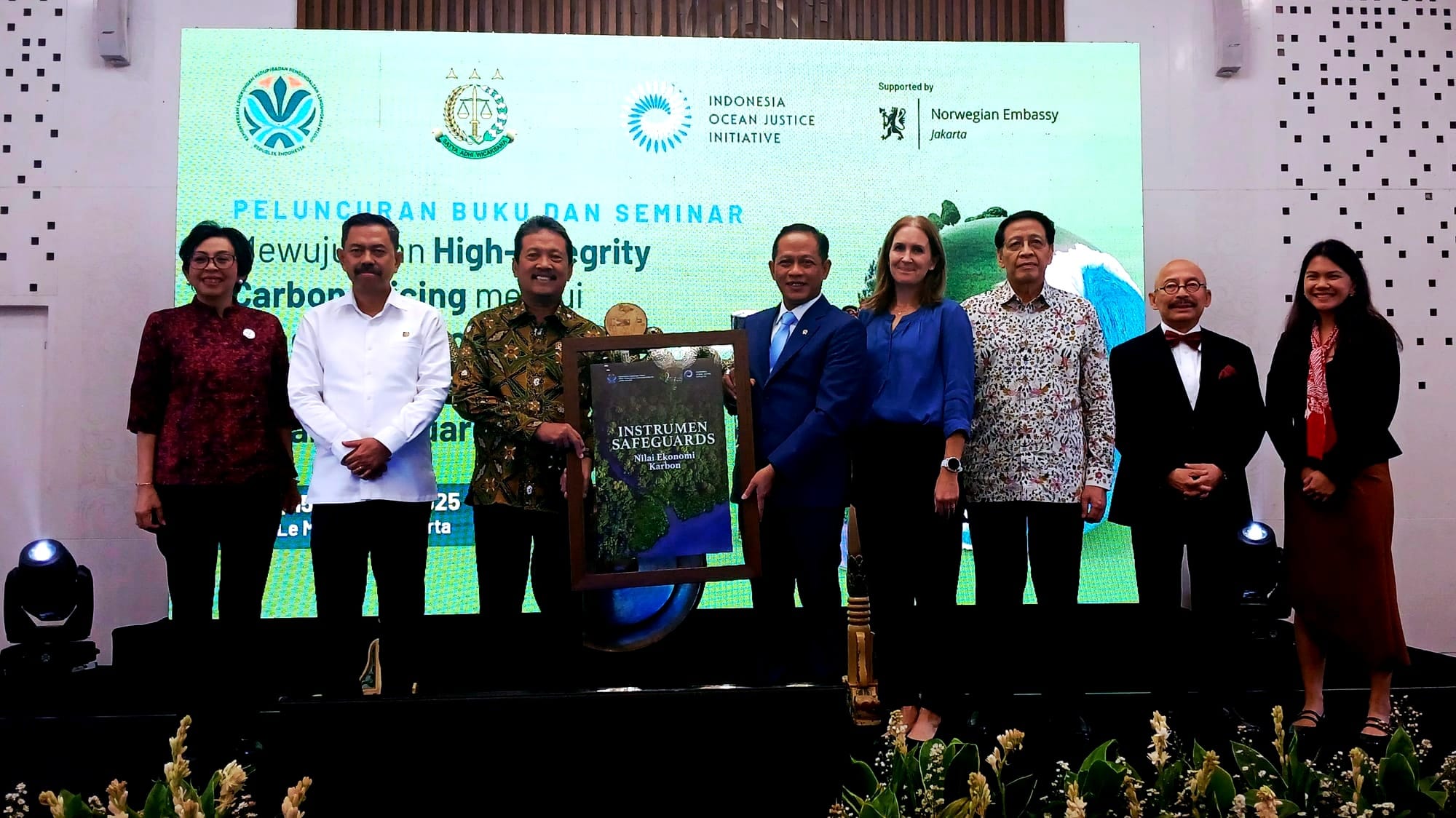
"Indonesia at that time still adhered to the compliance market which was mandatory from the Paris Agreement. However, Indonesia's compliance market was not responded to, no buyers came, because the international market was already controlled by the VCM scheme. We must collaborate and not clash with each other," Hanif said at the seminar "Realizing High-Integrity Carbon Pricing through Strengthening Social, Economic, and Legal Safeguards in Indonesia" organized by the Indonesia Ocean Justice Initiative (IOJI) in collaboration with the Ministry of Environment and the Attorney General's Office in Jakarta, Wednesday (15/10/2025).
Indonesia's persistence to maximize carbon trading, according to Hanif, is due to Indonesia's high biodiversity background, with 22 out of 31 ecosystems in the world. In addition, Indonesia also has the responsibility to reduce greenhouse gas emissions in accordance with the specified NDC target.
"In the 2019 inventory, Indonesia has a baseline figure of 1,145 million tons of greenhouse gas emissions that must be reduced by 43% by 2030 and 60% by 2035. We have tried very hard to achieve that, but we don't have enough money to reduce emissions by that much," he explained.
In addition to environmental responsibility considerations, Hanif emphasized that Indonesia's carbon market scheme has a comparative advantage over other countries. He warned that without a carbon market with integrity, the carbon advantage will have the fate of other commodities, whose prices are determined by others.
"Enough of our negligence in protecting commodities. If we fail to safeguard commodities, how much more carbon in the form of securities? This is where the norms in this safeguard can provide guidance before a strong law, so that our comparative advantage does not go to waste," Hanif concluded.
Last year, Indonesian President Prabowo Subianto stated Indonesia's target to reach net-zero emissions by 2050, or sooner than the previous target of 2060.
Meanwhile, in its Nationally Determined Contributions (NDC) in 2022, Indonesia pledged to further reduce greenhouse gas emissions to an unconditional target of 31.89% and a conditional target of 43.2%.
Carbon emissions are one of the biggest contributors to greenhouse gases. In the future, companies that produce small amounts of carbon dioxide emissions can sell carbon credits to companies that produce a lot of CO2.
Carbon credit buyers are industries, countries or companies that produce high amounts of carbon emissions by using fossil fuels or consuming large amounts of energy. Examples include steel mills, coal or gas power plants, data centers, and the transportation sector.
In the carbon market, what is actually traded is the right to greenhouse gas emissions in tons of CO2 equivalent recorded in the National Registry System for Climate Change Control.
Market Needs Protection
The new regulation emphasizes protection for market participants, in addition to perfecting the existing regulatory corridors.
IOJI CEO Mas Achmad Sentosa said that concerns about decarbonization are the main impetus for reviewing and re-evaluating the performance of Indonesia's carbon market. The commitment to implement theParis Agreement and mitigate the climate crisis through the National Determined Contribution (NDC) will be tested by looking at how Indonesia protects its domestic carbon trade.
"The implementation of carbon economy value requires a safeguard instrument as an integrity fence to maintain the objectives of the Paris Agreement , and facilitate the carbon economy business to run according to the principles of transparency, accountability, social responsibility, and dispute prevention," Achmad said during his speech.
To ensure carbon trading goals are achieved, IOJI is working with the Ministry of Environment, the Ministry of Marine Affairs and Fisheries, and the Attorney General's Office to realize the synergy of government, carbon market players, and communities to implement the safeguard instrument.
In the division of roles between government agencies, the MOE plays a role in harmonizing carbon trading with environmental and nature conservation policies. KKP is the authority that protects marine ecosystems, which have the largest carbon sequestration capacity.
Meanwhile, the Attorney General's Office guarantees compliance with and enforcement ofcarbon-related crime cases, which range widely from fraud, embezzlement, corruption, to money laundering under the guise of carbon trading.
"As we approach COP 30, we are reminded that the fight against the climate crisis is a shared commitment. Together, we must ensure that the value of the carbon economy remains aimed at addressing the climate crisis, and not just for economic gain," he concluded.
Close the gap
Representing the Indonesia Carbon Trade Association (IDCTA), Novita Kumala stated that the requirement for carbon reduction integrity has been quite burdensome for businesses.
To address these doubts about integrity, a number of measures from both the demand and supply sides have been taken, such as establishing the Integrity Council of the Voluntary Carbon Market (ICVCM) in 2021.
Novita explained that companies engaged in the carbine market need Core Carbon Principles (CCP) certification from ICVCM to be able to get the integrity label. On the buyer side, VCM Indonesia also provides rules and guidelines to ensure that the buying company is genuine in its decarbonization mission.
"Integrity in this case should not only be seen from one party. Law enforcement should not only look at the carbon developer side, but all interested parties from upstream to downstream," said Novita.
The safeguard instrument that can be a derivative of Presidential Regulation 110/2025, according to Novita, is needed to fill regulatory and policy gaps, not to add to existing regulations. She pointed out that safeguards no longer need to regulate mechanisms such as Environmental Management Efforts (UKL) and AMDAL, but focus on aspects that have not been covered.
"Safeguards must check the company, whether they really implement decarbonization or not, whether there is documentation or not, if not, what will happen to the business license. There is no follow-up regulation like this," he said.
Novita reminded that the main goal in carbon projects is the people affected by the climate crisis. For this reason, information disclosure is a major factor that ultimately determines the integrity of the carbon market.
"Safeguards can serve as a guideline to improve the registry mechanism that provides transparent carbon project documents. The mechanism already exists, but there are still gaps that need to be closed. Don't let the compliance of carbon market players actually increase costs by adding things that are not actually needed," Novita concluded.