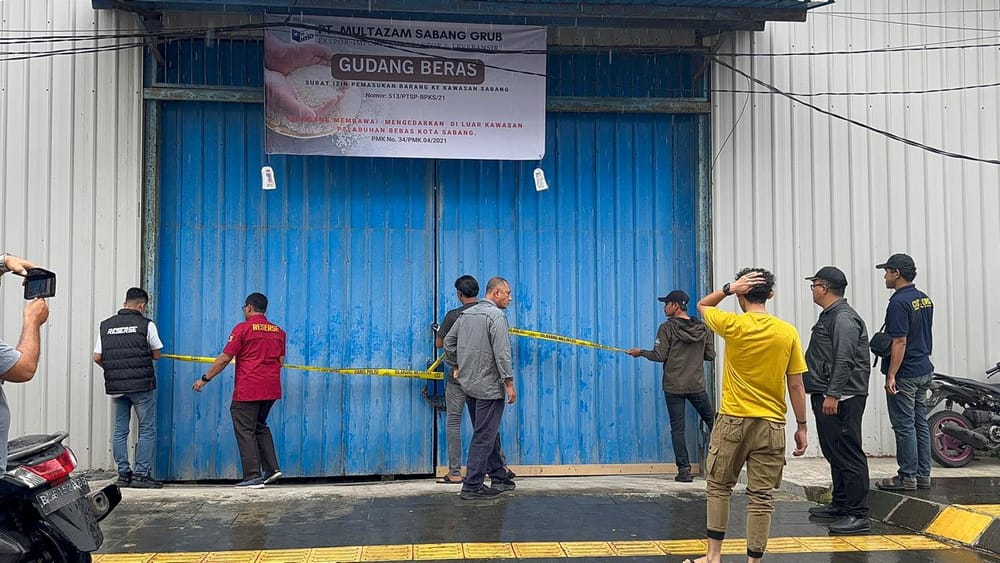

After the revelation of the illegal import of 250 tons of rice without permission in Sabang, Aceh, on Sunday (23/11/2025), the discourse on the government's seriousness in promoting food self-sufficiency has surfaced again. In addition to trying to reduce imports, let alone close illegal rice imports, it is time to continue other steps to realize food self-sufficiency.
IPB Agriculture Observer Dwi Andreas said there are five steps to realize food self-sufficiency including.
- Intensification can be done by increasing yields from existing land through the use of superior seeds and appropriate fertilizers.
Extensification can be done by expanding agricultural land to increase total food production. - Diversification and land optimization, food diversification can be achieved by reducing dependence on one type of commodity by developing a variety of types of food grown. Meanwhile, land optimization can be done by optimally utilizing existing land, including previously unproductive land, through careful planning.
- Improving the welfare of farmers by providing easy access to capital.
"Providing easy access to farm business credit and other financing schemes and subsidies and assistance can be in the form of access to fertilizer and seed subsidies," he told SUAR in Jakarta (24/11/2025). - Strengthening the food logistics system by building a strong logistics system so that crops can be optimally absorbed by the market.
- Policy and Collaboration are needed to implement supportive regulations and avoid sectoral egoism. Establish strong collaboration with various ministries and the private sector to achieve the same goal.
Modern agriculture
Chairman of the Rice Millers Association (Perpadi) Sutarto Alimoeso fully supports the Ministry of Agriculture's (MOA) efforts to build modern agricultural clusters across Indonesia to accelerate the achievement of self-sufficiency.
According to Sutarto, cluster development will have a major impact on the strengthening and resilience of the nation in the future, especially since the government has also fulfilled domestic production properly and sustainably.
"If clusters can be built, then credit will be easy, KUR is easy, seeds are easy and fertilizer is also easy because farmers are already available there," he told SUAR in Jakarta (24/11/2025).
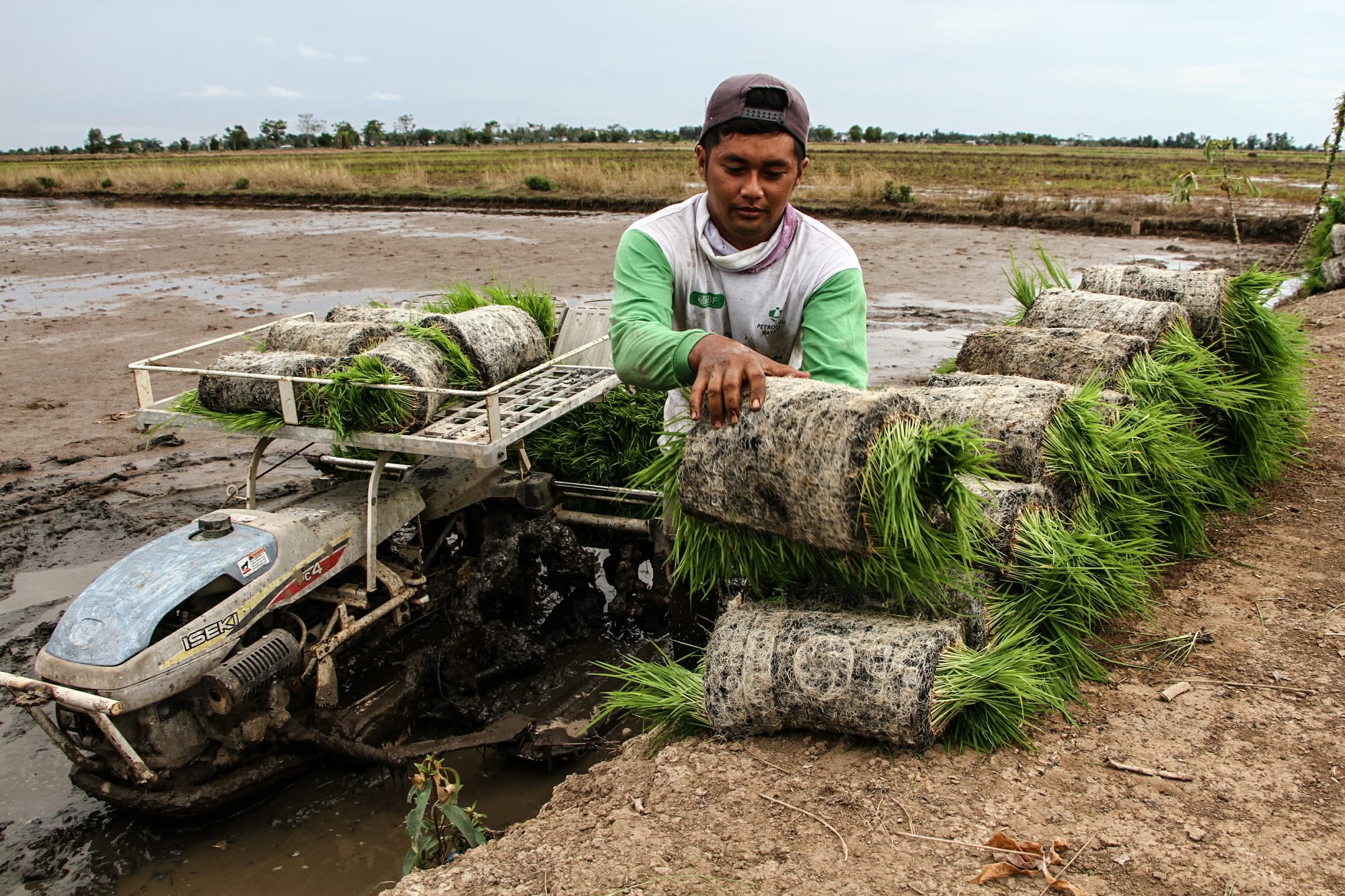
Sutarto said modern agricultural clusters can also increase productivity and efficiency, by using modern technology such as tractors and combine harvesters to speed up work and efficiently cultivate larger areas of land.
Clusters also allow farmers to earn greater profits due to production cost efficiency and become a solution to increase farmers' independence and welfare, such as through the formation of integrated corporations.
Self-sufficiency claim
Appreciation of efforts to achieve food self-sufficiency emerged in the Working Meeting of Commission IV of the House of Representatives with the Ministry of Agriculture on (24/11/2025). This meeting turned into an appreciation event for the great success of the agricultural sector under the command of Minister of Agriculture Andi Amran Sulaiman.
Since the beginning of the meeting, the members of Commission IV considered that the Ministry of Agriculture's performance had made a significant leap from increasing food production, increasing farmers' exchange rate (NTP), improving budget governance, to strengthening agricultural modernization, all of which showed a positive trend that established the transformation of national agriculture.
The achievement of rice self-sufficiency is the main highlight. Commission IV considers that the achievement is not just an administrative claim, but proven through field findings.
Read also:
 Benedictus Krisna Yogatama
Member of Commission IV of the House of Representatives from the PDI-P faction and former Minister of Maritime Affairs and Fisheries (2001-2004), Rokhmin Dahuri called Amran's leadership excellent and brought a new era of the revival of Indonesian agriculture.
"Facts on the ground, from working visits and recesses, it is true that God willing, Indonesia can achieve rice self-sufficiency this year with a production target of 34 million tons. Whereas national consumption is only around 31 million tons," said Rokhmin in a press release received by SUAR in Jakarta (24/11/2025).
Not only production, the farmer exchange rate (NTP) also shows a positive trend, which is considered as evidence of the success of farmer protection policies.
NTP from 119 last year now rose to 124.3. Kementan's success in managing the budget also received great appreciation. The fast realization of the budget and the direct impact on the field are considered as evidence of efficient and precise management.
Budget realization in October reached 72% and is projected to reach 93.8% in December. In the BPK criteria, 93.8 is a good achievement.
Rokhmin's appreciation also includes the direct impact of the Ministry of Agriculture's programs that he has seen in the field. He highlighted the quality of seed, fertilizer, irrigation, and alsintan assistance which he said really helped farmers increase productivity.
He also considered strengthening agricultural technology and modernizing agricultural machinery as important achievements that were previously difficult to achieve.
Furthermore, Rokhmin even emphasized that the current success of the agricultural sector is the result of Amran's firm, fast, and data-driven leadership.