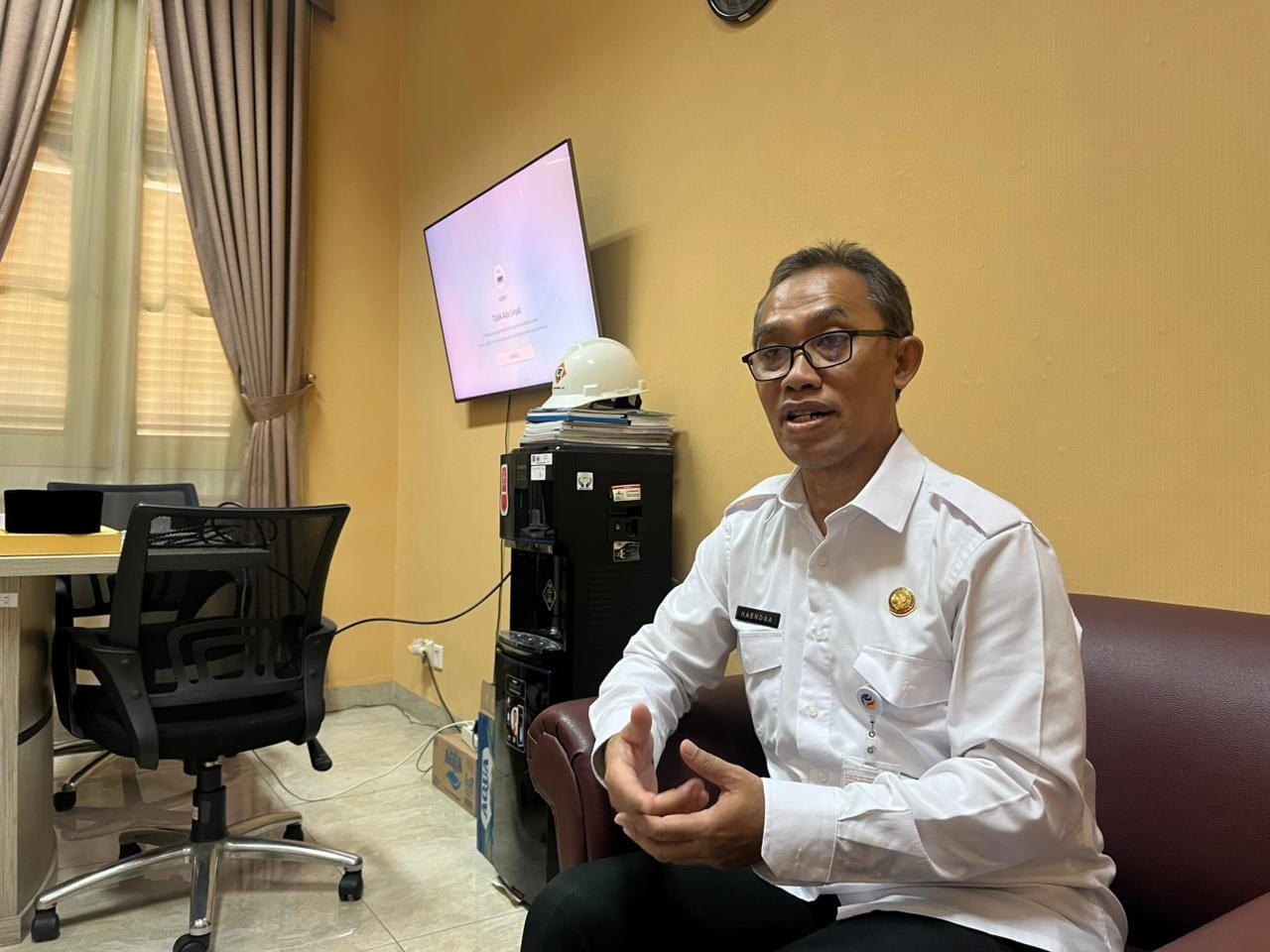
Special interview with Deputy for Nuclear Safety Assessment of the Nuclear Energy Regulatory Agency (Bapeten), Haendra Subekti
It took two weeks for the Nuclear Energy Regulatory Agency (Bapeten) to ascertain the source of the Cs-137 radionuclide contamination, following a report from the Ministry of Marine Affairs and Fisheries (KKP) on exported shrimp suspected of being radioactively contaminated in the United States, in August.
From this information, Bapeten and the Ministry of Marine Affairs and Fisheries (KKP) began to coordinate. "We met, discussed, to follow up on which factory this was from, then we surveyed the factory, to the location and finally expanded, it was found that there were several locations contaminated with Cesium," said Bapeten's Deputy for Nuclear Safety Assessment, Haendra Subekti.
After contamination was found in a factory, the inspection continued to several other factories, until it was believed that there was one factory that was the source of the pollution. "The Minister of Environment as chairman of the Task Force came to that conclusion," Haendra said.
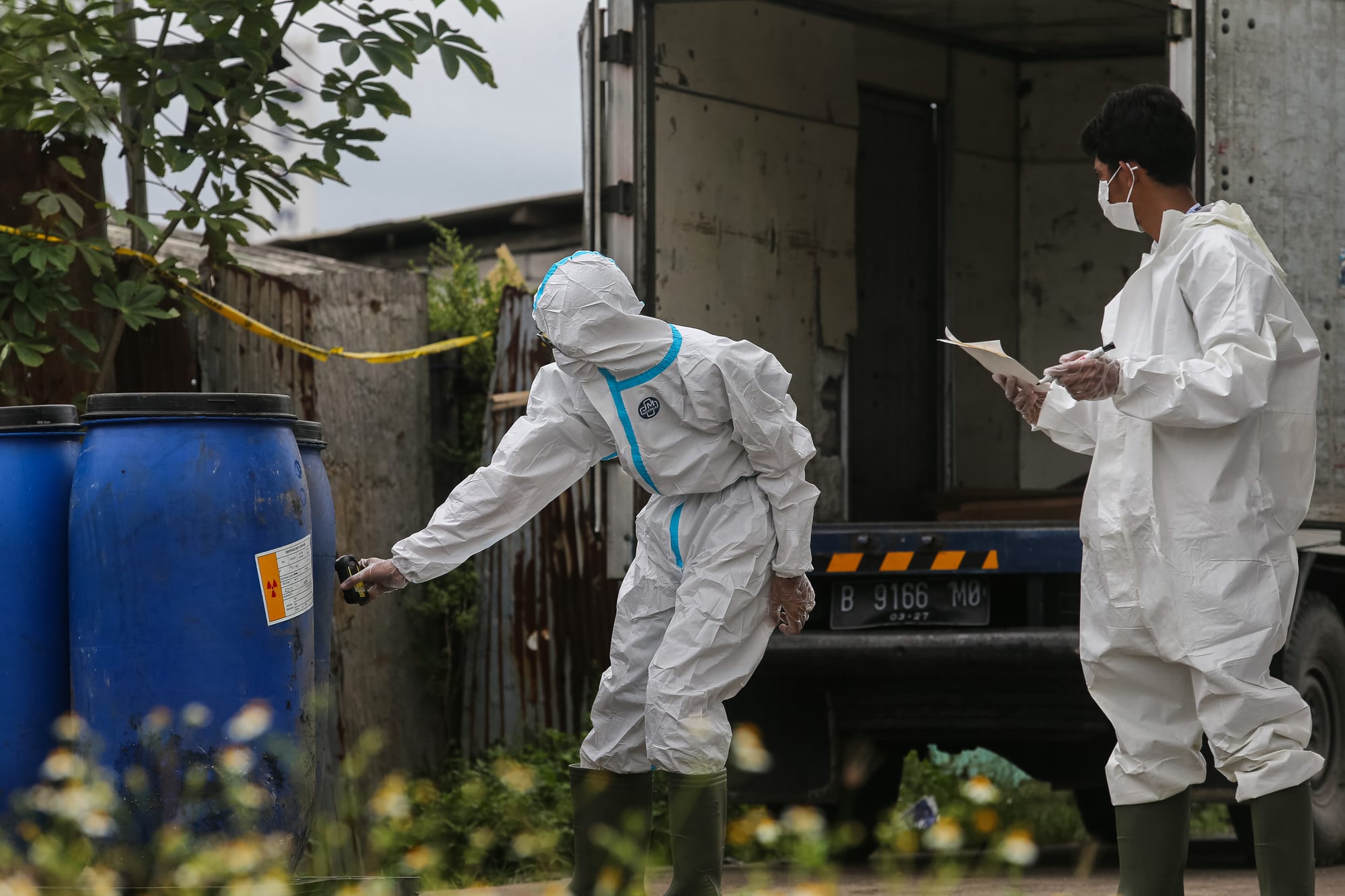
Because of this incident, Bapeten officers were very busy. In addition to Cikande to carry out decontamination, some others were assigned to inspect containers in Tanjung Priok, then inspections in the context of exports because the US government reopened shrimp exports and spice exports. "So there must be radiation checks and tests. Now we are running out of people," Haendra said.
According to him, this incident is a lesson learned for all parties, if supervision needs to always be carried out, especially for commodities that will be exported. "It turns out that we also have to be aware of all areas, both nuclear and non-nuclear. So that from future decisions, for example, there will be enforcement that industrial areas that mainly have metals, they must install radiation portal monitors (RPM)," he said.
Lalu bagaimana prosedur pengawasan terkait potensi adanya cemaran bahan berbahaya khususnya radioaktif ini dilakukan, wartawan SUAR Dian Amalia dan Gema Dzikri mendapatkan paparan panjang terkait hal ini dari Haendra saat berkunjung ke kantornya di Kawasan Gambir< Jakarta Pusat, Selasa, 21 Oktober 2025 lalu. Petikannya:
Why was there no early detection in the Cikande area of a Cs-137 radionuclide leak?
Yes, the point is because it is not a nuclear or radiation facility area, Bapeten has never been there, because there is no indication of the use of radioactive sources.
But if we move towards Cilegon, there are uses in factories for measurement purposes, such as density measurement, thickness measurement. Those are used in factories in Cilegon. But specifically in the Cikande area, in Bapeten's license list, there is no use of radioactive sources there.
Public activities were observed to be normal near the radiation source. Exactly how dangerous is Cesium-137 and are they being kept in the dark?
Most of them are not well educated. So most of them, if we look at the TV coverage, also say they have been there everyday. But when viewed from the danger, Cesium is one of its characteristics that can enter the body easily, with its form that can become dust, it has the potential to enter the body.
The impact on the people there is long-term.
If it's short-term , it's in hot spot locations, if it's long term, it's there. But if it's in people's homes, it's not dangerous, but it has the potential to enter the body, because of what hands hold, then eating doesn't wash hands, or sticks to clothes.
Therefore, this education is the task of the Task Force (Cesium-137 radiation handling task force). Everything that is done in Cikande is controlled by the Task Force for decontamination, for law enforcement, for regulation, for health, for communication, and for relocation.
Why do we have to relocate, because we want to clean the house, if we want to decontaminate but there are people there, it will be troublesome, so we have to move so that the people are not there and we can freely clean. After a few days, they can return home. The target for relocation according to the regulation is 7 days.

What was Bapeten's initial analysis that a foundry could process Cesium?
For metals in general, there should be no Cesium. So if there is Cesium, it must be mixed with Cesium. Now the source of Cesium from where, that is being deepened.
So Cesium is used in the gauging industry. The container is also metal, for people who don't understand that it is radioactive, then it can be considered just ordinary iron. And the iron is heavy because it has lead, for ironmongers it is a big profit because it is heavy.
Those who don't understand will think that this is ordinary stuff, ordinary flea market, this may also happen abroad, goods that do have Cesium are carried over into scrap metal, or have been processed into raw materials and are not known.
Because this incident is not the first time in the world. There have also been incidents of contamination of these smelters in America, and there have also been incidents in Europe. So they themselves are already aware, so there is an RPM, there is a detector, and it is required.
So far, is the management of registered radioactive waste monitored by Bapeten?
Waste control is important. Bapeten records all sources used and where they are sent, we record everything. Until when it is in the disposal site, it means it is safe there. Even when we get there, we already have a record of how many are there.
So I believe the data base is accurate for sources that are not used, disposed of until they are sent. Even some companies that say bankrupt are assisted by Bapeten for the process to dispose of their waste.
Because we don't want this bankrupt company to have no money, we help facilitate sending it to the disposal, but of course with a process in accordance with the laws and regulations, there must be a court decision, through the Attorney General's Office also involved to legalize in the context of the disposal in accordance with the provisions.
How to prevent the entry of hazardous materials including radioactive elements, especially at ports?
Actually, since we got the radiation portal monitor grant, I forgot the year, we have started working with Customs, providing technical guidance to officers in the field so that later they can know when an alarm is active or not. If it is active, what to do, we have trained them.
And lately, since this case has been busy, we have returned to providing some kind of direct guidance in the field. So it's no longer in the classroom, because directly to the field, if there is an active alarm, call Bapeten.
So it is indeed officers from Customs who supervise, if there needs to be further handling can coordinate with Bapeten?
So we currently do not have Bapeten officers standing by at the port. What exists is that we can be summoned at any time. For the case of shrimp containers returning to Indonesia, Bapeten is indeed standing by there according to schedule. So we already have a coordination schedule, when it arrives, our friends stand by there. That's until November maybe. Especially the five suspected containers, we are indeed awaited.
What are Bapeten's steps to prevent similar incidents in the future?
So yesterday we have started to make a kind of socialization for steel industry entrepreneurs in the Banten area together with the Regional Government. We provide socialization, for example the radiation symbol. If there is a device, for example between metals, there is a symbol (radiation), you should report to Bapeten. Why do you have to report? Because we don't know whether this has contents or not.
This program has actually been around since the beginning, I used to socialize to scavengers in the Batam area, in the Sulawesi area, in Banten, we came to the scavengers to socialize.
Now we are intensifying it again, if we used to go to the collectors, now we go to the industry. We will intensify this again through programs to several industrial areas and of course the closest is with the Ministry of Industry, then also with the Regional Government. This is what we are targeting in the future for socialization.
How about prevention on the commodity side?
Now friends from Bapeten from yesterday are training friends at the KKP to be able to detect with the tools required by the FDA. So the procedures we use are in accordance with what is requested by the FDA. In business language, they are our customers, we follow their requests.
In this case, Bapeten has two tools that are in accordance with their specifications, so for several days of training we use specifications that are in accordance with the FDA. But later on, the fish processing factories will also buy equipment in accordance with FDA specifications, so that they can scan themselves, of course there will be supervision from KKP quality inspectors, so it is not Bapeten people who stand by.
By training CTF quality inspectors these few days, it is hoped that the quality inspectors will have the competence to do scanning, as well as supervise fish processing units to do their own scanning , because it is required by the FDA, and the method must be exactly the same.
Is it enough to provide skills to officers at MPAs?
Indeed, what KKP requested was not only training. There are already three places that want to export, so later these three locations, Bapeten will help with Bapeten scanning equipment at these locations, there are in Jakarta and outside the city.
But don't forget, there are 34 company locations that must be supported for this, until they have the equipment. Because the procurement of this equipment takes time, if I'm not mistaken, it takes three months. This has been ordered, the arrival of the goods is three months, because the order is from the United States.