

Banks are looking to increase the growth of sustainable financing in line with environmental awareness and ambitious targets to achieve net-zero emissions by 2060.
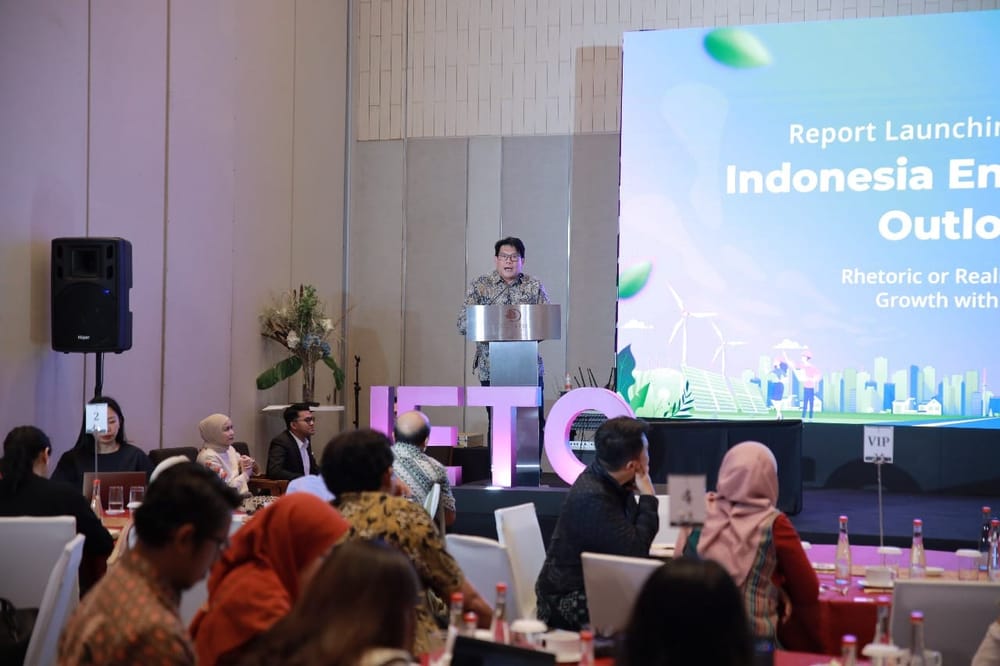
This was stated by Andi Syaiful Wahdi, Enterprise Banking Business Head of Bank Danamon Indonesia, at the Net Zero School, part of the MUFG Net Zero World (MUFG N0W) 2025 series.
The forum promotes cross-sector understanding of the role of green finance for Indonesia's low-carbon economy. This is done as part of climate change mitigation efforts.
Andi explained that the 'Net Zero School' brings together government, businesses and financial institutions to accelerate the green transition. Andi emphasized that sustainability is not just about protecting the environment, but also understanding the social and environmental impacts of business.
"We believe collaboration from various sectors is important to encourage this sustainability," he said in a press conference in Jakarta, Monday (13/10/2025).
Bank Danamon also targets to become a net zero emission bank by 2030. Various internal measures taken by Danamon include:
- Reduced use of paper, electricity, and water
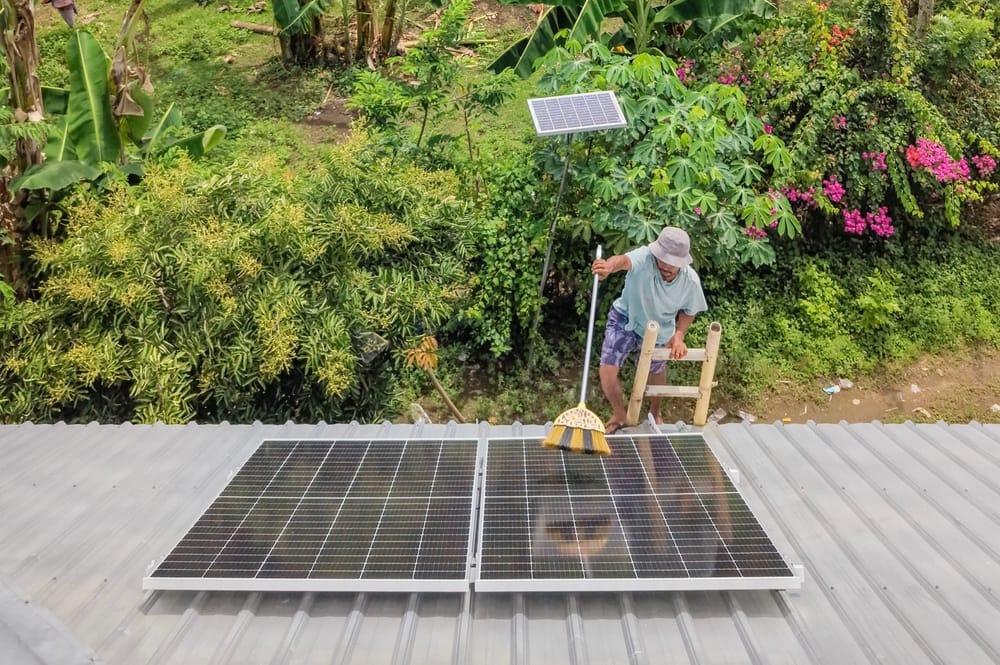
- Solar panel installation
- Eco-friendly air conditioning in the office.
"On the financing side, Danamon is strengthening support for green and social projects, including UMKM and renewable energy," he said.
Through the cooperation with MUFG, Danamon expands its results-oriented sustainable financing portfolio, including sustainability-linked financing (SLL).
Andi hopes that initiatives like Net Zero School will increase public awareness of the importance of green financing.
"Hopefully this can encourage us all to realize a greener world in the future," he said.
Colin Chen, Head of Sustainable Finance Asia Pacific at MUFG Bank, explained that Environmental, Social, and Governance (ESG) principles are an important framework for businesses in facing the challenges of a low-carbon economy.
This approach requires companies to balance financial interests with social and environmental responsibility. Colin added the importance of understanding the concept of dual materiality, which looks at sustainability from two sides, namely how climate risks affect company performance and how business activities impact society and ecosystems.
This shift in perspective, says Colin, opens up new opportunities for innovation and inclusive growth, as demand for green investments in the region grows.
He emphasized that the main issue of sustainability today is reducing greenhouse gas emissions.
He assessed that global attention is now also shifting to the issue of nature and biodiversity. Indonesia is in a strategic position because of its rich forests and its status as one of the world's largest biodiversity centers.
Indonesia, he said, faces both climate change risks and great opportunities in transitioning to a low-carbon economy with investment potential of around USD3.8 billion.
Opportunities exist in the renewable energy, transmission network, and electric mobility sectors.
Chen also highlighted the potential of nickel for the battery industry as well as the development of low-carbon fuels such as Sustainable Aviation Fuel (SAF). From 2027, the government aims for at least 1% of aircraft fuel use to come from SAF to accelerate the adoption of clean energy.
He noted that global sustainability frameworks and standards are still diverse, but the harmonization process is ongoing. Indonesia already has a strong foundation through the implementation of sustainable financing, support for thematic bonds, annual reporting, climate risk management, and green taxonomy. The International Sustainability Standards Board (ISSB) standards are also planned to come into effect in Indonesia on January 1, 2027.
"Policy and infrastructure readiness are more important than just who is the fastest to reach net zero," he said.
Gandolfo explained that sustainable financing includes four main categories, namely:
- Green financing,
- Social
- Performance indicator-based financing or sustainability-linked financing.
- Transition finance aimed at high-emitting sectors such as cement, steel, shipping, aviation and oil and gas to help phase-in low-carbon operations.
In practice, the bank's role does not stop at providing funds. For Gandolfo, the bank also helps customers design financing frameworks and map out assets that meet sustainability criteria. The four main steps emphasized are assessing asset feasibility, conducting evaluations, managing funds transparently, and delivering regular reports to investors.
Chen emphasized that the sustainability ecosystem consists of various instruments that complement each other to accelerate decarbonization while expanding social impact. Each instrument has a different mechanism, but all are geared towards mobilizing capital to projects that deliver emission reductions and measurable social benefits.
One form is social financing, which targets vulnerable groups such as UMKM players, low-income communities, people with disabilities, women, youth, or other marginalized communities.
For high-emission sectors such as cement, steel, aviation and oil and gas, Gandolfo highlighted the importance of transition finance. These schemes allow companies to take gradual steps towards greener operations with a credible, science-based transition plan.
"Funding can be directed towards decarbonization projects such as hydrogen technology, energy storage, or carbon capture," he said.
Chen also highlighted blended finance as a form of collaboration between government, private and philanthropic organizations on projects that are difficult to execute commercially. By combining grants, guarantees, insurance, or technical assistance, project risks can be reduced making them more attractive to investors. He expects this scheme to be increasingly applied as the need for energy transition funding increases.
Chen said green and sustainable financing in Indonesia has grown rapidly in the last five years.
Total financing through green and sustainability loans reached around USD3.2 billion, while green bond issuance reached USD2.8 billion.
Chen is optimistic that the sustainable financing market will become more diversified with the involvement of more companies outside the large sectors.

Himbara in Green Financing
In addition to MUFG and Danamon, members of the Association of State-Owned Banks (Himbara) continue to strengthen support for green financing as part of the national commitment towards a low-carbon economy.
Bank Mandiri recorded a sustainable financing portfolio worth Rp304.5 trillion until June 2025, growing 9.6% on an annual basis. Of that amount, the green portfolio rose 13.3% to Rp157.5 trillion, making Mandiri the green financing market leader with a share of more than 35%, according to a Bank Mandiri release received by SUAR some time ago.
Operationally, Bank Mandiri became the first bank in Indonesia to implement a Digital Carbon Tracking system to monitor carbon emissions in real time.
By mid-2025, the bank's emissions will drop by 3.9% thanks to the implementation of 10 green offices, 3 GBCI-certified buildings, 31 electric vehicle charging stations, 870 solar panels, and 490 electric and hybrid vehicles. The improved ESG performance will see Mandiri's MSCI score rise from "BBB" to "AA" by 2025.
PT Bank Rakyat Indonesia (Persero) Tbk or BRI also showed growth in green financing with a portfolio of Rp89.9 trillion until the first quarter of 2025, up 8.18% on an annual basis.
The funds flowed into the renewable energy, green transportation and sustainable natural resource management sectors. In total, BRI's sustainable financing portfolio reached Rp796 trillion or 64.16% of the total ESG-based financing and investment, according to BRI's press release.
BRI Director of Human Capital & Compliance, A. Solichin Lutfiyanto, said this increase shows BRI's seriousness in becoming an agent of change towards a green economy.
BRI also issued three phases of Green Bond worth IDR 13.5 trillion and a sustainability-linked loan of USD 1 billion to strengthen microfinance. By integrating ESG principles throughout the financing chain, BRI seeks to expand support for UMKM and low-income communities and strengthen contributions to the Sustainable Development Goals (SDGs).
Senior Vice President of the Indonesian Banking Development Institute (LPPI), Trioksa Siahaan, assessed that green financing in the national banking sector is still dominated by lending to UMKM, most of which are classified as environmentally sound business activities.
While some large banks have started to channel financing to the certified palm oil sector and renewable energy projects, the largest contribution still comes from micro and medium-sized financing. On the other hand, banks are considered ready to expand their green portfolio, although the readiness of the business sector is a determining factor in the successful transition to a low-carbon economy.
Trioksa emphasized the importance of strengthening infrastructure and human resource capacity in banks, as well as evaluating regulations to more effectively encourage green financing without increasing the risk burden. He sees great opportunities in sectors such as green building and solar energy for households.
"When banks are active and selective in channeling green credit, businesses are automatically encouraged to improve towards business processes that support the net zero emission target," he told SUAR.