
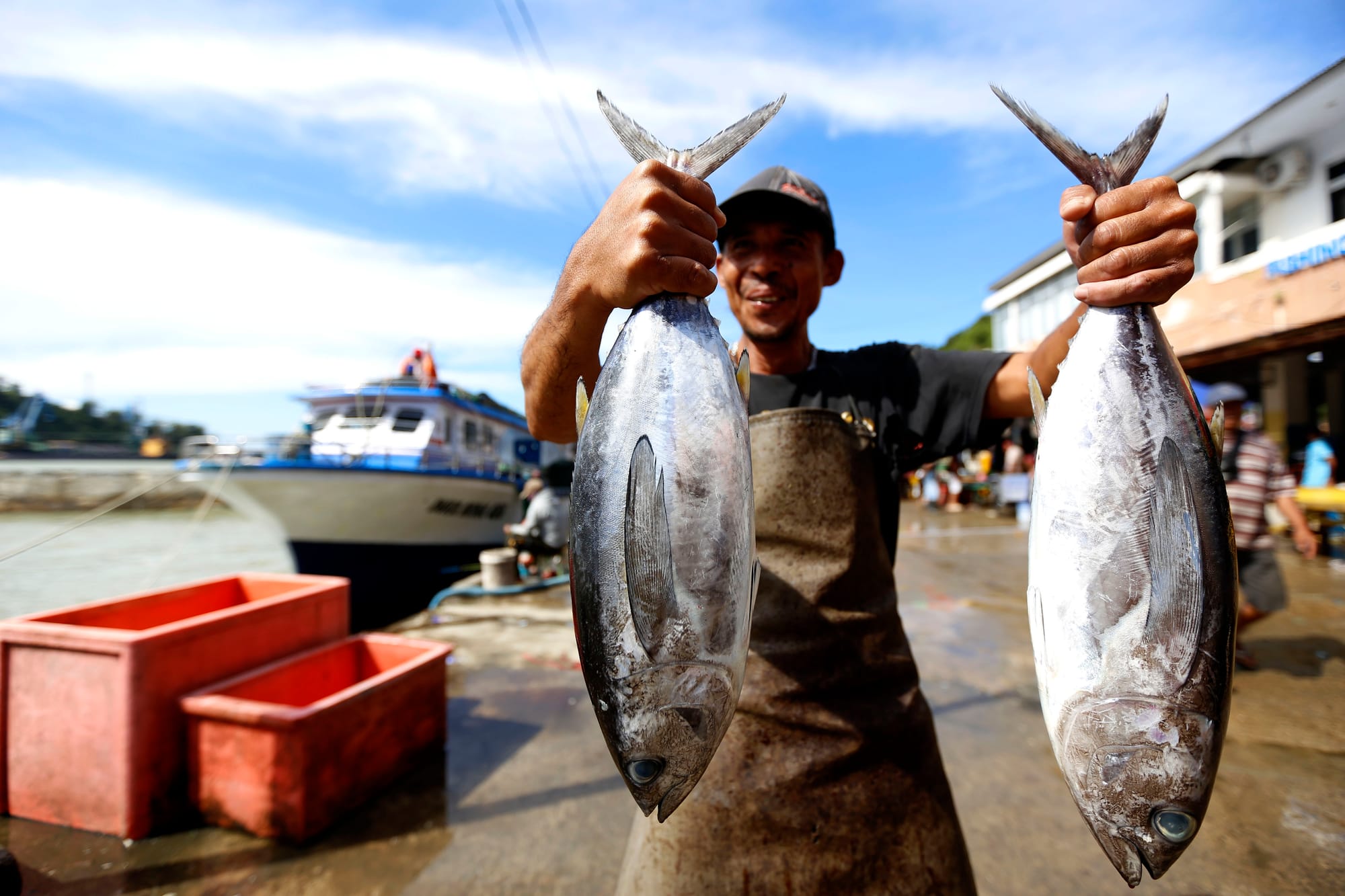
Indonesia's fisheries industry has received positive signals from the Middle East. A total of six Indonesian fish processing unit (UPI) companies received permission to enter the Saudi Arabian market.
The approval was issued by the Saudi Food and Drug Authority (SFDA) on Tuesday (19/08/2025) and announced by the Ministry of Marine Affairs and Fisheries (KKP) on Friday (22/08/2025).
The six UPIs for processed products are PT Pahala Bahari Nusantara, PT Suri Tani Pemuka, PT Muria Bahari Indonesia, PT Sekar Laut, PT Alam Jaya, and PT Philips Seafood Indonesia. For raw materials, Indonesia is known to have 63 capture fisheries units that have had the opportunity to export products to the Land of Camels.
This is a valuable opportunity to increase the added value of seafood products, as well as the beginning of opening alternative market shares amid the trade war.
"This approval marks Indonesia's success in expanding access to exports of fishery products to Saudi Arabia, while strengthening Indonesia's position as a food exporting country that meets international safety and quality standards," said BPOM Head Taruna Ikrar in a press statement received by SUAR, Tuesday (26/08/2025).
The export of Indonesian seafood products to the country of Bani Saud is not just a mirage. The proof is that Mohammed Bawazir for Trading Co Ltd (MBT) signed a letter of intent (LoI) worth US$ 60 million, or around Rp 984 billion at an exchange rate of Rp 16,400 per US dollar, to buy Indonesian processed food products, including canned tuna.
MBT is one of the leading distributors in Saudi Arabia for food and beverage (F&B) products, body care, and herbal products. MBT Managing Director, Fawzi Bawazier, emphasized MBT's commitment to continue to encourage the use of Indonesian products in the Saudi Arabian market. According to him, Indonesian F&B products have enormous potential to enter the Saudi Arabian market.
"We are very open to helping Indonesian businesses who want to do business in Saudi Arabia, be it large companies or UMKM. We hope that Indonesian businesses will not only focus on the domestic market, but can also devote efforts to explore the Saudi Arabian market," said Fawzi.
New hope
For fisheries and seafood businesses, the news is also a breath of fresh air after the issue related to shrimp products from Indonesia that allegedly contain radioactive compounds.
The US Food and Drug Administration (FDA) recently announced the discovery of Cesium-137 in imported frozen shrimp. The FDA specifically mentioned that this finding was detected from frozen shrimp products processed by PT Bahari Makmur Sejati located in Indonesia. The FDA also advised Americans not to purchase or consume these seafood products.
So, getting fresh air from Saudi Arabia, Marketing Director of PT CJ Feed and Care Indonesia Haris Muhtadi welcomed it as a good momentum for processed fishery product producers and Indonesian exporters to re-approach the potential Middle East share.
"So far, our exporters tend to be comfortable with the Japanese and American markets, not too focused on the Middle East market. Likewise with Europe, which is not much glanced at because of the difficulty of certification that cannot be fulfilled by processing companies and producers in Indonesia," Haris explained when contacted by SUAR, Monday (25/08/2025).
Haris explained that in terms of demand, the Middle East market is not bigger than conventional fisheries markets such as Japan and the United States. However, his party is ready to welcome this news.
According to the businessman, who is also the Chairperson of the Indonesian Aquaculture Society (MAI) Business Development Commission III, in terms of production capacity and product quality, Indonesia's processed fishery product industry is more than ready and has been very developed, so it has high added value.
"For example, Indonesian shrimp products are very advanced. We no longer send head on shrimp or peeled shrimp. The shrimp we send is ready to cook, already in the form of frozen ebi furai , shrimp crackers, and so on. The market there asks for any kind of processed product, basically our fisheries industry is very capable of fulfilling it," he said proudly.
Not only in terms of export volume capacity, Indonesia's processed fishery products industry has also obtained sanitary and phytosanitary certification from countries that are known to have very strict quality standards to accept export products, such as Japan and the United States.
"To enter the Middle Eastern market, maybe we need to attach halal certification, which is definitely not too difficult [to obtain] because most fishery products are halal products that do not go through the slaughter process and so on," said Haris.
The majority of exporters, according to Haris, lack the patience to move out of their comfort zone and explore markets that have been sidelined.
Despite the capacity readiness and success of Indonesia's processed fishery products industry to enter the Middle East market, Haris admits that there is one major challenge. The majority of exporters, according to him, lack the patience to try to get out of their comfort zone and penetrate market shares that have been sidelined.
In fact, more than just a matter of diversification, the opening of new market segments can serve as mitigation and anticipation.
"If we only rely on the existing market, when something happens, we will be left scrambling. Let's organize and attend more exhibitions, seafood expos, in the region, and be more active in the future, so that we are no longer dependent on the Japanese and American markets," said Haris.
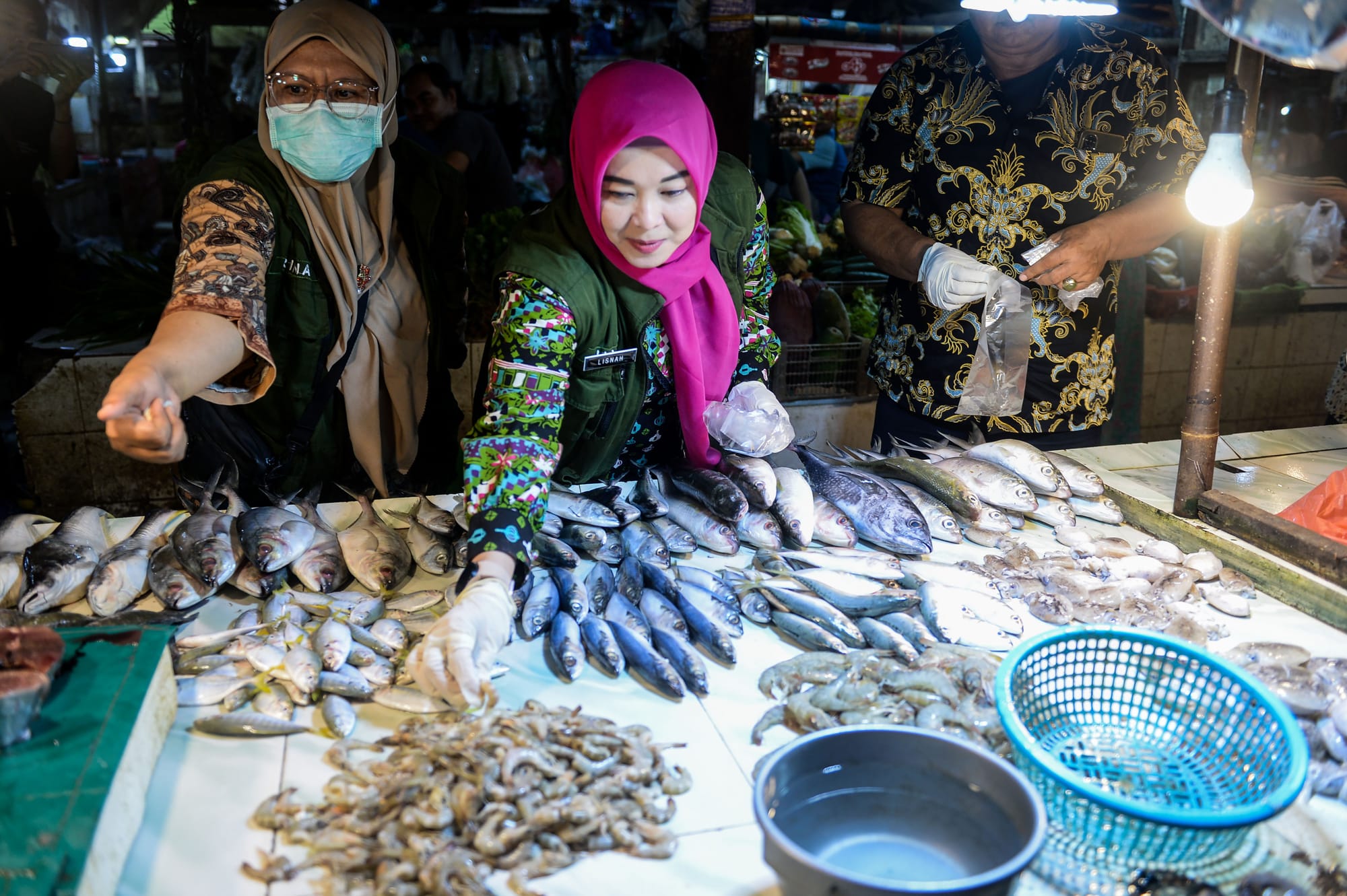
In response, Head of the Agency for Quality Control and Supervision of Marine and Fishery Products, Ishartini, appreciated the enthusiasm of fishery producers to enter the Middle East. From the government side, KKP is committed to providing support in the form of guidance to other fish processing units to follow in the footsteps of successful UPIs.
Dismissing concerns about the modest demand in the Middle East market, Ishartini emphasized the huge potential for annual demand, particularly to meet the consumption needs of Hajj and Umrah pilgrims in Saudi Arabia.
"The opportunity is not playing, and it has been seen by our competitor countries, such as Vietnam," Ishartini said when contacted by SUAR, Tuesday (26/08).
Although encouraging, the SFDA approval is not the end point. KKP is currently working hard so that not only processed products from capture fisheries can obtain export licenses, but also processed products from aquaculture. One of the reasons is that the volume of demand for processed products from aquaculture is still below the demand for capture fisheries products.
Not fighting alone, the Directorate General of Strengthening Competitiveness at KKP continues to coordinate with the Ministry of Trade and the Indonesian Embassy in Jeddah to prepare if producer associations need government facilities to promote Indonesian products in the Middle East through exhibitions.
"We will continue to try so that all Indonesian processed fishery products can enter, because of the opportunity for large demand from Hajj and Umrah pilgrims, including pilgrims from Indonesia. Thus, we can meet their consumption needs and food availability with processed fish from the country," he concluded.
Export quality standards
In addition to diligence, the ability of small and medium-scale industries to meet export quality standards that are different from those of large-scale fisheries industries is also a challenge in efforts to expand the share of exports to the Middle East.
A lecturer at the Faculty of Fisheries and Marine Sciences, Padjadjaran University, Rusky Intan, said that small and medium-scale fisheries industries that have the potential to expand their share and be able to go international are still struggling to meet these quality standards.
"Let alone for exports whose certifications are diverse and quite expensive to fulfill (HACCP and Health Certificate). [The ability of small and medium scale industries] to meet national quality standards is not all that can be done," Rusky said in a written message to SUAR, Tuesday (26/08).
Furthermore, according to Rusky, small and medium-scale fisheries industry players are still in dire need of technical education to find out the types and correct dosage of food additives that can be used in preparing the products they will export.
There is also the challenge of raw material consistency in terms of freshness and size. Not to forget, the challenge of cold supply chain prerequisites that require processed fish products to be delivered at a constant low temperature to prevent damage to the destination.
"To my knowledge, export regulations are changing and getting stricter. The challenge for UPI, especially small- and medium-scale ones, is to fulfill these export requirements, and that requires not only capital, but also human resource capacity," Rusky said.
"Export regulations are changing and getting stricter. The challenge for UPI, especially small- and medium-scale ones, is to fulfill these export requirements, and that requires not only capital, but also human resource capacity," Rusky said.
Based on Ministry of Trade data, in the January-June 2025 period, the total trade between the two countries reached US$ 3.28 billion. Indonesia's exports to Saudi Arabia in that period amounted to US$ 1.70 billion, an increase of 49.53% compared to the same period the previous year which amounted to US$ 1.14 billion.
Meanwhile, Indonesia's imports from Saudi Arabia were recorded at US$ 1.58 billion. Thus, Indonesia managed to record a surplus of US$ 128.00 million against Saudi Arabia.
In the January-June 2025 period, Indonesia's processed food exports to Saudi Arabia were recorded at US$ 134 million, growing 4.03% compared to the previous year and becoming one of the main drivers of the increase in export value.