
Complementing Finance Minister Purbaya Yudhi Sadewa's fiscal policy, the Board of Governors of Bank Indonesia (BI) announced a 25 basis points (bps) cut in the benchmark interest rate (BI Rate) to 4.75%. This move is a way for BI to increase economic growth through increased public spending while encouraging banks to channel more credit with liquidity expansion.
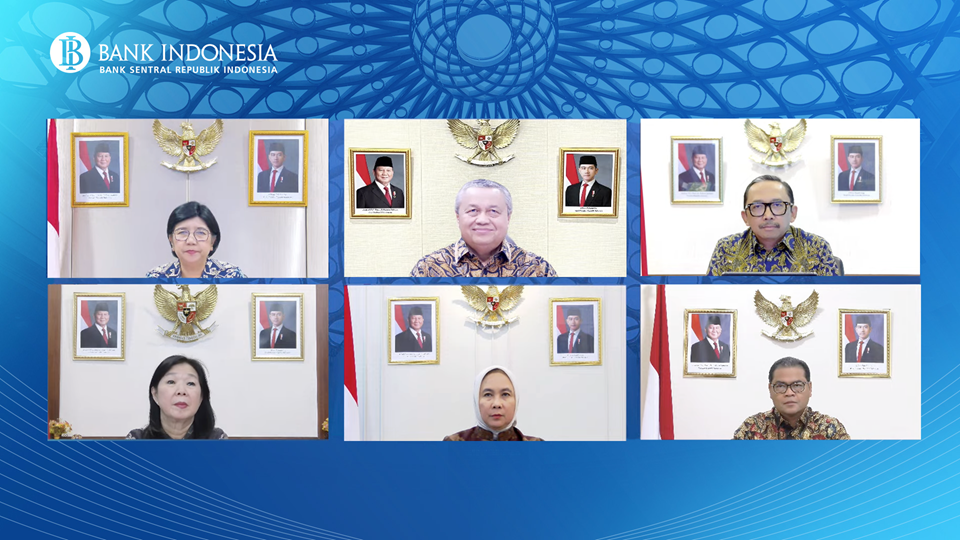
The BI Board of Governors conveyed the decision in a press conference of the September 2025 BI Board of Governors Meeting (RDG) held online, Wednesday (17/9/2025). The decrease in the BI Rate was followed by a decrease in the deposit facility rate by 50 bps to 3.75% and a decrease in the lending facility rate by 25 bps to 5.50%.
Throughout this year, BI has lowered its benchmark interest rate five times with a total reduction of 125 basis points. Each reduction amounted to 25 basis points. The rate cuts were made in January, May, July, August, and September.
BI Governor Perry Warjiyo stated that the decision was taken after the board of governors conducted a comprehensive assessment of global and national economic conditions.
Currently, Perry noted, the world economy is experiencing a slowdown, not only due to the reciprocal tariff policy of the United States, but also due to the decline in European and Japanese exports, as well as the decline in China's economic performance.
"This prospect encourages accommodative monetary policy, with an increase in capital flows to gold purchases and a decrease in capital flows to emerging markets, including Indonesia," Perry said.
Facing this situation, BI decided to implement monetary liquidity expansion and loose policy by lowering interest rates, increasing liquidity, and encouraging credit financing. These steps were taken to encourage the strengthening of investment, spur agricultural and manufacturing exports, and ensure an optimal increase in government spending.
Domestically, the economic record remains favorable and supports external resilience. July 2025 trade balance recorded a surplus of US$ 4.2 billion. Portfolio investment into SBN recorded net inflows of US$ 432 million, continuing net inflows into SBN in Q2-2025 of US$ 1.6 billion.
Foreign exchange reserves at the end of August 2025 were maintained at US$ 150.7 billion, while inflationary pressure was recorded at a low 2.31% YoY. The rupiah exchange rate against the US dollar also strengthened by 0.30% (ptp) compared to the level at the end of August 2025 thanks to BI's consistent stabilization policies.
"The direction of BI's policy mix will be all out for pro-growth policies, maintaining inflation and rupiah exchange rate stability by encouraging economic growth, strengthening the structure of the payment system industry, and strengthening the resilience of payment system infrastructure," Perry said.
"The direction of BI's policy mix will be all out for pro-growth policies," Perry said.
Not just a signal
The impact of the BI Rate reduction was immediately felt by the banking industry. This is considered a directional step to accelerate the decline in the cost of banking funds and encourage growth engines while maintaining inflation expectations and rupiah stability.
Bank Permata economist Josua Pardede assessed that the decision to reduce the BI interest rate lowered the lower limit of the interest rate range so that funds did not linger at BI. Banks are encouraged to lower deposit rates, and in turn, lending rates.
"This is also accompanied by liquidity expansion and steps in the money market so that transmission actually occurs, not just a signal," said Josua when contacted by SUAR, Wednesday (17/9/2025).
He also underlined that the 125 bps interest rate cut since January 2025 has taken into account the room for cuts and the condition of Indonesia's economic growth which is still below its potential.
"The combination of weakening external impetus and opportunities for global interest rate cuts provides room for Indonesia to shift policy from being very cautious to being more supportive of economic recovery while maintaining the exchange rate," he said.
Monetary policy easing, according to Josua, is a reasonable response to domestic demand that has not been strong. This is characterized by weakening lower middle class consumer confidence, limited job openings, and businesses choosing to wait and see.
Although the easing gesture is very clear, caution is still needed as there are three sources of risk. First, food price pressures when supply is disrupted or demand increases could erode the easing space.
Secondly, the fiscal push could add to price pressures if not matched by increased supply.
Third, financial sector regulatory uncertainty that affects market perception and capital flows.
"Going forward, BI's consistency in maintaining the rupiah, the continuation of pro-market monetary operations, and synergy with fiscal policy are key so that the benefits of cuts really flow to businesses and households without sacrificing the economic stability that has been built," Josua concluded.
In line with Josua, Indonesian Banking Development Institute (LPPI) lecturer Ryan Kiryanto stated that even though BI's RDG decision this month was beyond economists' expectations, it was a "sweet jamu" that provided fresh air for the banking and real sectors. Especially with the injection of Rp 200 trillion into Himbara banks and the continued economic stimulus package.
"In other words, the policy stance of BI as the monetary authority and the Ministry of Finance as the fiscal authority can be said to be 'in sync' or synchronized. Banks are expected to immediately adjust interest rates to encourage credit expansion," Ryan told SUAR, Wednesday (17/9/2025).
Ryan underlined that the appropriate follow-up that banks can do is to prepare channels of credit distribution to business fields, including national strategic projects, as well as to the corporate or UMKM customer segments. On the other hand, business people can immediately submit credit proposals due to accommodative interest rates.
No less important, financial authorities also continue to monitor developments in the field. Especially the optimization of lending to the UMKM segment after OJK issued a POJK on the ease of financing to the UMKM segment.
Now, according to Ryan, it is just a matter of how the government through its tools creates and maintains the conduciveness of the business and investment climate to encourage entrepreneurs to expand and investors to invest. "Thus, the transmission of the monetary and fiscal policy mix can be effective to the real sector," said Ryan.
Indonesian Employers Association (Apindo) Economic Policy Analyst Ajib Hamdani said he appreciated all monetary efforts to boost economic growth. With the lower benchmark interest rate, it is hoped that it can be transmitted to a lower credit interest rate.