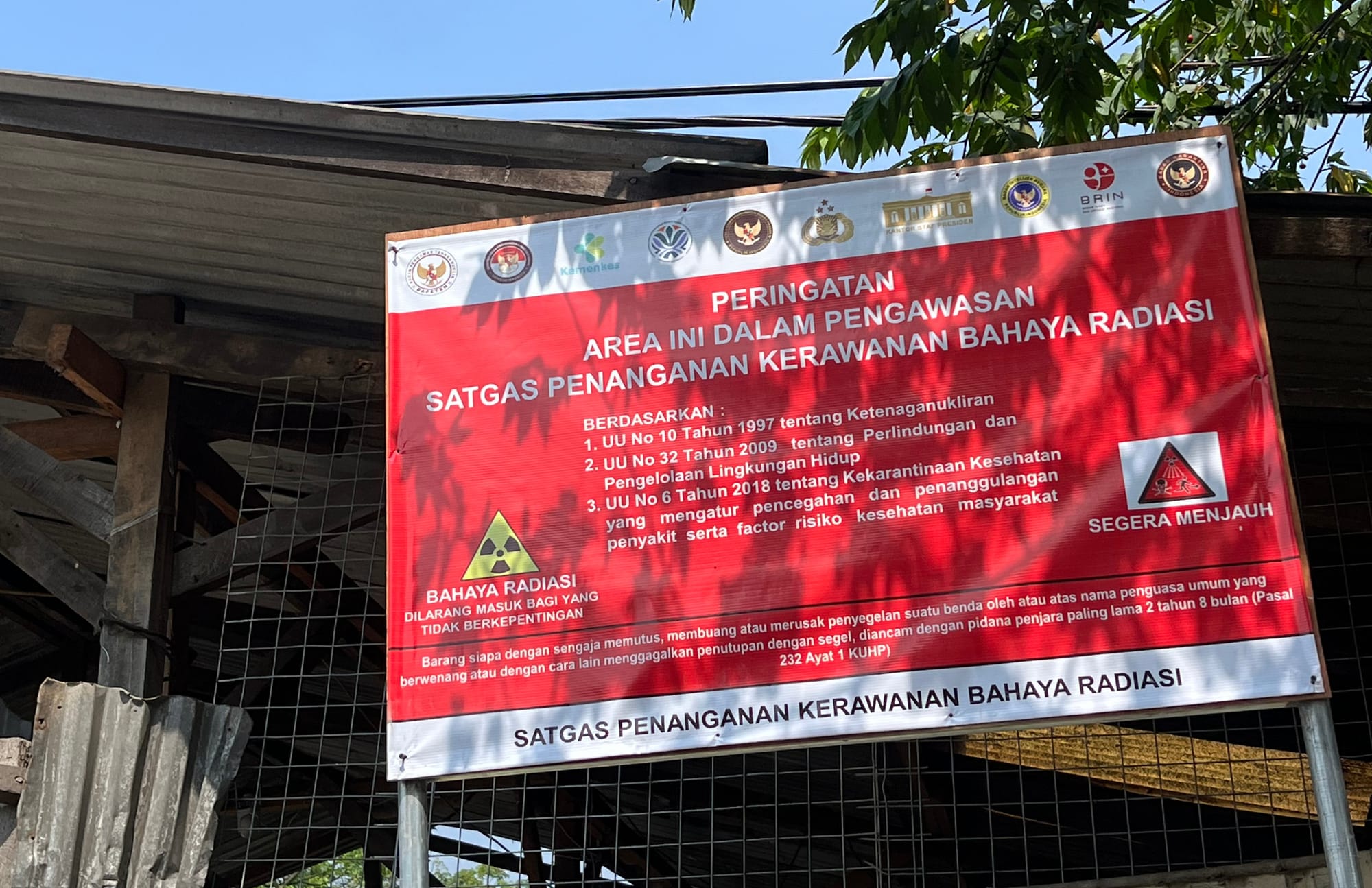
On the side of the road leading to the PT Bahari Makmur Sejati 2 factory, an old rusty red angkot car is parked with its back door open. Inside, powdered drink ingredients in colorful sachets hang on the left side, while at the base of the window, bread and fried foods are still neatly arranged on trays, barely touched despite the daylight.
Inside the car, Mrs. Masti, as she is familiarly called, sat alone on a small wooden bench, smiling kindly when SUAR approached, last Friday, October 17, 2025. In front of her, four boxes of mineral water were still intact. Buyers seem to have disappeared since the factory at the end of the road stopped operating due to radiation cases. "Now it's just as it is, neng," he said.
He hopes that the factory can resume operations so that his shop will be busy again. Previously, the factory area had been decontaminated. However, residents like Mrs. Masti did not know what was actually happening, especially inside the factory. "No one told me," she said. "If you hear it, it has been cleaned up. But we don't know," she said again.
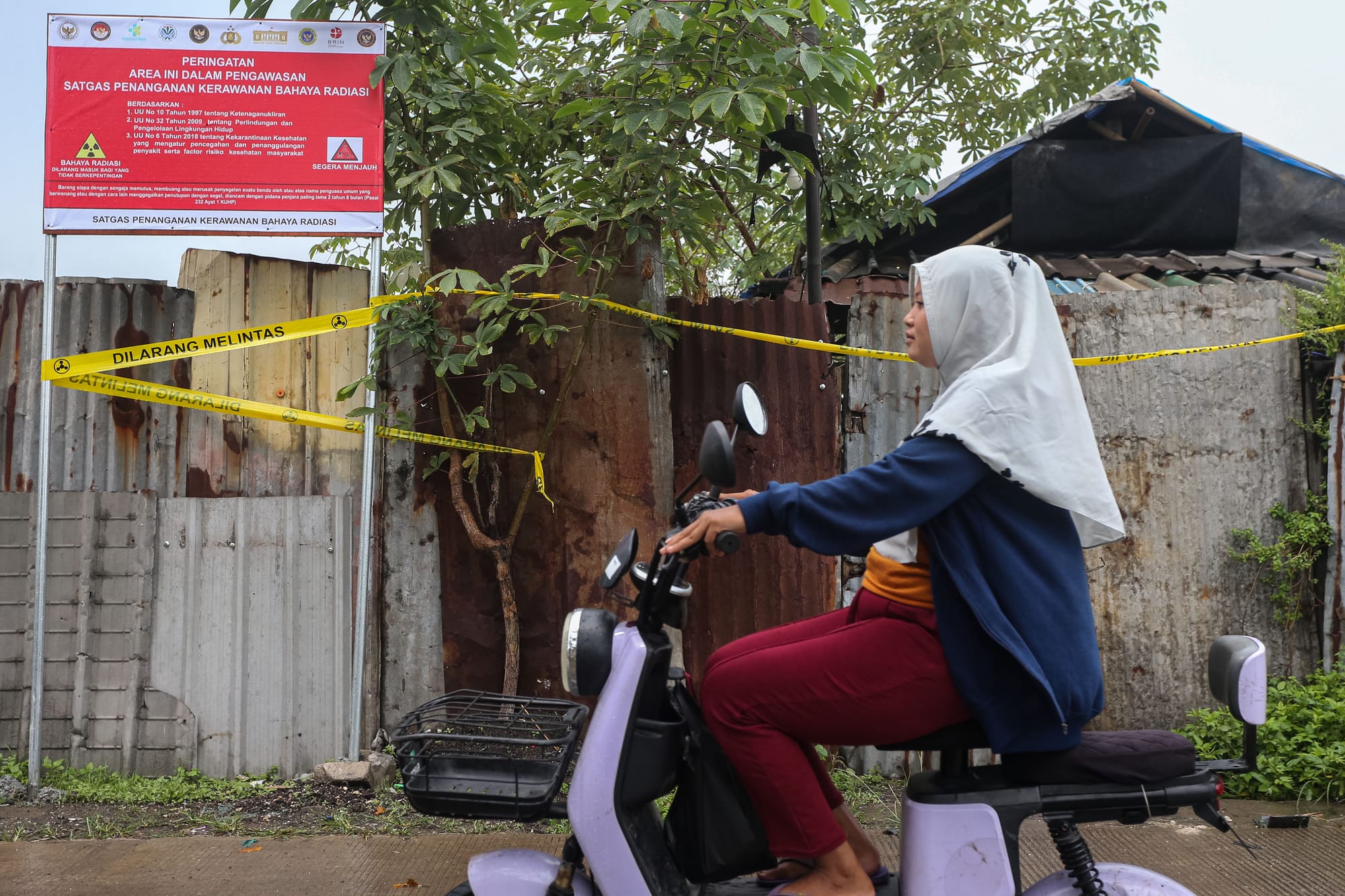
For Ms. Masti, the issue is simple: how to survive. Because when the factory stops operating, it's not just production that stops, but also the flow of money in the pockets of the vendors, parking attendants, and small traders who depend on the factory workers.
Not far from Mrs. Masti's stall, near the PT Jongka Indonesia factory building, which at that time had just been declared safe from radioactive exposure, a traveling drink seller who sells his drinks in a simple pickup truck, Andi Buang, is still enthusiastic about making a living.
He admitted that despite the Cesium-137 radioactive exposure incident, it did not have a significant impact on his drink selling business. He also did not get an order to stop selling in the red zone area. "There is no (socialization), it's fine, there is no prohibition. But what if there is a ban?" he asked.
While preparing dozens of iced tea drinks for factory workers in the area, Andi, who has lived in the village near the scene since around 1980, said he was not afraid of the radioactive exposure that hit the industrial area.
He is even afraid that many employees will be dismissed due to the incident, which will affect his business turnover. Therefore, he asked the government to immediately resolve this problem.
"Yes, I pity the affected employees, there are also those who pick up the affected employees here. There are also those who often hang out here to pick up, since the factory was closed, it has been almost three months," he continued.
Need for thorough investigation
The radiation exposure that occurred in Cikande did have a wide impact on the community, as well as the economy. On the other hand, procedures for handling cases like this need to be strengthened in the future.
Dr. Ir. Arnold Sutrisnanto, Chairman of the Indonesian Society for New Nuclear Energy (MEBNI) emphasized that radiation itself is not always dangerous, as it is a natural part of the universe. "The human body emits radiation, as does the sun. It's just that the level of exposure and length of exposure determine the impact on health," he said.
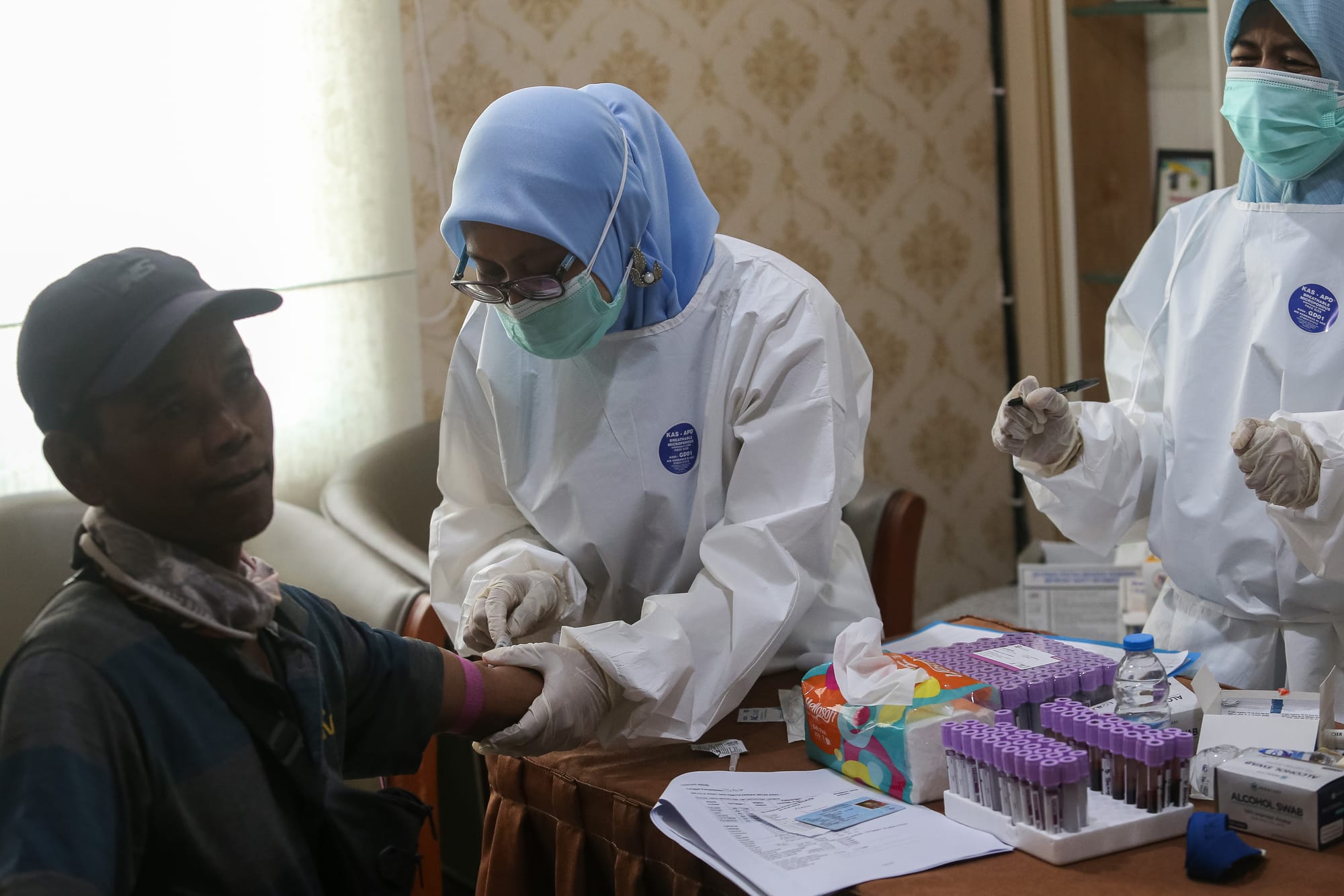
However, he added, the main problem is not the level of exposure, but rather the surveillance system in Indonesia that failed to detect it. "We missed twice: first, the shrimp containing radiation escaped from Indonesian ports; second, it was only discovered after it arrived in America," he said.
The exposure is expected to spread up to two kilometers and potentially contaminate shrimp packing plants around the site. "There is also another possibility, the container that transports the shrimp uses containers used to transport scrap from the factory. So it's not the shrimp that are directly exposed, but the container," he added. Arnold emphasized that the investigation must continue to ascertain which version is correct.
According to Arnold, whatever the cause, this case is a criminal act. "There are clear laws governing the use, storage and disposal of radioactive materials. If there is misuse or smuggling without permission, it is a crime," he said.
Arnold explained that the safe limit for radiation in food such as frozen shrimp is 1,200 Bq/kg. Thus, the level of 68 Bq/kg found in America is still far below the safe threshold and should not be a health hazard. However, public perception is different. "When people hear the word 'radiation' or 'nuclear', they are immediately afraid, even if the level is small. Because of this, products can still be rejected by foreign markets," he said.
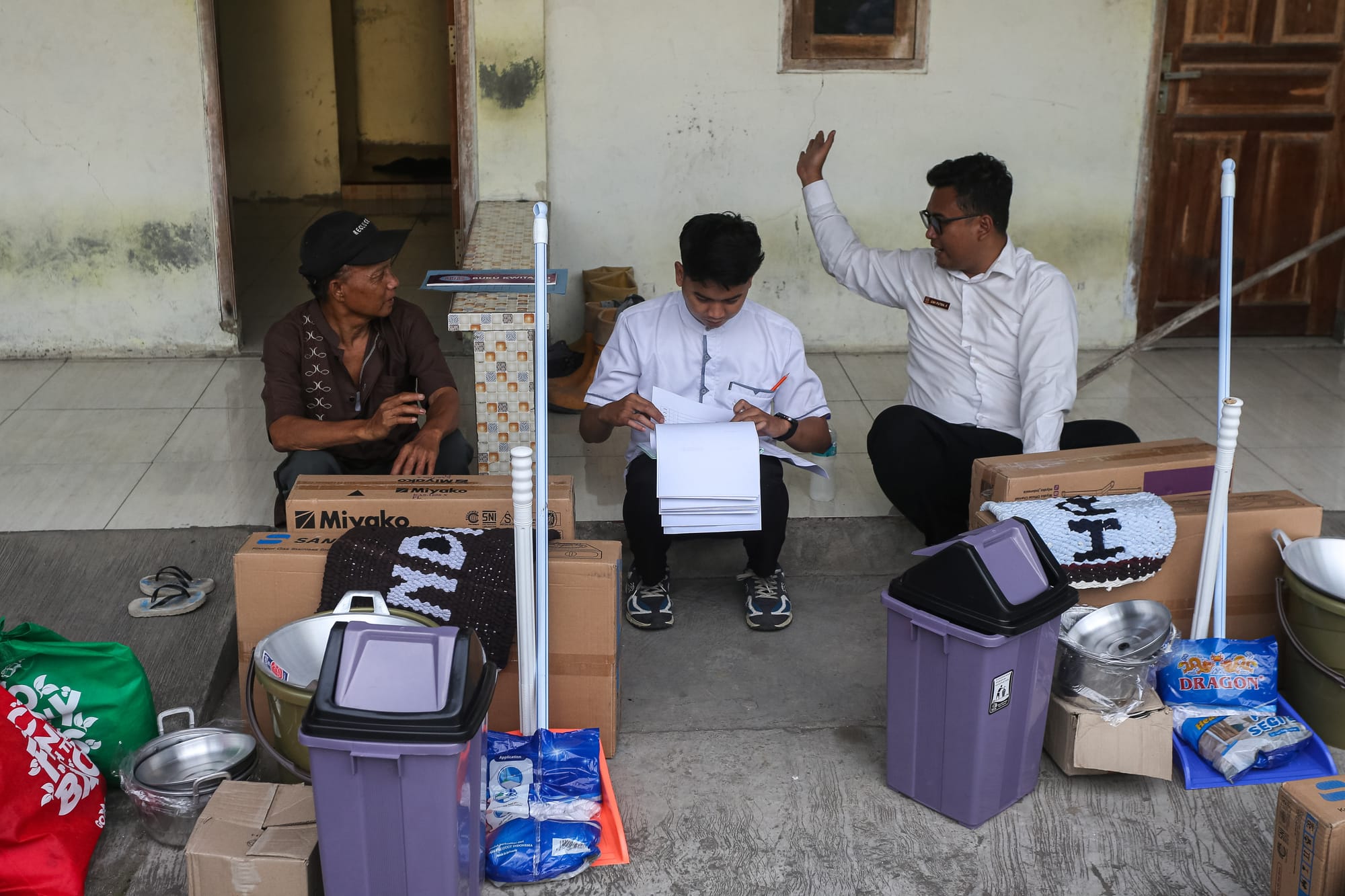
Arnold details three factors that determine the level of radiation hazard, namely distance - the further away, the weaker the effect. Then time - the longer the exposure, the greater the impact, and thirdly the need for shielding, such as protective clothing or retaining walls. "Radiation cannot be completely avoided, but it can be controlled," he explained.
He also reminded the importance of inter-agency coordination in the supervision and security of radioactive materials, especially in import-export activities. "Ideally, Bapeten or the Nuclear Energy Supervisory Agency works together with the Directorate General of Customs, security forces, and other related institutions. "If it is through official channels, it is usually easy to detect. But if it is through smuggling, it is the domain of law enforcement officials," he said.
He stated the need to strengthen Bapeten's functions and duties in monitoring the use of hazardous materials like this. Also, the improvement of monitoring tools so that detection can be more accurate and faster. "The case in America must be a lesson. If they can detect 68 Bq/kg, why can't Indonesia? That means our monitoring system still needs to be improved," said Arnold.
Strengthening in supervision
Meanwhile, the Deputy Head of the Import Directorate of the Technical Directorate of Customs at the Directorate General of Customs, Ministry of Finance Chairul Anwar explained that technically, every item entering Indonesia must go through a notification and inspection process.
Customs in collaboration with other technical agencies such as the Ministry of Trade, Ministry of Industry, and Bapeten will always ensure that these goods meet the prohibitions and restrictions (lartas).
However, Chairul admits that there are still limitations in detecting goods exposed to radiation, rather than those containing radioactive materials directly. "For radioactive materials such as uranium or certain compounds, the HS code is clear and we can detect it. But if the goods are exposed to radiation, there is no system that can automatically read that," he explained.
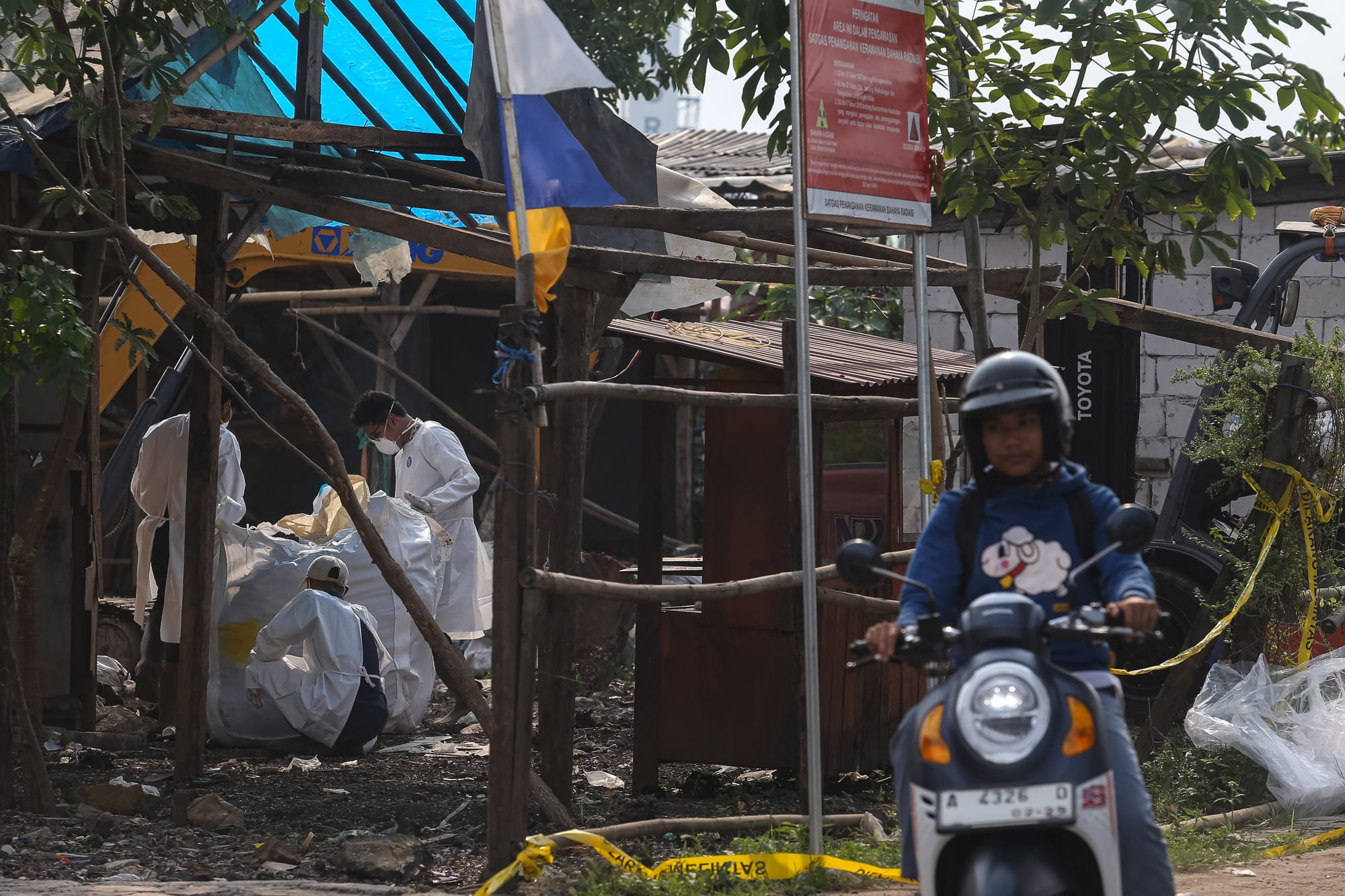
Chairul mentioned the importance of usingradiation portal monitors (RPM) at major ports. Currently, some ports such as Tanjung Priok have X-ray containers and hypo scans for general inspection, but not all of them are equipped with special radiation detectors.
"There is technology that can detect radiation in containers, but the tools are limited. We at Customs only ensure that the goods are scanned as required, while if there are indications of radiation, of course that is the domain of BAPETEN which has the authority to measure and verify," he said.
Chairul added that cross-agency cooperation needs to be strengthened so that the early detection system for imported or exported goods exposed to radioactivity can be carried out more effectively. "Ideally, there is a clear working mechanism. If the detector sounds, the goods are separated first in a certain location, then handled with appropriate decontamination procedures," he said.
In addition to the sea route, Chairul highlighted that the potential entry of goods exposed to radiation can also be through various other doors such as air routes, express mail, and PMI (Indonesian Migrant Workers) shipments. "Almost all goods can be potentially exposed. Not only from large containers, but also through delivery packages, air cargo, or personal belongings of passengers," he said.
Collective awareness prevents disaster from recurring
With this disaster, according to Dicky Edwin Hindarto, from the Thamrin School - Climate and Sustainability, it is hoped that it can make all parties realize the importance of caring for environmental issues that have emerged more frequently lately.
According to him, this case is not just an export issue, but a signal that our supervisory system has a big gap, especially in ensuring the safety of products coming out of Indonesia.
"When our shrimp is rejected, people think America is overreacting. But if it turns out that there is truth behind the reason, this is a big problem. Because it's not just about shrimp from Banten or Surabaya, but all of our exports are potentially affected," he said.
Dicky estimates that if this issue is not taken seriously, Indonesia's potential economic losses could reach US$20 billion, considering that the US is the main market for national shrimp exports.
He added that this condition is very worrying because the location of the industry is close to residential areas. Radiation, according to him, is accumulative, the longer the exposure, the greater the risk to residents' health.
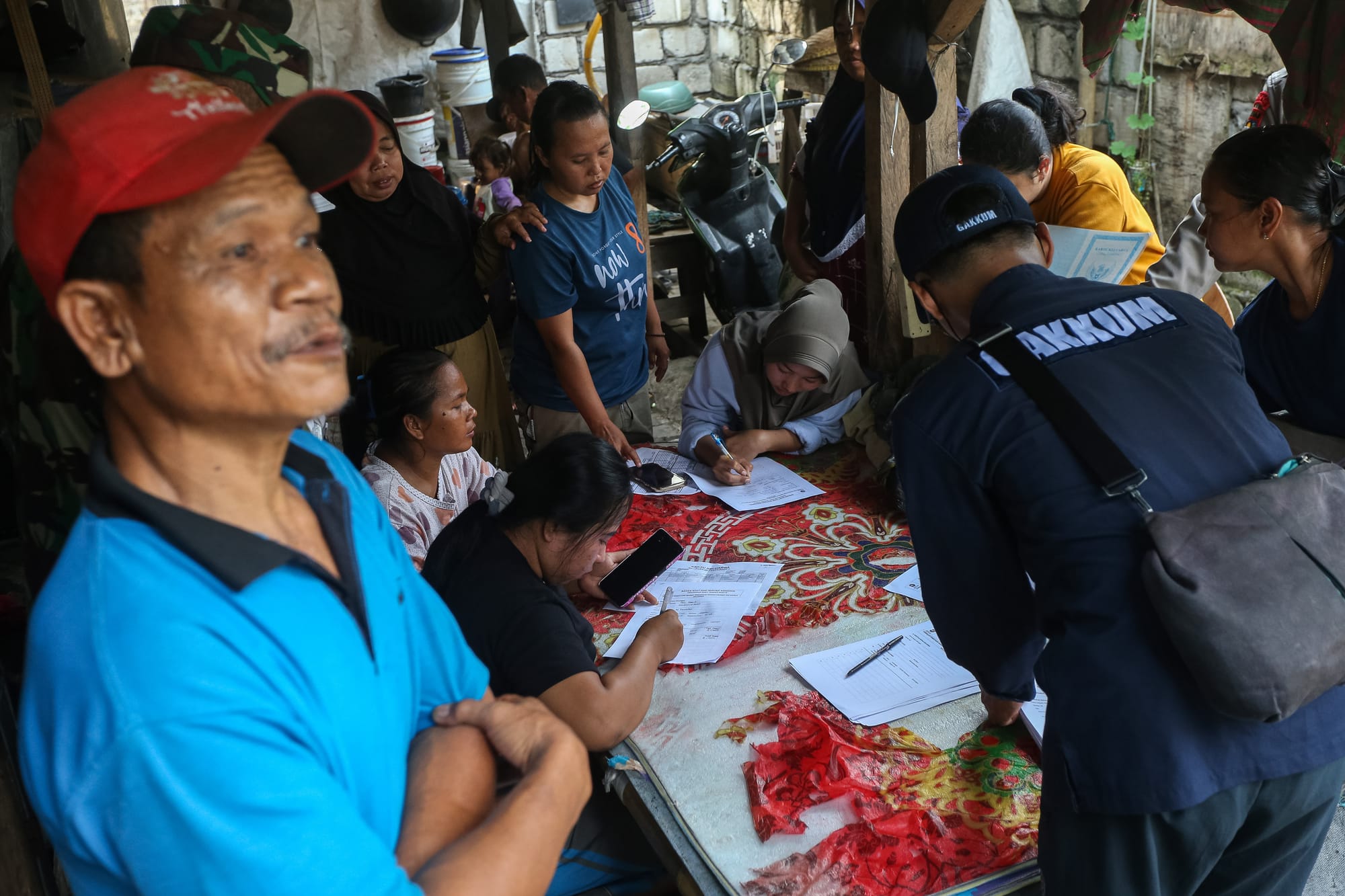
"Imagine the surrounding community, children, mothers, or workers who are there every day. Has their exposure ever been measured? Even warteg workers can be exposed without knowing," he said.
Dicky highlighted the weak supervision of imported goods entering Indonesia. He said that the raw materials that were the source of the exposure probably entered through official import channels, which should have been monitored by state institutions.
He pointed out that many other commodities have the potential to carry similar contaminants, ranging from used metals, used paper, used clothing, to industrial chemicals such as cement and fertilizers. "We import a lot of goods, and without radioactive measurements, everything can be potentially dangerous," he said.
Dicky also highlighted the unclear national standards for handling decontamination of radioactive exposure at the industrial and community levels. He mentioned that in the case of Fukushima in Japan, the affected area was prohibited from being occupied for years until it was declared safe.
On the other hand, he appreciates the initial steps of the Ministry of Environment and Forestry that have begun to handle decontamination and consider relocating residents. However, he emphasized that the handling approach must be comprehensive, not just temporary.
"Radioactivity is like a toxic person, it must be kept away first. But after that, how do you clean up the environment and ensure there is no further exposure? That is what must be answered together," he said.
Dicky also reminded that Indonesians have not been aware enough of the nuclear and radioactive risks around their daily lives. "We don't have a nuclear power plant yet, but humans can already be exposed to radiation. That means something is wrong in our system. Don't let everyone's BPS suddenly rise because of radiation exposure that we ourselves have never measured," he said.
Look at the problem proportionally
Meanwhile, the Head of the Strategic Policy Center of the Regional and National Strategic Studies Agency (BKSDN) of the Ministry of Home Affairs, Fahsul Falah emphasized the importance of seeing radioactive issues proportionally and solutively, not with excessive fear or antipathy.
"We should not see this radioactivity only as a disaster. It is a disaster, but the most important thing is to find a solution. If we fail and are confused, we will eventually become antipathetic to radioactivity. In fact, should Indonesia not have nuclear? Do we have to be afraid of radioactivity?" said Fahsul.
According to him, people need to have freedom of thought and the ability to be critical of issues like this. He pointed out that radiation is actually not a foreign thing in everyday life. "We encounter radiation every day, for example from sunlight. In the morning it is good, but if it is excessive, it can cause skin cancer. So the point is not to reject radiation, but how we manage it," he explained.
Meanwhile, Haendra Subekti, Deputy for Nuclear Safety Assessment of Bapeten, explained that so far the use of radioactive elements in Indonesia has always been supervised by Bapeten. The problem is indeed in the supervision when goods enter or leave Indonesia which needs to be tightened.
In addition, there is also a need for procedures that can be understood by all parties regarding waste management. When the use is complete, there are steps that need to be adhered to so as not to damage the environment.
"For example, if it is for industry, metal, it usually has a lifespan of around 3 months, 100 days. If it has been three months, it is considered that it can no longer be used. Well, if it is no longer used, the flow is sent abroad if it is imported, if it is domestically produced, it will be sent to the disposal site, which is in Serpong," Haendra explained.
However, if for some reason it cannot be sent, for example the company is bankrupt, or the company abroad no longer exists, it can be sent to the disposal site in Serpong. "Bapeten can help for companies that do not have funds, because they are bankrupt for management," he said.
Mukhlison, Dian Amalia, and Gema Dzikri