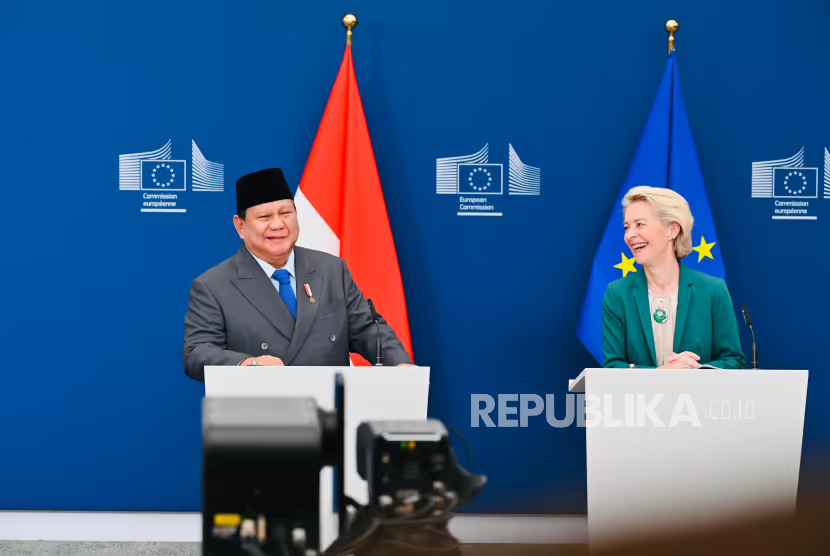
After years of negotiations, Indonesia and the European Union have taken a decisive step toward finalizing their long-awaited free trade pact. On July 13, 2025, at the EU headquarters in Brussels, Coordinating Minister for Economic Affairs Airlangga Hartarto and EU Commissioner for Trade and Economic Security Maroš Šefčovič signed an exchange of letters to accelerate the conclusion of the Indonesia–EU Comprehensive Economic Partnership Agreement (IEU-CEPA).
The agreement is expected to be formally signed in Indonesia this September, before entering a ratification process by all 27 EU member states and the Indonesian parliament. Once implemented, tariffs on 98.6% of Indonesian exports to Europe will fall to zero, covering palm oil, copper ore, footwear, rubber products, cocoa butter, iron and steel, and other key commodities.
Indonesia is entering a strategic phase in strengthening its economic ties with the European Union through the IEU-CEPA. Economic relations have shown a positive trend, with bilateral trade reaching USD 30.1 billion in 2024. The trade balance also remained in Indonesia’s favor, with the surplus rising from USD 2.5 billion in 2023 to USD 4.5 billion in 2024.
Trading with Europe, a Way Out
The government is targeting 20 flagship Indonesian export commodities for the European Union. Trade in these commodities will benefit from the implementation of the IEU-CEPA by end-2026.
Airlangga is confident Indonesia’s exports to the EU will increase by up to 50% within three years after IEU-CEPA takes effect. Indonesia’s exports to the EU in 2024 totaled US$17.3 billion, up 4.01% from the previous year.
The increase in export value is driven by wider market access for Indonesia’s flagship commodities to the European Union, as tariffs will reach 0%. This covers 98.61% of total tariff lines and 100% of the EU’s total import value from Indonesia.
The opening of the European market offers new hope for Indonesian businesses following the tariff war imposed by the United States. European countries could become a new destination for Indonesian products.
Trade Minister Budi Santoso believes the European Union will be a promising new trading market for Indonesia—indeed, with greater potential than the United States.
He explained that, to date, the EU imports goods from around the world worth US$6.6 trillion, while the United States imports US$3.3 trillion. In other words, the EU market’s potential is twice that of the United States. “This is a new alternative for our market,” Budi said.
The European Union market’s potential is twice that of the United States.
He said that if Indonesia can make greater use of the European Union market, it would help boost exports and provide an alternative to existing destinations. “So if we can gain greater access to Europe, I think it’s a good market for us as an alternative to other countries’ markets,” Budi said.
Redma Gita, Chairman of the Indonesian Filament Fiber & Yarn Producers Association (APSyFI), agreed that the soon-to-be-effective IEU-CEPA with the European Union could be a positive alternative for Indonesia’s exports—especially as, once the agreement takes effect, export tariffs to Europe will be 0%.
He said this could open new opportunities, even if they cannot be leveraged in the short term. While awaiting the United States’ final decision on the 19% tariff, Redma added that businesses can continue communicating with buyers in the U.S.
Beyond Europe, another potential market that has opened is BRICS. One member, Russia, has strong purchasing power and could be explored. However, he noted the main obstacle lies not with buyers but with the transaction system. “All transactions still use U.S. dollars, through banks connected to the United States,” he said.
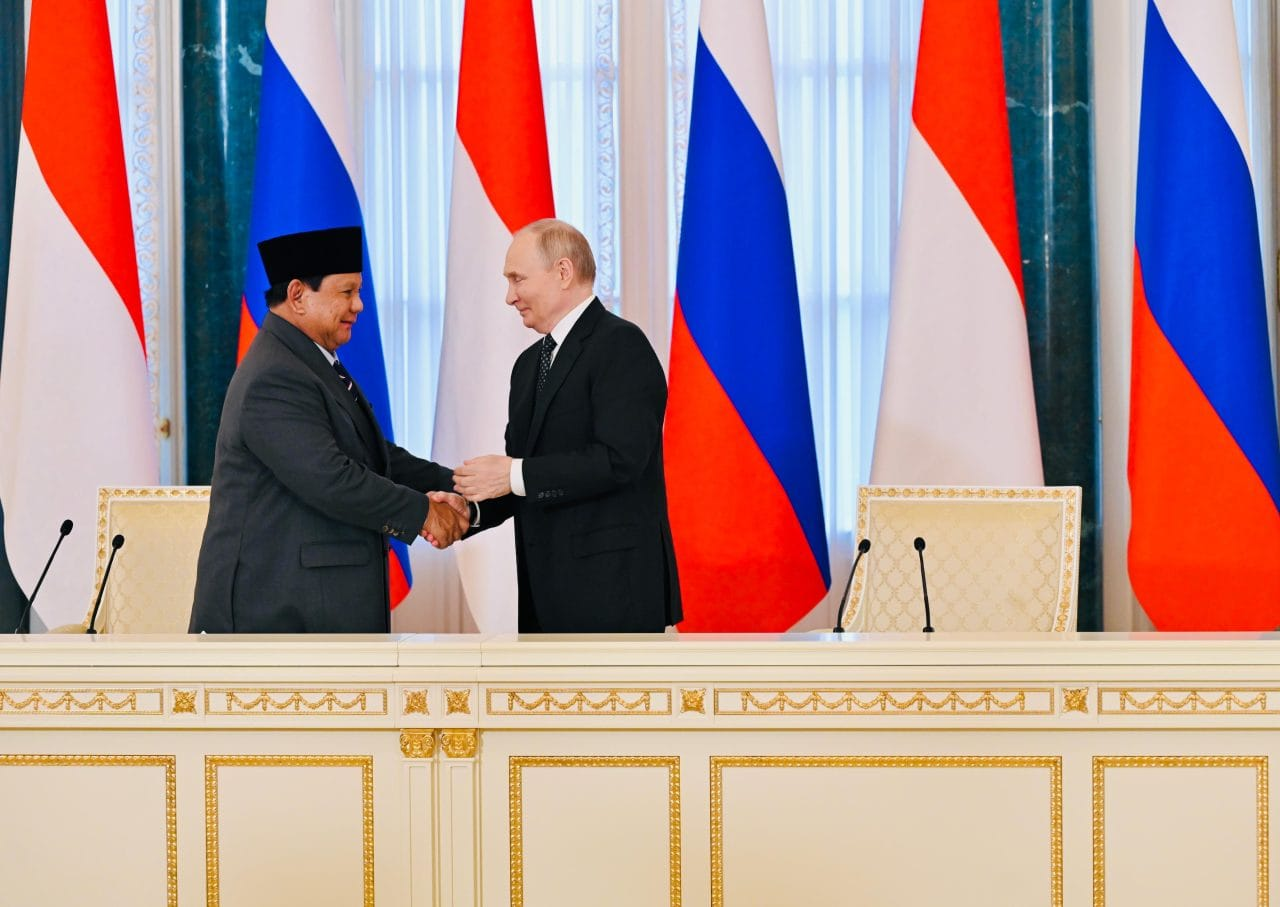
Redma explained that if fund transfers are detected as originating from Russia or Iran, accounts can be frozen—a lingering effect of longstanding geopolitical tensions between the U.S. and Russia. To address this, he said barter arrangements have been used and proven effective in the past. In his view, the government should step in to open export pathways to alternative markets such as Russia.
Indonesian Products and Environmental Issues
The Chairman of the Indonesian Palm Oil Association (GAPKI), Eddy Martono, said the association strongly supports the government’s efforts and appreciates moves to open export channels to Europe. However, GAPKI is not confident that CPO exports to the European Union will increase due to non-tariff barriers—namely the European Union Deforestation Regulation (EUDR).

Europe still views Indonesia’s CPO as environmentally unfriendly—an issue faced for years without reaching agreement. Under the EUDR, Indonesia is classified as a medium-risk country, meaning palm products from Indonesia will face stricter checks, including traceability of land origin and legality certification.
The solution, he said, is for the government to take a more serious approach and present scientific evidence that Indonesian CPO is safe and no longer damages land.
Eddy explained that GAPKI is diversifying export destinations; besides the United States, BRICS member countries are also targets. Latin America and Africa are being explored as alternative markets. He also voiced concern over the risk of a global recession that could suppress overall export demand, and emphasized the need for a strategy that is not only reactive to the United States, but also anticipatory of global dynamics.
The opportunity to expand export markets remains open if the government seriously pursues partnerships such as the IEU-CEPA and BRICS.
Deputy Director of the Institute for Development of Economics and Finance (Indef) Eko Listiyanto sees room to broaden export markets if the government is serious about advancing cooperation such as IEU-CEPA and BRICS. He said alternative markets must be developed now to reduce dependence on the United States, though the results will not be visible in one or two years.
“Economic strategy must be strengthened systematically. The government needs to carry out business matching, trade promotion, and activate economic information networks in partner countries. If we don’t start now, it will be difficult,” Eko said.
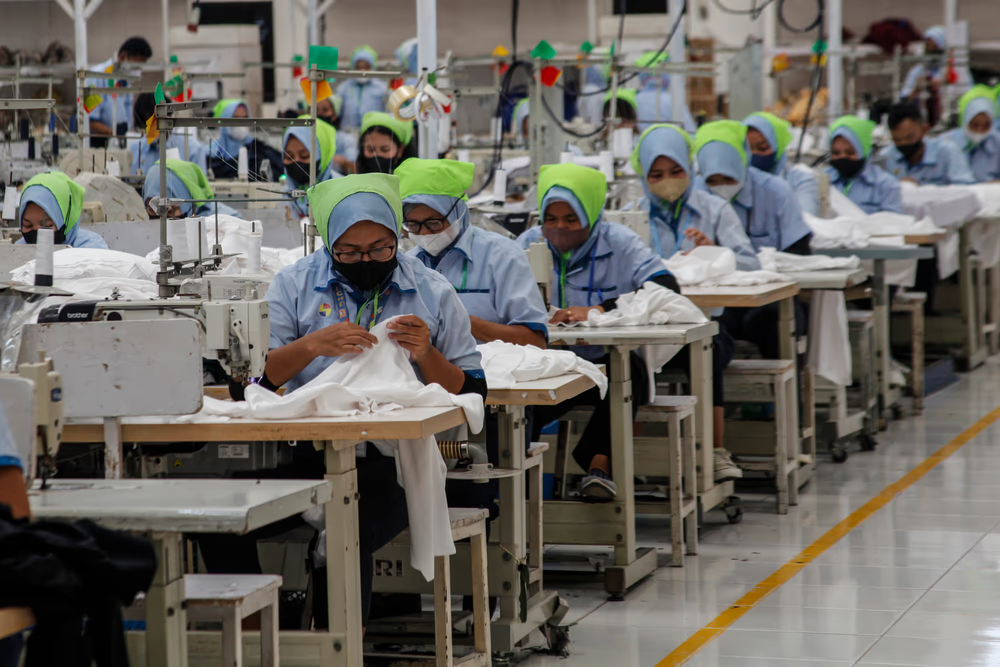
The European Union is promising because its demand for footwear and apparel is even larger than the U.S. At the same time, stable markets such as China and ASEAN also need to be pursued more aggressively. Given today’s geopolitical map, Eko believes it is important for Indonesia to quickly broaden its export base.
He argued that expanding or finding alternative export markets must begin with concrete, measurable plans. “Our networks in the European Union are still small. They must be built, not awaited,” he said.
He cautioned that the government cannot rely only on short-term reactions to U.S. policy. According to Eko, BRICS suits sectors with strong price competitiveness, while the European Union is more suitable for labor-intensive industries that emphasize quality.
For the EU, the main challenge is standards—Indonesian export products must meet premium quality to compete. In BRICS, the key challenges are price and product homogeneity.
If Indonesia wants to compete in BRICS, pricing strategy and production-cost efficiency must be strengthened.
If Indonesia is to compete in BRICS, pricing strategy and production-cost efficiency must be reinforced. Countries such as Malaysia are showing interest in joining BRICS, which will intensify competition. Energy and raw-material cooperation could be key to ensuring Indonesia does not fall behind.