

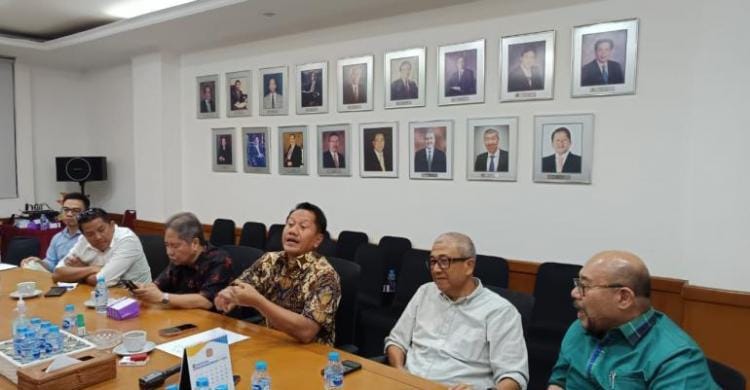
Indonesia's property gods, the bosses of the country's top development companies, suddenly gathered on October 29, 2025. They fulfilled the invitation of the Advisory Board of the Indonesian Real Estate Organization (BPO-REI), the largest developer association in Indonesia. There were 37 Indonesian high-profile property entrepreneurs who that night gathered together at the residence of the Minister of Industry for the 2009-2014 period, MS Hidayat.
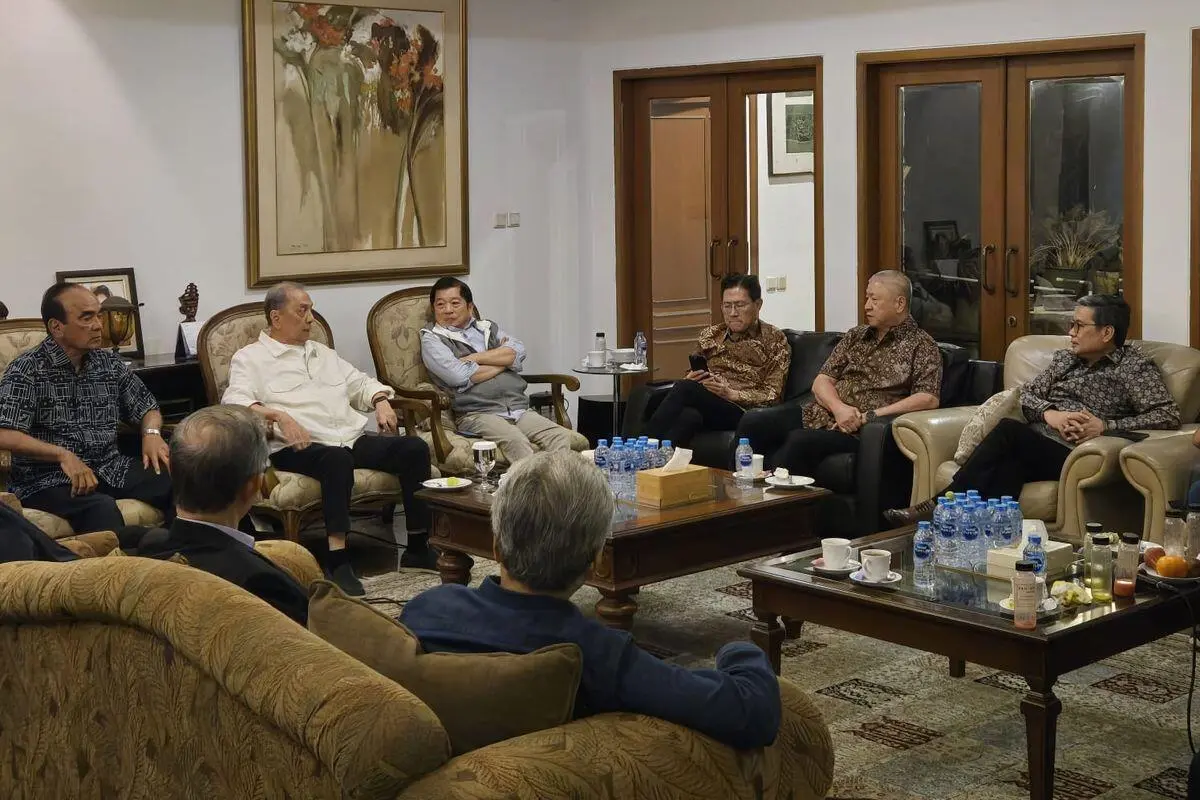
They include James T Riady (Lippo Group), Sugianto Kusuma (Agung Sedayu Group), Alexander Tedja (Pakuwon Group), Herman Soedarsono (Duta Putra Land), and Siswono Yudo Husodo Minister of Housing and Minister of Transmigration and PPH (Settlement and Development of Forest Encroachers 1988-1998 and Suharso Monoarfa Minister of Public Housing 2009-2011.
These senior entrepreneurs met to discuss a number of issues that are currently emerging in the property sector. Related to support for the 3 million house program, apartment market recovery, low-cost housing schemes, and balanced housing.
Honorary Chairman of REI, MS Hidayat, said the meeting of around 37 REI figures and seniors at his private residence was aimed at providing support to the REI Central Executive Board (DPP) in fighting for various issues currently being faced by developers.
According to Hidayat, the casual discussion that night discussed government policies, as well as market conditions in the midst of a decline in people's purchasing power, and input for DPP REI to do in the future. "We will hold meetings like this every five months, to continue to provide positive input to the government," said the Chairman of DPP REI for the 1989-1992 period.
The regulations that plague
The most important part of the REI senior meeting was actually discussing regulatory obstacles that cause investment uncertainty. According to former Minister of National Development Planning/Head of Bappenas Suharso Monoarfa, one of the current obstacles for developers is the concept of a balanced residential policy.
Balanced residential formulation is a mandatory regulation for housing developers to build houses with a proportional composition between simple, medium, and luxury houses.
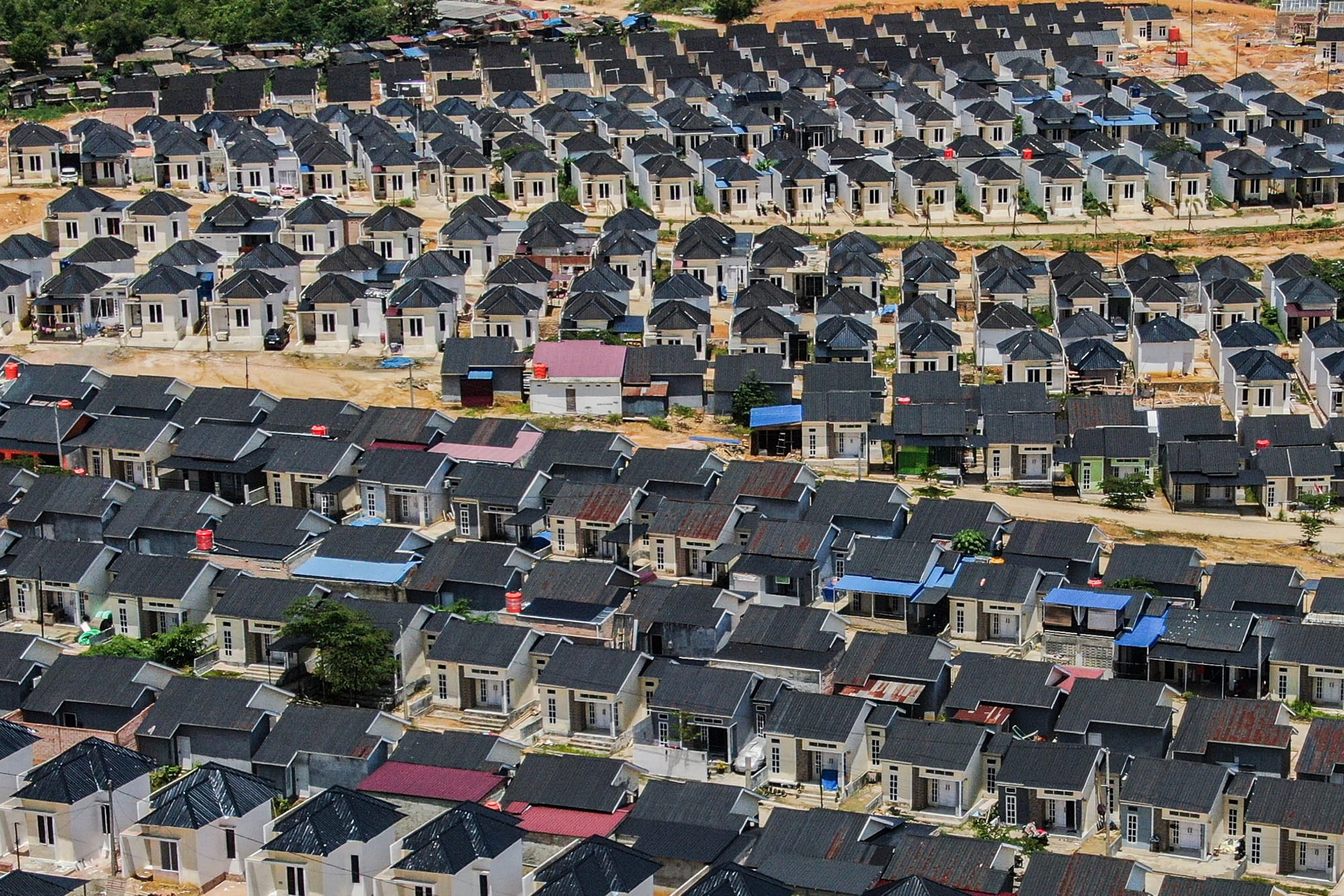
The goal is to ensure fair and equitable access for all levels of society to decent housing, especially for low-income people (MBR). The required composition is 1 luxury house: 2 medium houses: 3 simple houses for large-scale development.
However, in practice there are differences in interpreting the mandate of the regulation. On the other hand, if developers fail to comply with the regulation they are threatened with fines.
In addition, the balanced housing formulation requires developers to build a balanced composition of house types in one district/city.
Developers also claim that, in aggregate, they have met the balanced residential formulation. Indeed, there are one or two development companies that have not fulfilled the formulation. But they are also threatened with sanctions.
"Even though they have actually prepared the land, it has not yet been built, because there is no demand, but they have to pay compensation," Suharso said. Interestingly, the fine can be paid to the Housing Development Acceleration Agency, "but that agency does not yet exist," he said.
From the results of the meeting, BPO-REI proposed a realistic option to implement the Balanced Residential provisions in the form of a balanced composition between simple, medium, and luxury houses that are currently running rigidly.
Vice Chairman of DPP REI, Bambang Ekajaya stated that his party offered a middle way related to balanced housing which is difficult to achieve in big cities due to high land prices with project flexibility. .
He pointed out that developers in Jakarta can replace the obligation to build simple houses by building them in other locations, because it is impossible to provide cheap units in areas where land prices have soared. "It's impossible to build simple houses in Menteng, right?" he said. The point is, the policy is not unworkable, as long as it is given flexibility.
Another alternative proposal is to pay a reasonable conversion fund, and the location of balanced housing can be done throughout Indonesia, not just one district/city, as stipulated in Law Number 1 Year 2011 on Housing and Settlement Areas and amended through the Job Creation Law.
PSUs and environmental management fees
There are also concerns from developers, related to the provisions of infrastructure, facilities and utilities (PSU) built by developers must be submitted to the local government. However, sometimes if the PSU is handed over to the local government, it becomes an asset of the local government, but it is not well maintained due to the limited budget of the local government.
PSU includes infrastructure, facilities, and utilities such as roads, electricity, and waste management. According to Suharso, this regulation has actually existed since 2009, namely the Minister of Home Affairs Regulation Number 9 of 2009.
The developer wants this rule to be evaluated. "The developer asked for this rule to be changed, it does not always have to be handed over, because it can be managed by the developer, and the evidence is that there is no problem. But if the local government can maintain it, please do so," said Suharso. .
The next issue that troubles developers is the environmental management fee (IPL). So far, environmental management fees in flats and apartments are treated as luxury goods. Paying for electricity is not like ordinary house rates, paying for water is also like that. "So that apartments in Jakarta are empty, because it is expensive to pay the IPL, because the treatment is like that," said Suharso.
The developers also feel that the voting system for the Association of Owners and Residents of Flat Units (PPPSRS), which appliesone man one vote, is not fair. "It should be based on the size of the unit, people with larger units have the same vote, so they asked for it to be changed," he said.
In addition to regulations, developers also want to participate in helping the government, one of which is the repair program for uninhabitable houses according to their capacity. "They want to help in accordance with their respective capacities," he said.
These developers, said Suharso, also want to seriously show their intention to jointly revive the sluggish property industry sector. One of them, by means of incentives from the government.
"They really want to revive this property, because reviving the property will defend hundreds of industries behind it, so that it can trigger economic growth and also create jobs, because there are also many people working," said Suharso.
Hindered by declining purchasing power
The government does need to pay attention to the complaints of property entrepreneurs. The housing sector is currently the focus of President Prabowo Subianto's government policy for good reason. First, the availability of housing has a direct effect on people's welfare. Second, housing development drives economic growth through various additional activities, ranging from construction services to the sale of building materials.
Third, the sector generates a lot of employment in related industries such as construction, logistics and building materials manufacturing, thus providing a broad social and economic impact.
Minister of Housing and Settlement Areas Maruarar Sirait emphasized that the support and collaboration of developers, banks and other government authorities are expected to be strategic steps to accelerate the housing development target as directed by President Prabowo Subianto.
This synergy is important because the acceleration of development depends not only on government fiscal policy, but also on the availability of liquidity and financing from the banking sector.
From various data, the trend of housing construction, especially subsidized ones, shows an increase, but people's purchasing power remains an obstacle. The reduction in the benchmark interest rate three times year-to-date (ytd) has not been able to significantly accelerate property credit.
On the other hand, the construction of subsidized houses through the 3 million houses program shows a positive trend, with the realization until early August 2025 reaching 190,335 units through contracts and distribution of subsidized mortgages, but market challenges are still great.
Growth in residential mortgage loans (KPR and KPA) in June 2025 was recorded at 7.7% year-on-year (yoy), down from 14.3% yoy in the same period last year.
This slowdown was mainly due to weakening purchasing power, which was also reflected in the increase in the non-performing loan (NPL) ratio of the mortgage segment to 3.07% yoy in June 2025, up from 2.4% in the same period last year.
In the midst of low purchasing power and slowing property loan growth, a diversification strategy remains key to maintaining optimal portfolio performance.
Secretary General of Real Estate Indonesia (REI), Raymond Arfandy, confirmed that the current slowdown in the property sector cannot be separated from the fundamental problem, namely weak demand due to a non-rotating economy. According to him, various government incentives, ranging from VAT borne by the government to relaxation of licensing, do help, but have not touched the core of the problem.
Raymond explained that the slowing economic conditions have made banks more cautious in disbursing mortgage loans. "It's like the chicken and egg problem," he said.
When the economy slows down, banks tighten lending; while dragging credit holds back the property sector. In a situation like this, according to him, there is no solution but to encourage the circulation of money widely in the community.
He cited the example of fiscal policy to the regions that had been held back on the grounds of prudence towards budget management, instead creating new problems. "Withholding funds is not a solution," he said. What is needed is economic activity that makes money circulate, so that household consumption rises and property demand moves again.
For REI, the recovery of the housing sector is highly dependent on the government's courage to release liquidity to the public, especially the middle class, which is the main driver of home purchases.
Raymond also highlighted the role of financing as one of the weak points holding back the market. The strict rules of the Financial Services Authority's Financial Information Service System (SLIK OJK) mean that many potential buyers, even those with the ability to pay, fail to pass the creditworthiness process. He believes that financing should be designed to be more responsive to economic cycles, rather than focusing solely on mitigating short-term risks.
Minister of Housing and Settlement Areas (PKP) Maruarar Sirait during a working meeting with Commission V of the House of Representatives on Wednesday, November 19, 2025 confirmed that the Ministry officially supports the elimination of OJK's SLIK to a certain extent.
Maruarar explained that his party had met OJK four times and had submitted these recommendations to the Coordinating Minister for the Economy, Minister of Finance, and OJK officials themselves.
He asked for full support from Commission V so that this issue becomes a common political pressure. Our position is clear: if possible, SLIK at certain numbers should be abolished so that our people do not have difficulty accessing housing," he added.
Regarding the developers' complaints, Sri Haryati, Director General (Dirjen) of Urban Housing at the Ministry of PKP, admitted that currently there are several regulations that actually hamper investment in this sector. "Regulations must accelerate the construction of public housing, not slow it down," she said.
Any policy adjustments, he continued, will be discussed in an integrated manner so that the housing ecosystem, both supply and demand sides, can grow in a healthy, inclusive, and sustainable manner.
Sri emphasized that the government is currently conducting a comprehensive evaluation of the housing sector regulations, with a focus on resolving these complaints without sacrificing the principle of prudence. The evaluation is being conducted together with the Ministry of Finance, Ministry of Home Affairs, OJK, and local governments, as this issue is cross-sectoral.
With this series of policies and evaluations, the government believes that the target of building 3 million houses is still on track to be achieved, while opening up space for the supply of more affordable housing for millions of families in Indonesia. A house, Sri said, is not just a physical development, but a foundation for social stability, economy, and quality of life.
Mukhlison, Dian Amalia, and Gema Dzikri
Food Safety or Occupancy
The most sensitive issue of concern to REI seniors at the moment is the polemic over the implementation of the Protected Rice Field (LSD) and Raw Rice Field (LBS) policies. The Minister of ATR/Head of BPN, Nusron Wahid, had emphasized that in regional development planning, his party would refer to the physical condition of the land (rice fields) in determining the status of LBS and LSD land, instead of using the basis of the Regional Spatial Plan (RTRW) and Spatial Detail Plan (RDTR). "It seems that spatial planning is being ignored," said BPO-REI member Adrianto P Adhi.
Nusron's move is considered to have the potential to cause uncertainty in property development, because it is considered to ignore the RTRW and RDTR, which are mandated by law as the commander of development.

Responding to complaints about LSD, Minister Nusron emphasized that the background of his ministry's policy is because there are 314 districts/cities whose RTRWs do not include Sustainable Food Agriculture Areas (KP2B), where LSD is included in the area group. "This is what makes them (developers) reckless," said Nusron.
He explained that his ministry classifies two types of LSD. First, land that is physically no longer a paddy field, but on the map is still recorded as a paddy field, so this type of data will be disciplined. "If it is no longer a rice field, we will delete it, so there is no need for LSD licenses," Nusron explained.
Meanwhile, the second type of LSD is land that is physically rice fields, but in the data it is no longer rice fields. Thus, Nusron emphasized that he would review this type so that it could be returned to its physical and data functions as rice fields.
He also conveyed the arrangement of RTRW and RDTR in accordance with LSD to support the function of rice fields to maintain food security. The conversion of paddy fields will reduce rice production.
Meanwhile, Chairman of DPP REI Joko Suranto said that his party had communicated with the Minister of Agrarian and Spatial Planning/Head of BPN, regarding the issue of spatial constraints and LSD. As a result, there is a plan to reopen LSD licensing in 140 cities.
Related to this. DPP REI immediately sent a letter and complete data to the Minister of ATR / BPN, as well as input regarding the LSD policy. "The LSD obstacle is in principle in process. We support the efforts of food security and self-sufficiency that the government wants to achieve according to the nation's challenges in the future," he said.
Mukhlison