

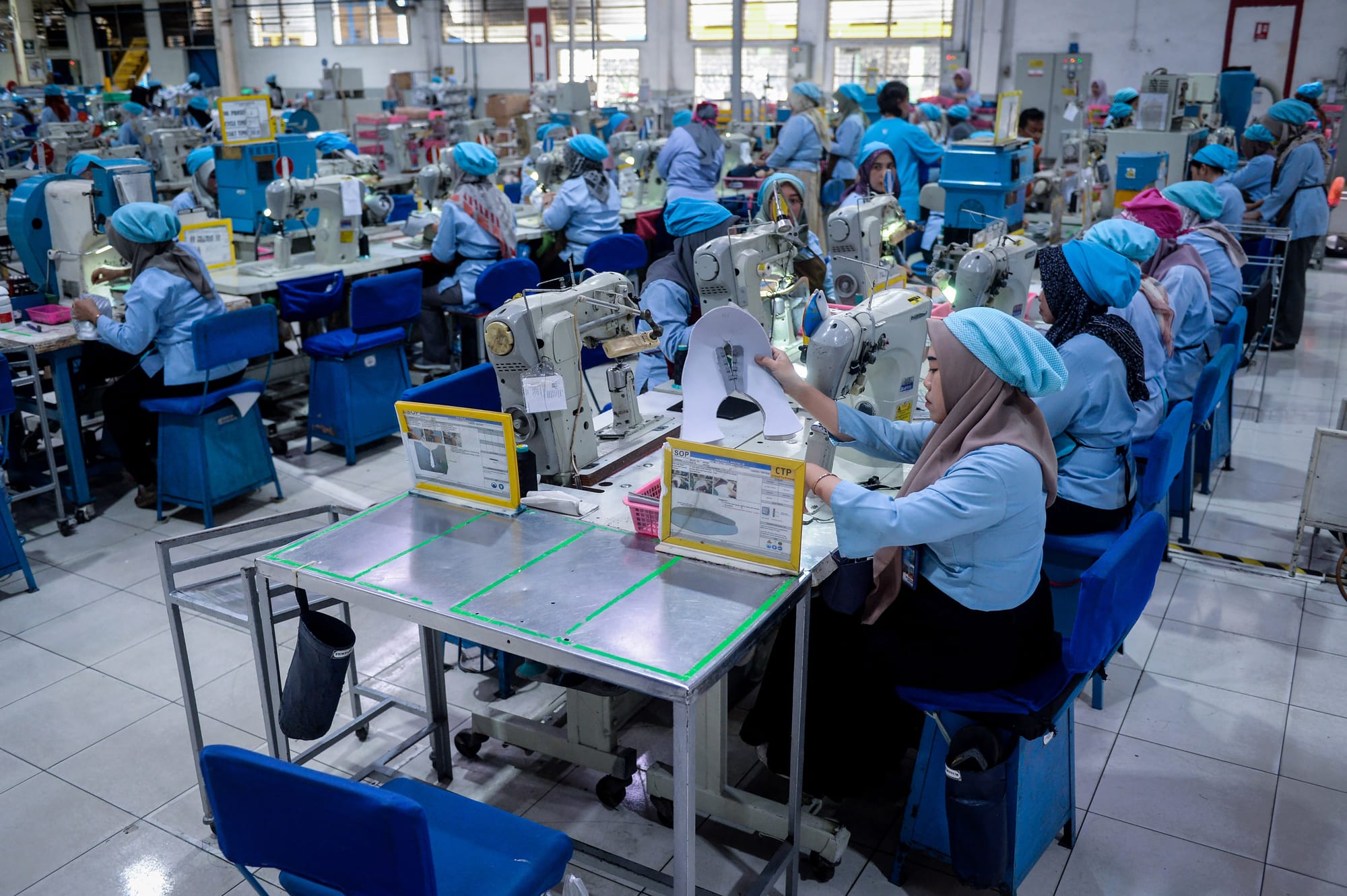
A slew of new orders saw Indonesia's manufacturing activity return to growth with the Purchasing Managers' Index (PMI) at its highest level since February 2025, according to a report by S&P Global.
In a report released today, Monday (1/12/2025), Indonesia's PMI stood at 53.3 for the November 2025 period, a significant increase from 51.2 in October.
This shows that Indonesia's manufacturing activity is growing again and entering the expansion zone.
"The key to the expansion in November was strong growth innew orders. The growth rate was the highest since August 2023," said S&P Global Market Intelligence Economist Usamah Bhatti as quoted on the S&P Global website in Jakarta (1/12).
Previously, Indonesia's manufacturing activity was depressed in Apri - July 2025 with a value below 50 and entered the contraction zone.
The business world reported that higher demand was supported by the domestic side. Meanwhile, export demand still fell at an even deeper pace to become the lowest in 14 months.
"The increase in demand caused production to pick up, which is the first in three months," Usamah said.
According to him, businesses reported an increase in production which made them prepare themselves by purchasing raw materials in anticipation of the expected improvement in demand.
He explained that they have increased employee recruitment. This has happened for four consecutive months. Although the pace of job creation slowed down compared to October.
November's data gives an idea of the health of Indonesia's manufacturing sector and the domestic economy is still the key.
Strategy to drive expansion
Chairman of the Indonesian Export Companies Association (GPEI) Benny Soetrisno said the manufacturing sector is a leading sector in the Indonesian economy, the growth of this sector must be maintained.
In order for the manufacturing sector to continue to expand and be able to absorb labor, three strategies are needed, including First, Support in terms of policies and regulations.
Examples of policies to encourage the manufacturing sector are
- Tax relaxation, such as withholding VAT increases, to increase purchasing power and support businesses.
- Strengthening supply chains and infrastructure by developing local raw materials, the development of local raw materials can reduce the trade balance deficit.
- Third, Diversification and market strategy by encouraging product diversification to reach a wider market.
"Improving the quality of infrastructure and distribution connectivity to support the industrial supply chain can also make manufacturing expand," he said when met at Kadin's Rapimnas, at Park Hyatt, Jakarta (1/12).
In response, the Ministry of Industry (MoI) highlighted that the November Manufacturing PMI reached its highest level since February 2025. This reflects a stronger improvement in national industrial operating conditions and solid manufacturing sector performance.
The increase in Manufacturing PMI value was mainly driven by a surge in new orders which reached a 27-month high.
Most respondents cited an increase in the number of domestic customers as a driving factor, while demand from overseas actually shrank quite sharply.
This condition encouraged manufacturers to increase production again after a period of stagnation, as well as to increase finished goods stocks in anticipation of continued demand. The increase in demand also had an impact on the working capacity of factories.
Companies recorded a significant accumulation of work, the highest for more than four years. To maintain smooth production, many industry players increased their workforce although not as fast as the previous month. Raw material purchasing activities also increased, in line with efforts to maintain input supply readiness amid recovering demand.
Minister of Industry Agus Gumiwang Kartasasmita stated that the Ministry of Industry continues to strengthen the foundation of the industry through increasing efficiency, integrating supply chains based on local raw materials, and preparing a skilled workforce. Competency improvement programs, process innovation, and transformation towards green manufacturing are prioritized to ensure sustainable competitiveness.
"In the midst of a slowdown in several major export markets, domestic demand is again the anchor of growth. Our industry is moving adaptively, making capacity adjustments to maintain momentum," Agus said in a release received by SUAR in Jakarta (1/12).
According to S&P Global, the ASEAN Manufacturing PMI increased from 52.7 in October to 53 in November 2025. Indonesia (53.3) is in the expansionary group with Thailand (56.8), Vietnam (53.8), Myanmar (51.4), and Malaysia (50.1). Meanwhile, the Philippines is in the contraction zone (47.4).
Outside the region, a number of large countries also recorded expansion such as India (59.2), the United States (52.5), Australia (51.6), and China (50.6). These conditions indicate that global industrial activity is stabilizing, although the speed of recovery is uneven.
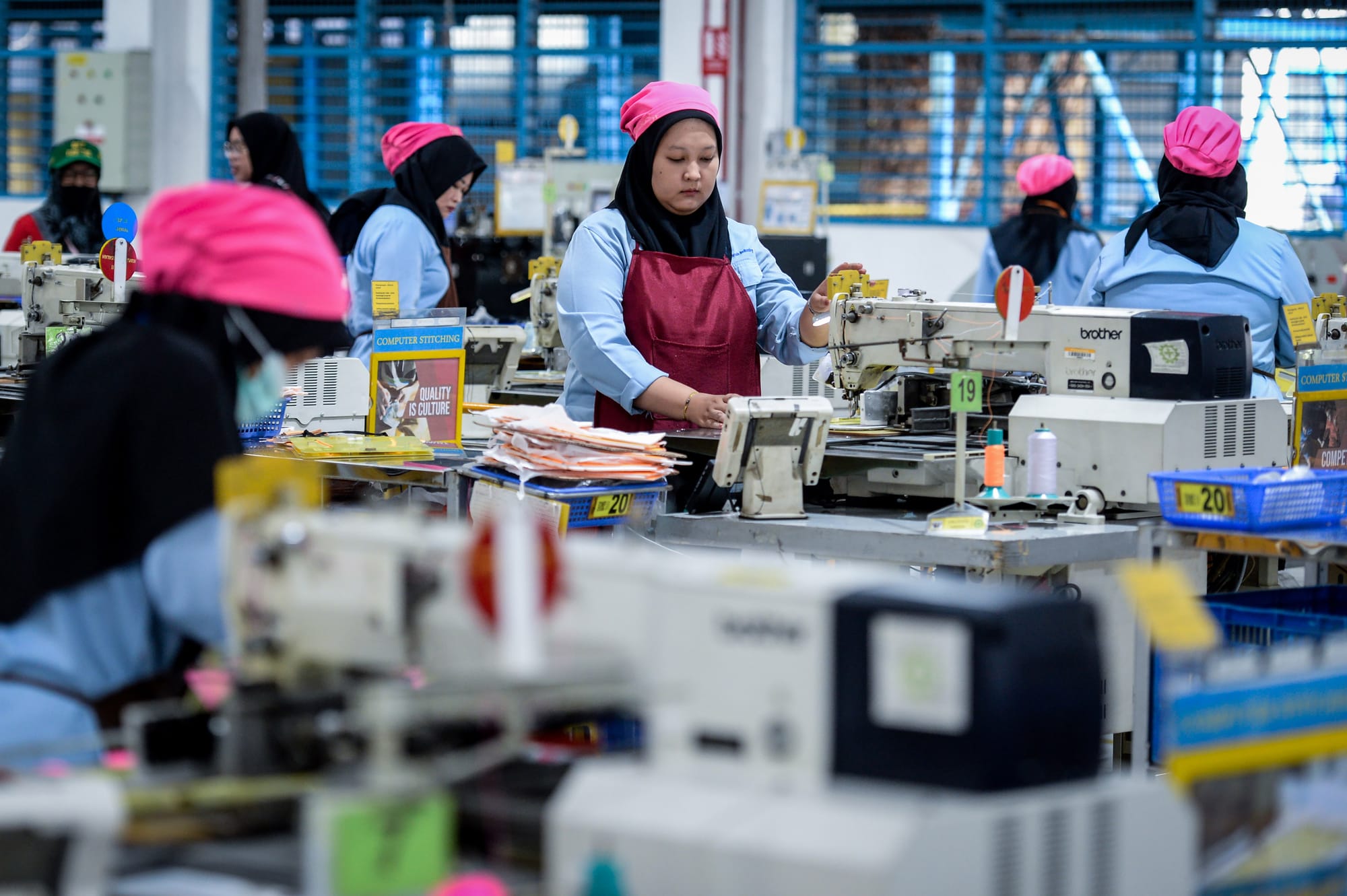
IKI November 2025
The Ministry of Industry noted that the IKI in November 2025 was also still in the expansion zone at 53.45. In value terms, the November IKI fell slightly by 0.05 points compared to October 2025 which was at 53.50.
Despite slowing down on a monthly basis, the November 2025 IKI showed improvement compared to the same period last year. The IKI value increased by 0.50 points compared to November 2024, which was at 52.95.
Spokesperson for the Ministry of Industry (Kemenperin) Febri Hendri Antoni Arief said that this month, the manufacturing industry oriented to the domestic market has strengthened. It can be seen from the domestic IKI which monthly rose 0.37 points from 52.34 to 52.71.
In contrast, the IKI for export-oriented manufacturing industries slowed 0.17 points from 54.35 to 54.18. In terms of IKI-forming variables, new orders in November 2025 increased by 0.68 points to 55.93.
However, the product inventory variable experienced a slowdown of 0.33 points to 56.19. Meanwhile, the IKI value for the production variable is still contracting after falling as deep as 1.08 points to 47.49.
Febri revealed that the IKI value was obtained from a survey and analysis of 23 sub-sectors of the manufacturing industry. Of these, 22 sub-sectors experienced expansion this month.
The two sub-sectors with the highest IKI values are the Tobacco Processing Industry, followed by the Pharmaceutical Industry, Chemical Medicinal Products and Traditional Medicines.
The expansion of the tobacco processing industry is driven by the activities of business actors who are actively carrying out production after passing the harvest period. "The tobacco processing industry is seasonal, it does increase in certain periods," he said.
Meanwhile, expansion in the pharmaceutical, chemical and traditional medicine sub-sectors was driven by government spending. Especially spending for the national health insurance program on pharmaceutical products.
On the other hand, there is one manufacturing sub-sector that contracted, namely the textile industry, this result is the same as last month's IKI, which at that time the textile industry was the only sub-sector that contracted.
Analysis from the Ministry of Industry reveals a number of factors that are still putting pressure on the textile industry. The main factor causing the contraction is sluggish demand. This condition occurred amid rising prices of raw and auxiliary materials that drove up selling prices. A number of manufacturers also reported a decline in retail sales.