

Fiscal constraints or regional budgets can be anticipated in various ways, including diversifying other sources of revenue to pursue Regional Original Revenue (PAD), optimizing Revenue Sharing Funds (DBH), and carefully calculating transfer funds from the central government. This needs to be done so that development can continue amid limited fiscal resources.
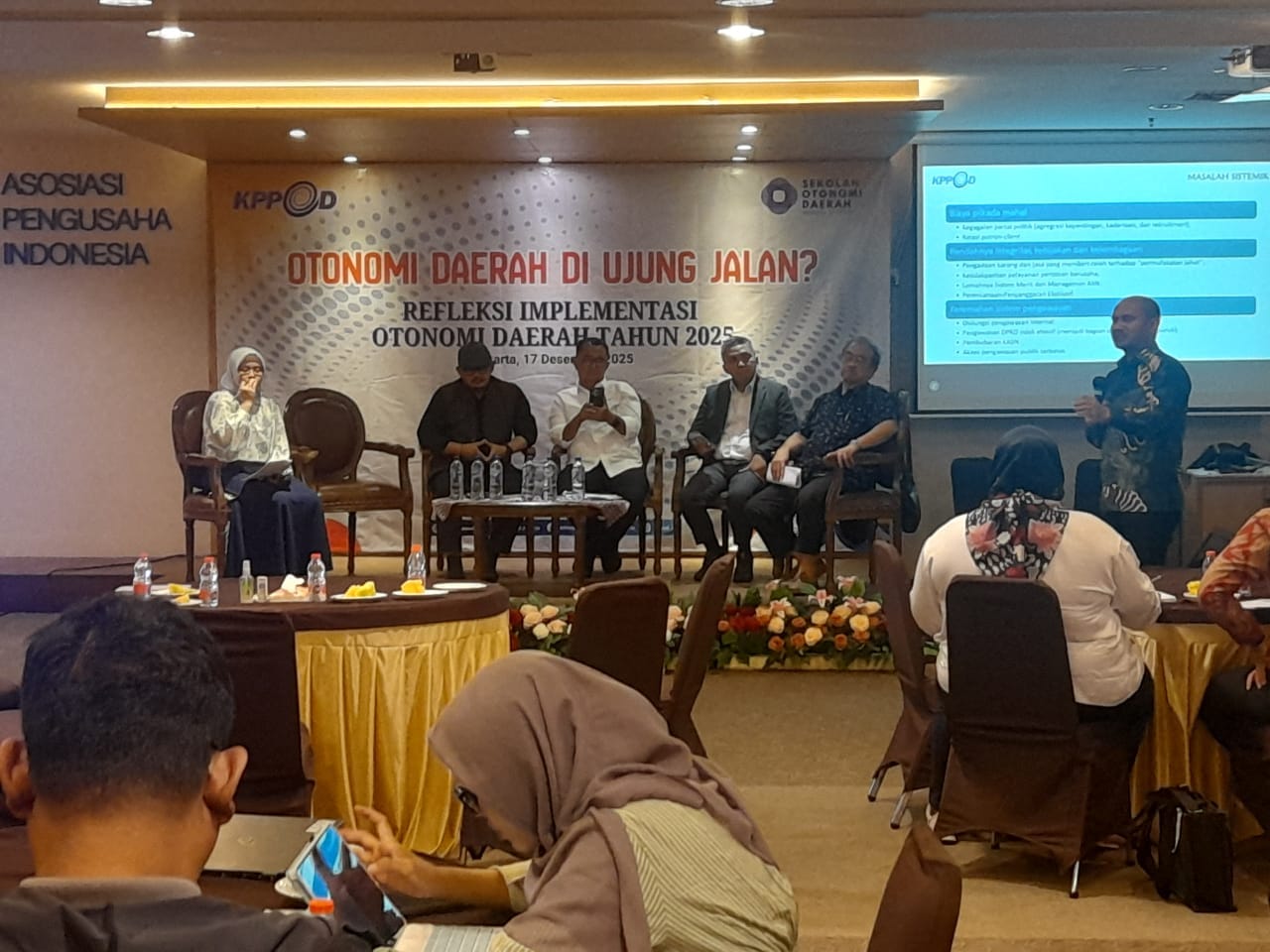
This issue was raised during a discussion held by the Regional Autonomy Monitoring Committee (KPPOD) entitled "Regional Autonomy, At the End of the Road? Reflections on the Implementation of Regional Autonomy in 2025" on Wednesday (17/12/2025).
KPPOD Executive Director Herman Suparman explained that the role of PAD in regional autonomy is crucial as the financial backbone for financing development and public services, reducing dependence on the central government. In addition, it also increases regional fiscal independence so that regions are more responsive to the needs of their own citizens and can develop local innovations.
Funds from PAD are used to finance priority programs, infrastructure, and basic services such as education, health, and sanitation in accordance with local potential and needs.
"With strong local revenue, local governments have greater flexibility in allocating budgets for innovation and rapid response to local issues," he said.
He explained that strategies to increase PAD include intensification and extensification of taxation, digitization of services, re-registration of taxpayers, and cooperation with the private sector and regionally-owned enterprises. In addition, there are also efforts to increase human resource capacity (training), strengthen regulations and supervision, optimize regional assets, and diversify sources of PAD , such as tourism.
Not only that, local governments can also rely on Revenue Sharing Funds (DBH) in their fiscal posture. Although DBH is important to support regional spending, according to him, local governments must optimize PAD and diversify other sources of revenue.
Herman added that it would be better if DBH was used as a supporting mechanism rather than the main backbone, so that development would be more sustainable and not easily shaken by changes in central government policy, as was done by East Kalimantan Governor Rudy Mas'ud.
Read also:
 Zikrina Ratri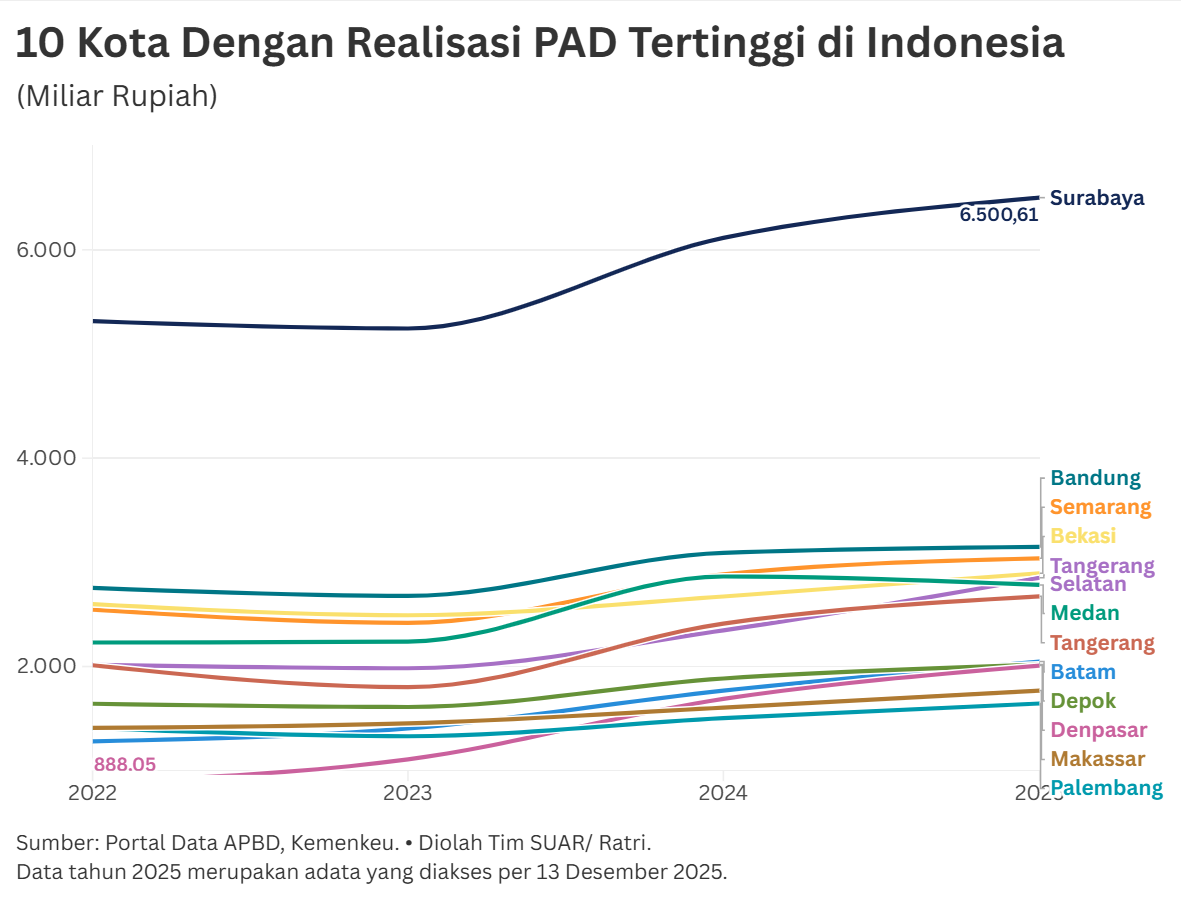
Executive Director of the Association of Indonesian City Governments (Apeksi) Alwis Rustam said that Apeksi actively promotes regional autonomy with a focus on strengthening fiscal independence, improving the quality of public services, and ensuring that national policies are in line with regional needs, particularly through central-regional synergy to deliver better services.
"We strive to ensure that the spirit of regional autonomy truly leads to the welfare of the people without reducing regional authority," he said.
Fiscal independence can be strengthened by managing local revenue properly and effectively through the development of the tourism sector and support for UMKM
Apeksi also bridges national priorities with the realities and specific needs of cities through forums such as the DPOD (Regional Autonomy Advisory Council) Coordination Meeting to ensure that policies support the implementation of autonomy.
Play an active role in dialogues related to new laws such as the Job Creation Law to ensure that there is no erosion of regional autonomy.
Digitalization
Anton Supit, a member of the Indonesian Employers Association (Apindo) Expert Council, said that improving digital-based public services is one indicator of the success of regional autonomy.
Digital services such as e-government and online applications speed up administration and decision-making, reducing red tape.
Digital services can also reduce costs, as people no longer need to visit physical offices, saving them time and transportation costs, as well as reducing government operating costs.
"The process becomes measurable and monitorable, increasing public trust in local government, so digital-based public services are important," he said.
Digital access helps small and medium-sized enterprises (SMEs) in rural areas expand their markets and increase competitiveness, promoting balanced regional economic growth.
Head of the Center for Home Affairs at the National Research and Innovation Agency (BRIN) Mardyanto Tryatmoko said that the quality of regional civil servants (ASN) is crucial to the success of regional autonomy.
Civil servants play a central role in regional autonomy as policy implementers, public servants, planners, and supervisors of regional development.
"Civil servants are required to be professional, have integrity, be innovative, and be adaptive in order to realize effective, clean governance that is capable of improving the welfare of the community through optimal service and management of local resources," he said.
Director General of Regional Autonomy at the Ministry of Home Affairs Akmal Malik The development of natural resources, tourism, and renewable energy through collaboration with the private sector and indigenous communities has also begun. This could be an alternative for carrying out development amid limited fiscal resources.