

The Ministry of Finance outlined a number of tips to maximize three channels of state revenue, namely customs, taxes, and Non-Tax State Revenue (PNBP) in the 2026 State Budget. Fast movement to comb and patch existing gaps, open alternatives, and digitalization will be taken hand in hand to finance a list of large spending programs while keeping the deficit under control.
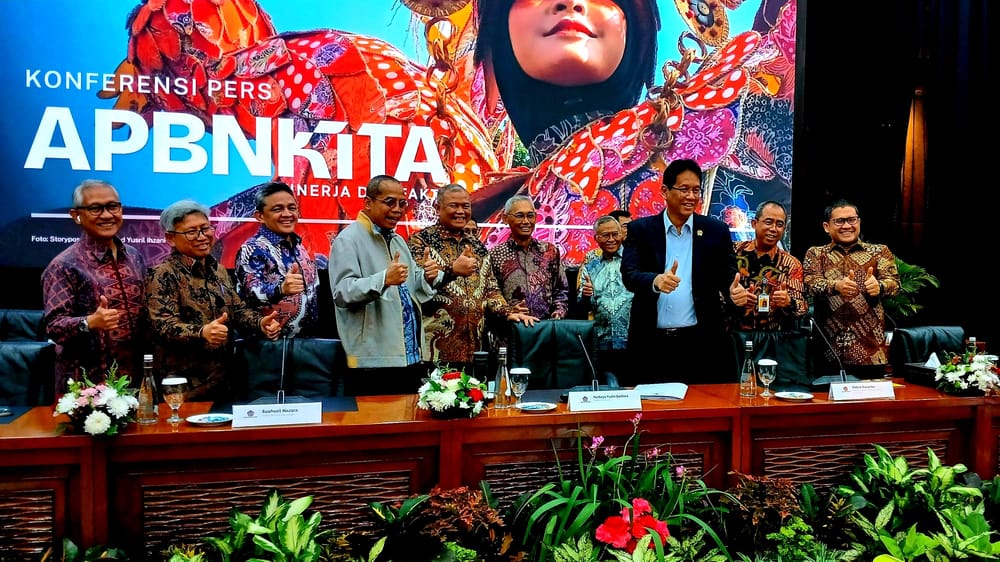
The explanation was conveyed by Director of Revenue and Strategic Planning of Customs and Excise Muhammad Aflah Fahrobi, Expert Staff for PNBP Mochamad Agus Rofiudin, and Expert Staff for Tax Compliance Yon Arsal in the second day of the Media Gathering "Peel Through the 2026 State Budget" in Bogor, West Java, Friday (10/10/2025).
Successfully realizing customs and excise revenue of IDR194.9 trillion or 64.6% of the 2025 State Budget target of IDR301.6 trillion in August, the government is targeting customs and excise revenue to increase by 11.4% in the 2026 State Budget with a target value of IDR336 trillion. In detail, the import duty target reaches IDR49.9 trillion, the export duty target IDR42.6 trillion, and the excise target IDR243.5 trillion.
Fahrobi admitted that to pursue the increased revenue target, his office faces a number of external and internal challenges, ranging from the dynamics of the global economy that has a direct impact on international trade to limited resources and regulations that are not yet harmonized.
"There are still many underground economy practices, illegal cigarette sales, and downtrading are external challenges. However, currently Indonesia has used free trade agreement facilities up to 37.45% of annual import value to overcome the impact of tariff policies that are still being negotiated," he said.
Undaunted by the challenges, the Directorate General of Customs and Excise has prepared a number of strategies. In terms of facilities, increasing expectations of customs services in special economic zones and increasing UMKM exports are the focus to attract investment and increase effectiveness.
In terms of sources, Customs will intensify excise on tobacco prices (CHT) without increasing tariffs, namely by adjusting retail selling prices. This step is taken because although CHT revenue determines the amount of excise revenue, there is still room for other levies that can be an alternative.
On the surveillance side, the commitment to revitalize patrols at sea, ports, borders, and major airports will spearhead the prevention and handling of smuggling and cross-border crimes, including the circulation of narcotics, psychotropic substances, and precursors (NPP).
"Currently, we are also preparing for the excise tax on packaged sugar-sweetened beverages. It is still under joint study, and we will see its development in the near future," Fahrobi concluded.
More shockproof
In addition to customs revenue, tips for optimizing PNBP became one of the important emphases in the presentation. This is because the potential of PNBP, which began to be regulated in Law Number 9 of 2018, has proven to be concrete. In 2015, PNBP was recorded at Rp255 trillion. Now, in 2025, the PNBP target reaches Rp477.2 trillion, almost doubling.
"We use this momentum to transform PNBP, reviewing its greater potential. Currently, the PNBP Government Regulation has been unified as an omnibus and is in the process of being reduced to a finance ministerial regulation," explained Expert Staff for PNBP Mochamad Agus Rofiudin to reporters.
Read also:
 Mukhlison Widodo
The nature of PNBP as a levy that mainly comes from crude oil, natural gas, coal, minerals, forestry, fisheries, geothermal, and palm oil is a challenge because the amount of revenue is highly dependent on the volatility of commodity prices in the global market.
Rofiudin illustrates, every 1 US Dollar drop in world crude oil prices can reduce PNBP by up to Rp1.6 trillion. This also applies to other commodities that make macro assumptions and PNBP targets must be adjusted in line with price changes in the global market.
"As it is now, global coal demand is falling due to green energy shifting and the demand for high-quality coal, while the results of Indonesian coal exploration have low quality on average. But PNBP can also rise sharply like during the commodity boom at the beginning of the Russia-Ukraine War in 2022," he said.
Focusing PNBP on sectors that are more resilient to shocks is the government's strategy to pursue next year's PNBP target of Rp459.2 trillion amid fluctuations in commodity prices. One of them is the relatively low PNBP in the fisheries sector, mainly because there are still few large-tonnage vessels that are the object of PNBP.
In addition to fisheries, the government will pursue revenue from premium immigration services for executive visas, auction of confiscated bauxite mines and IUPs, environmental fines, and activate an automatic blocking system that maximizes the role of PNBP receivables in the field.
"Digitalization will encourage simpler, interconnected, easier, and more efficient services so that supervision is more integrated and revenue policies can be formulated more wisely," concluded Rofiudin.
No need for a "people's party"
The performance of tax revenue as the largest revenue sector is not necessarily idle. Although tax revenue has increased steadily since 2022 with VAT and STLG as the main drivers, the target of IDR2,357.7 trillion, which grew 13.52% in the 2026 State Budget, is not as easy as turning your palm.
" We must admit that thetax ratio is not very sophisticated, because so far it is still 10 percent. This year's realization is 10.08% to 10.24%. Indeed, the comparison cannot be an an sich, but it must also pay attention to the type of tax and what is included in the calculation," said Expert Staff for Tax Compliance Yon Arsal.
To be able to reach the peak tax ratio of 15% for a country, Indonesia currently needs a significant increase, which is not easy considering the uncertainty of commodity prices and the shift in tax structure from conventional to digital has not been accommodated.
Arsal emphasized, with the number of taxpayers currently reaching 70 million or a quarter of the population, increasing compliance with easy digital access is the key. Of the 150 services of the Directorate General of Taxes, he stated that 60 services have been digitally based, with the e-filing SPT payment procedure reaching 98%.
"Click is the key. We try to make taxpayers able to access all services on the website, but the call center and tax service at the counter must also exist. Only now there are fewer counters , different from 5-6 years ago when in these months, the tax office was like a party. Now it is quieter," said Arsal.
With the SPT reporting date approaching, Arsal announced that the Coretax infrastructure is ready for mass use for 100 percent e-filing SPT reporting at the end of this year. The hope is that with this convenience, tax revenue will be maximized and the impact on economic growth will be felt.
Be transparent, maintain trust
The government's various tips to pursue state revenue at first glance seem very aggressive and close all loopholes. For businesses, inter-authority collaboration is key to ensuring that tax and duty payments do not feel burdensome to the point of avoidance.
Chairman of the Economic Policy Analyst Committee of the Indonesian Employers Association (Apindo) Ajib Hamdani assessed that the positive synergy between the Directorate General of Taxes, taxpayers, and tax consultants will build the willingness of entrepreneurs to contribute consciously and proudly to state revenues, instead of making the business world avoid.
"In the midst of an uncertain economy, tax authorities who collect repressively have the potential to reduce compliance and create taxpayer resistance in carrying out their obligations. In the end, efforts to increase state revenue can be similar to hunting in a zoo," Ajib explained when contacted by SUAR, Friday (10/10/2025).
He reminded that currently, 80% of state revenue in terms of taxes mainly comes from business activities, with 28% of taxes generated from the processing industry. Optimal collaboration between the government and the business world with open and transparent communication will foster trust between interested parties.
"An approach that is collaborative, persuasive, thoughtful, and fair will better encourage increased voluntary compliance," he concluded.
Sharing Ajib's view, DDTC Indonesia Tax Consultant Director Bawono Kristiaji understands that revenue optimization strategy is a necessity, considering that the availability of development funds is only possible if fiscal instruments such as taxes can operate optimally.
"It is better if the agenda is balanced with a strategy to increase voluntary compliance. Efforts to increase trust, accountability, transparency, tax education, and increase certainty in the tax system can be made to achieve that goal," said Bawono in Jakarta, Saturday (11/10/2025).